Over the last few years, I’ve been hearing more and more about what a cool city Berlin is. I jealously followed my friend Rikka’s experience there over on Deviating the Norm (hashtag travelbloggoals), and her descriptions of the city’s devotion to social justice, egalitarianism, noncomformity and partying (duh!) made up my mind that this was a place I needed to visit.
It has also recently become the home of one of my favorite people, which certainly didn’t hurt!
My friend Carolin was a foreign exchange student at my high school back when we were wee little baby 18 year olds. Here we are on our way to PROM (she’s on the right, I’m in the middle).

In the ensuing decade we’ve kept in touch as well as two people who are notoriously bad at keeping in touch can do. She visited the States a few times, and I last saw her on my post-college Eurotrip in 2010, when I visited her in Hamburg, Germany and we traveled to Amsterdam together. Five years later, we were well overdue for a reunion, and she relocated to Berlin right around the time that I moved to Spain.
While I did indeed love Berlin (our first trip outside Spain since arriving to Europe), my experience there was a bit dwarfed by the excitement of reconnecting with my old friend. I’ve been meeting some great people here in Madrid, but I was sorely lacking the comfort of giggling over memories that date back nearly a third of your life.


A solid chunk of the visit was spent catching up at Carolin’s kitchen table over mugs of glühwein and shots of Berliner Luft (a delightfully light, candy cane-flavored liquor beloved by Berliners), which I understand doesn’t make for riveting blog-reading, but I will of course share with you what we loved about the city itself and its fascinating history.


Tempelhof: This was on just about every list of must-see Berlin highlights that I’d checked out and I loved the idea behind it. A decommissioned WWII era airport inside the city limits, it was embraced by locals as a cool place to hang out, first unofficially, then eventually with the city’s blessing.

Now, helpful signs inside the park direct you to the best spots for a barbecue, while the old strips of runway make it the perfect spot to practice kiteboarding, skateboarding and other funky wheeled pursuits. Sections of it have been turned into community gardens, and there’s even a mini golf course made up entirely of found objects and odd sculptures.


Sadly, our whole trip was marred by shit weather and the day we chose to visit Tempelhof was especially crappy — frigidly cold, windy and not raining enough to make it seem worthwhile to bring the umbrella, but just enough to make you regret leaving it in the car as soon as you’d walked too far to return and get it. Despite the conditions, we did see some people out with their kites, and got a taste for how rad of a place this must be on warmer days. Carolin told us that she’d attended a music festival there shortly after moving to Berlin, which sounds like a great use of the space. The abandoned airport building itself is currently being used to house refugees as well.
DDR Museum: I knew pathetically little about the DDR (Deutsche Demokratische Republik, aka German Democratic Republic or GDR) period of Berlin’s history before this trip, so the museum was on the top of my priorities list for touristic pursuits. I was not disappointed — the museum is highly interactive and presents its information in fantastically creative ways, drawing the visitor in to a sense of life in East Germany by way of all the senses. You can listen to old radio broadcasts, climb inside a real Trabant (the only car that was available to the citizens of East Germany) and take it for a virtual-reality drive around the streets of 1970s Berlin, wander through a reproduction of a typical home complete with drawers and cupboards to open and knickknacks to rifle through, even spy on the conversations of guests in another part of the museum for a sense of the East German surveillance state.
The full-sensory experience provided a great way to learn about a surprisingly (to me) nuanced and complicated subject. I really didn’t expect how much I would actually agree with a lot of the regime’s policies and ideology, such as the social safety net, secularism and advanced level of equality for women. I came away from the experience wondering if the East German social experiment could have ended differently had it not been for the real evil of the regime — the mandatory participation, complete with ruthless crushing of dissent and escape attempts punished by death. In fact, Carolin told me that there are many Germans who would actually like to see the return of the DDR.
Memorial to the Murdered Jews of Europe: In Europe, you can barely walk 50 feet down any given street without running into some sort of statue, arch or monument — to the point that few of them really impart any sense of meaning. Of course, the Holocaust is still much more raw in our collective consciousness than, say, the exploits of Charlemagne, but above and beyond that fact, I thought this memorial did an incredible job at focusing your mind on the meaning behind it and drawing the visitor in to a space of solemn contemplation.
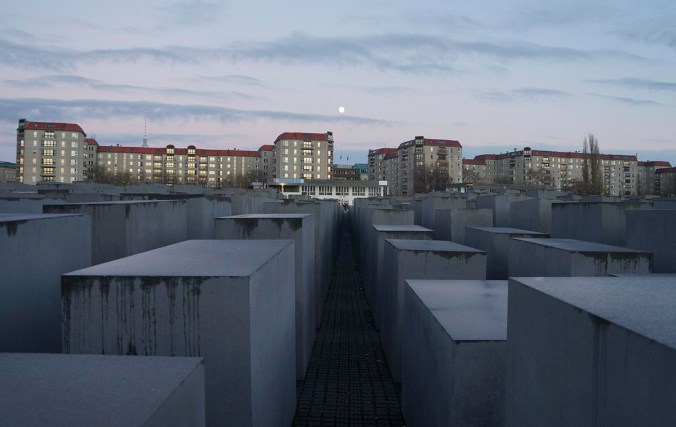
The memorial doesn’t look like much as you approach it — just a weird open space full of drab-looking concrete rectangles tucked between city blocks. We were just wandering around looking for a bite to eat when we came upon it. Without realizing what the purpose of the space was, we found ourselves compelled to walk around slowly and thoughtfully; the apparent uniformity of the blocks from the outside conceals changes in elevation within, and as you walk you’ll find yourself following the sloping ground until you’re deep inside, the concrete walls blocking out the city around you and even the other tourists who may just be a few feet away from you. It’s not beautiful, and it doesn’t reference its subject in any overt or specific way, but its dark yet compelling atmosphere definitely leaves a strong impression on its visitors. It has, in fact, been criticized for failing to incorporate specific details like the names of the victims, the number of the dead, and the places where the killings occurred. Personally, though, I found the abstract nature of the memorial to be even more effective.


TV Tower (Fernsehturm): This tall, futuristic-looking structure is visible from many parts of Berlin. I always enjoy odd aesthetic incongruencies like this one, and I loved the contrast of its ultra-modern look with the stately medieval elegance of buildings like the Berlin Cathedral.


You can also go up to the top for a one-of-a-kind city view! In addition to the observation deck, the big globe-shaped structure contains a bar and a revolving restaurant. Going up will set you back 13 euros, and I don’t know if I can say that it’s quite worth the cash, but it was a cool experience.
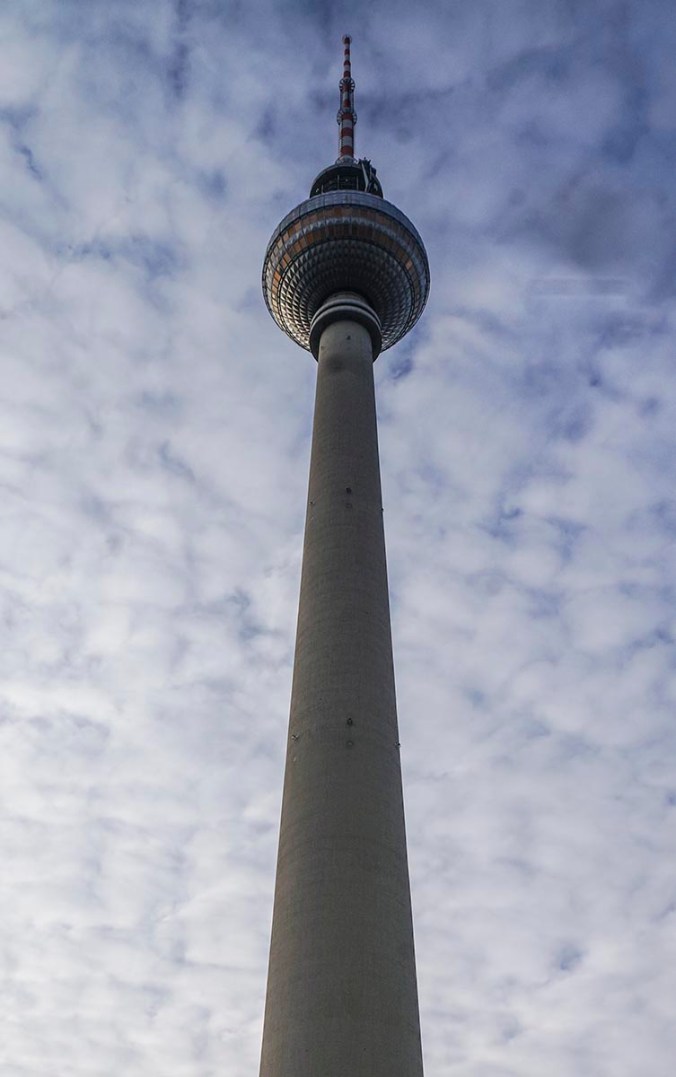
The elevator whisks you up all 203 meters in just a few dizzying seconds, and then you can join the throngs of tourists at the windows for a view of the city stretching all the way out to the horizon.

Every few feet along the windows there’s a new sign explaining what you can see in this particular section of the view and a little bit about the various neighborhoods, so it also provides a nice crash course about the city’s history and makeup. It was fun to sit and watch the S-Bahn trains zip along the tracks, chug over bridges and disappear into tunnels like a model train set; certain points also offer a striking aesthetic comparison between East and West German architecture.


East Side Gallery: After learning so much about East Germany and its isolation from the West, I was becoming more and more curious to see the original Wall that divided them. Luckily, a fairly large stretch of it near the city center is still preserved.


One side of the wall, facing the river, is decorated with ever-changing modern graffiti; some of it was cool, but most is pretty unremarkable. You can also see an original watchtower building in what was the space between the borders of East and West Germany.


The other side, displays the iconic images created by dissident artists in the late 80s and early 90s. After the wall fell, the city invited the original artists to return and restore their designs. Some were fenced off to preserve them, while others remain totally open and vulnerable to additions by visitors.


Many people have taken to them with markers or spray paint, adding messages calling for freedom and an end to oppression around the world (although plenty of people just sign their name or scrawl curse words instead).


Museumsinsel: The “museum island” is a cluster of 5 world-class museums in the heart of Berlin, tucked between two sections of the river Spree. Classified in its entirety as a UNESCO world heritage site, it’s a can’t-miss destination to anyone craving culture on their vacation.


We only had time for one museum, and we chose the Pergamon’s collection of cultural antiquities. I think we chose wisely — seeing recreated temples, original artwork and artifacts dating back to the time of the Fertile Crescent was seriously stunning. It was equally fascinating to learn how they were put together. Imagine coming across a pile of ancient rubble and having to figure out how each tiny stone shard or crumbled piece of brick once fit together to form a grand architectural wonder of an era of history that’s barely understood? (Unfortunately, we didn’t realize that cameras are permitted inside the museum!)
Other highlights:
Street art: I was not disappointed by Berlin’s much-hyped collection of street art. From brightly colored pieces to bold black-and-white designs, each mural adds to the city’s unique personality and vibrant feel.


Glühwein! The widespread availability of this delicious mulled wine beverage helped make up for the atrocious weather, and its ability to warm you up from the inside out is pretty amazing — especially once we learned of the popular option to add a shot of amaretto or rum.
Christmas markets: These pop up all over the city in late November, marked by the fairytale ambience of cheery Christmas lights and clusters of little stands selling yummy seasonal treats, gifts and, of course, glühwein.


All in all, it’s clear that I need to spend a lot more time in Berlin — especially in warmer weather. From what I hear, Berliners really know how to take advantage of their summers, flocking to their many waterways to go kayaking or sunbathe in the nude, throwing impromptu parties in the streets, BBQing at Templehof and gathering at the many outdoor flea markets.
Regardless, I’m so glad I went when I did. Even in the dead of winter, Berlin’s energy is inspiring, and I really appreciated the opportunity to connect with the city’s history along with an important person from my own past.
 find me in the air