I’ve been behind leaving pieces of my heart all over the place during the last few months, but the biggest one yet is in Lisbon.
For some reason, there seems to be a Portugal-shaped blank spot in the collective consciousness of most American travelers. Despite its proximity to popular destinations like Spain and France, Portugal barely seems to register as a potential vacation spot. Prior to leaving the States, I can’t recall talking to anyone who’d actually traveled there. For this reason, I figured there must not be a whole lot going on here. Time to set that straight: Guys, don’t sleep on Portugal.
Since arriving to Spain, almost every new person we met raved nonstop about Lisbon. We didn’t have much specific information to go on, but based on how passionately everyone seemed to feel about it, we quickly added it to our short list of destinations. I was also trying to figure out how to celebrate my birthday, and we decided to ring in my 28th year in Lisbon to take some of the sting off being alone in Europe and only two years shy of 30.
Well, I’ve adored every place I’ve visited since coming to Europe, but after this trip, Lisbon is easily my favorite. We fell in love with this city so hard and fast, my head was spinning the whole time we were there (although to be fair, that may have had something to do with all the caiprinhas we drank).
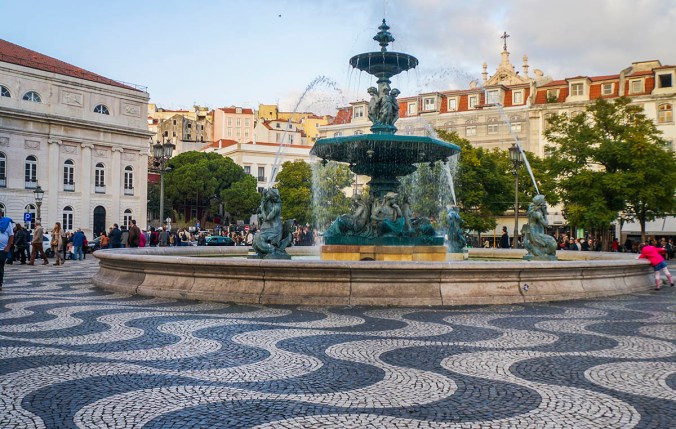
Why do I love Lisbon? Let me count the ways.
1. Poets and adventurers. On the free walking tour we took our first morning in Lisbon, I was struck by our tour guide’s description of the many statues we came across. What in any other city would be monuments to great generals or war heroes, in Lisbon were either dedicated to famous poets or explorers. I think this alone sums up a lot of what makes this city a special place.
2. Tiles and trolleys. Lisbon’s aesthetic is one of a kind. Most buildings are intricately detailed with complex, North African-style geometric tiles — all of which were hand-painted! It’s almost impossible to imagine a modern society putting that kind of time and energy into beautifying any old pharmacy, apartment building or goverment office. Throw in the steep inclines (it’s known as the City of Seven Hills), views of the bay, adorable old-timey trolleys, wrought-iron balconies, and pastel color scheme, and you’ve got something akin to the gorgeous love-child of New Orleans, San Francisco and Marrakesh.


3. Art and energy. We spent most of our time in Lisbon in the most heavily tourist-laden district; our hostel was right off the main drag leading down to Praça Do Comercio (Commerce Square), a pedestrian-only avenue where you can barely move for the throngs of visitors and the locals hoping to make money off of them. These types of places tend to be tacky and aggravating in most other major cities (Madrid included), full of obnoxious, pushy vendors selling cheap crap or dressed as Disney characters to try and lure little children into paying for a photograph. In Lisbon, however, it seemed to bring out the best (or at least, better) of the populace. We saw so many incredible musicians, dancers, and street performers to whom I was happy to shell out my money.


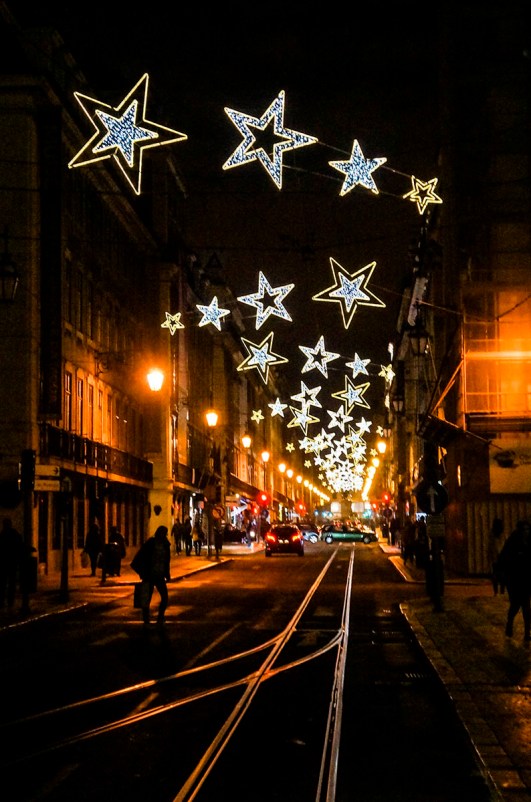
Also on the subject of Lisbon’s energy, I’d be remiss not to mention the nonstop nightlife — the everpresent live music and all-night-long partying, which spilled out boisterously onto the streets, was another thing that brought New Orleans to mind in a big way.
4. Melancholy and longing. Yet despite the raging parties and thriving arts scenes, there’s another side to Lisbon, too. When we pressed our friend Ryan (one of the Lisbon super-fans we know) to tell us more about why he loved this city, he kept coming back to the word melancholy. “It’s just got this vibe to it,” he said. “The people are nice, and they’re friendly, but there’s something a little bit sad about them, too.” While this might not seem like much of a draw, I saw what he meant almost immediately. There’s a bittersweetness written right into the fabric of Portuguese culture, and there’s no better example of it than fado, the country’s traditional music style.

We caught a live fado performance on my birthday and it was like nothing I’ve ever experienced. I don’t know if I even have the vocabulary to describe fado, so check out this Youtube video. Especially experienced live, the vocals possess such a raw and beautiful sadness that cuts right down to your soul. Our tour guide explained that fado originated from the mournful wailings of women who would go down to the port to say goodbye to their seafaring sons and husbands sailing off into the great unknown, many never to return. I felt that these emotional pulls — the desire to set forth and explore, balanced with the sadness of those you must leave behind — were evident in many facets of Lisbon’s culture and personality. No wonder this place has so many poets!
**
Another major, major highlight of our trip was where we stayed: Home Hostel. It’s been named the best hostel in the world for a few years running, and I wouldn’t question that for a second. It’s the kind of place that becomes a destination all on its own, which can be both good and bad — we definitely would have seen more of Lisbon if we hadn’t been having such a great time meeting people and hanging out in our hostel.
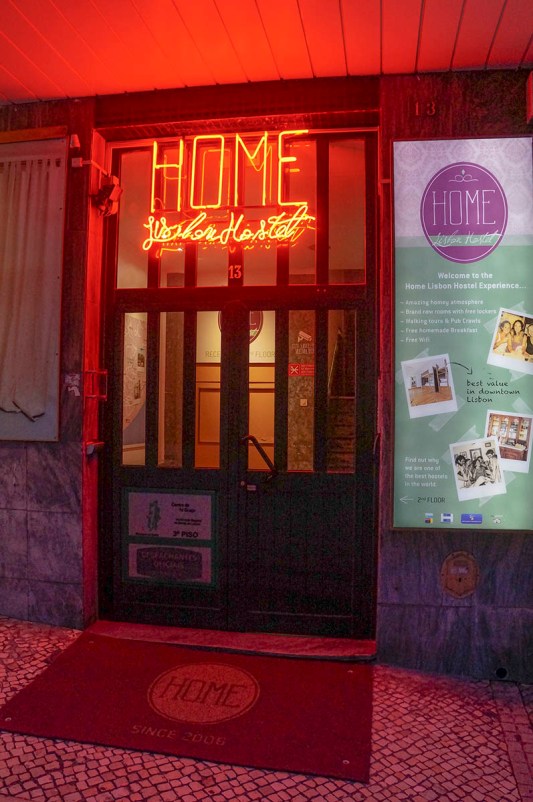
The place has an incredible community atmosphere, with a superbly furnished living room, a 24-hour bar, well-equipped kitchen and patio all constantly full of friendly travelers from all over the globe. They organize events like a nightly pub crawl and day trips to the nearby village of Sintra and are quick to offer advice on anything you could possibly need in the city. And then there’s Mamma.
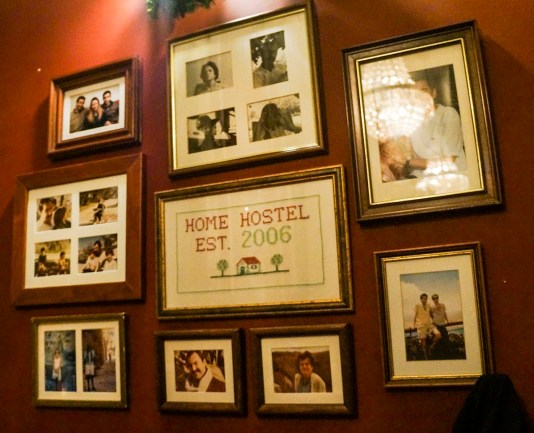
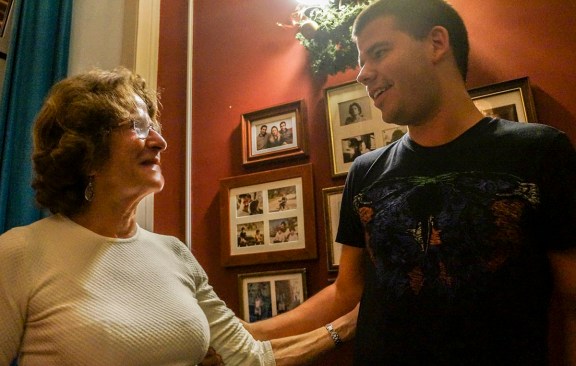
Based on its super welcoming, comforting vibe, it came as no surprise when I learned that the hostel is a family affair. The owner employs his mother, known to every employee and guest alike as Mamma, to cook a meal for the hostel every night. Don’t miss out on this if you ever stay here! For 10 euros, you’ll get an incredible multi-course, delicious home-cooked meal, practically unlimited beer and wine, and the company of Mamma herself, who keeps a velvet chair positioned in her spot at the head of the table every night.


We signed up for Mamma’s dinner our third night in the hostel, and we were pretty intimidated when we realized we’d be seated next to the lady herself after hearing so much about her. I was picturing a big, boisterous lady to match her revered reputation, but when she appeared, Mamma was tiny and soft-spoken. After serving bowls of fabulous zucchini soup and platters of salad, ribs and rice, she quietly took a seat next to us at the head of the table.
We quickly fell into conversation, and she of course turned out to be the most interesting person in the world. Sweet, sharp and very well-traveled, she now loves having dinner with the hostel guests every night and hosting foreign exchange students because in her words, it lets her travel in her mind even when she can’t leave Lisbon.

The previous night had been my birthday as well as Alex’s, a fellow hostel guest from Brazil. We’d already had dinner plans to go see fado, but he’d stayed in the hostel for Mamma’s dinner. I so wish I did too — apparently Mamma baked him a big cake and got everyone to join in the celebration. The night that we were at dinner, he came back again, and raised an emotional toast to thank Mamma for making his birthday feel so special even though he was so far from home.
Now, just a quick overview of the actual tourist things we did — I’ll go into more detail in another post, after we return to Lisbon and get to do some more!
Free walking tour with Sandeman’s Europe. This was a great way for us to start off our trip, laying a foundation of knowledge about Portugal’s history to put everything else in context. We saw some absolutely gorgeous sights, too — though due to a “You have the camera, right?” “I thought YOU had it” situation, I unfortunately only have a handful of iPhone photos to share.


Sunset on the bay. From our years on America’s east coast, we’re accustomed to being near the ocean, and living in a desert climate in the heart of Spain makes us yearn a bit for the sea. Haider in particular was prettyyyy excited by his first glimpse of open water…
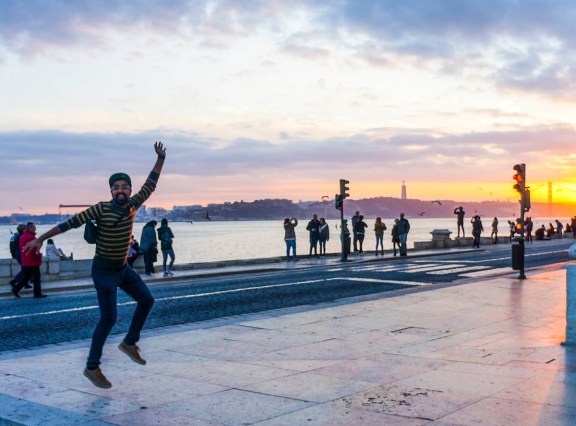
Featuring views of a suspension bridge nearly identical to the Golden Gate Bridge and a Jesus Christ monument inspired by Rio de Janeiro’s Christ the Redeemer statue (remember what I said about Lisbon being the love child of all the most beautiful cities in the world?), the bay next to the Praça Do Comercio is a wonderful place to watch the sunset.


Live fado and petiscos at La Bela Tasca. On our friend Ryan’s advice, we left the tourist-mobbed Rossio district behind for dinner and had a really authentic, one of a kind experience in Alfama (the medieval district). A spread of “petiscos” — Portuguese tapas — is already arranged on your table when you arrive, and you just tell the waitress to take away what you don’t want and request anything you’d like instead. Most are served cold, but you do have the option of ordering blood sausage which is delivered to your table in flames; you let it burn for about 10 minutes and then the waitress comes back to extinguish it for you to eat.


The restaurant also hosts live fado music, like many in Alfama on a Saturday night. Not only is the music unlike much else that I’ve heard, but the way it’s performed also felt very odd to us. The musicians (two guitar players and one singer of several that alternate between sets) set up in the narrow entrance between the restaurant’s two small rooms, so they are basically wedged in between tables of diners — they were right behind our table.
Absolute respect and absolute silence is demanded while the music is in session. If anyone attempts so much as a whisper while the fado is playing, you’ll be mercilessly shushed by one of the waitstaff. A Polish guy sitting at our table snuck out for a cigarette during one of the sets and the disgusted looks he received from everyone else in the restaurant made me want to crawl in a hole on his behalf. We actually caught the two Portuguese couples at the table next to us holding an extended text-message conversation with each other to maintain silence.
Each fado set only lasts about 20 minutes, with around 40 minutes in between to give the diners a chance to chat. The hushed, reverent atmosphere made it easy to get lost in the music. The performance is all acoustic, with the singer swiveling back and forth between the two rooms to project the melody directly to each set of listeners, often locking eyes with members of the crowd. All in all, it was fascinating, intimate experience.
Time Out Market. This bustling indoor food market is packed with stands offering every imaginable type of cuisine. It’s a little overpriced, but I recommend it for the opportunity to sample many of Portugal’s signature dishes, like bacalhau a bras (a heap of scrambled eggs, potatoes and salty cod fish).


Christmas markets. Many of Lisbon’s plazas get their own markets during the Christmas season, and we were thoroughly impressed by the one we visited. Everything for sale was gorgeously hand-crafted, unique and affordable. I couldn’t resist buying a few things for my family (now I have to figure out how to ship them) and of course, myself. All of the vendors were also really interesting to talk to, so we got to learn a lot of the process and history behind each traditional craft, all while sipping on deliciously fresh cups of sangria. (Glühwein, our beloved mulled wine beverage from Berlin, was also available but the 70-degree weather didn’t quite put us in the mood for it).

Trolley 28. All of the trolley lines are used as legitimate means of transportation around the city, but Line 28 probably draws just as many tourists as it does commuters. This is because it crosses through some of Lisbon’s most beautiful areas and affords dramatic views thanks to the steep inclines it cranks up. We took it on a rainy morning just a few hours before leaving Lisbon.


Botanical Garden of Lisbon University. Trolley 28 dropped us off just outside this park and we had a bit of time left to kill, so we took a stroll. Holy moley, this place is gorgeous! Packed with exotic plants and cactuses, dotted with demure statues and little ponds full of ducks and fish, it’s a beautiful place to wander around for a bit.


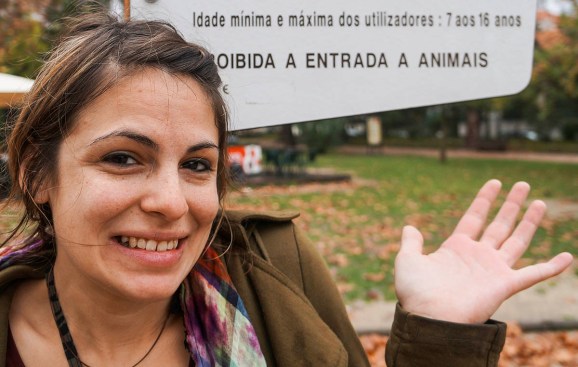
It also has the best playground equipment ever. When we came upon this structure, we couldn’t resist climbing up on it. The wires are taught yet perfectly springy, so you can easily scramble all around it or just hop up and down on one of the ropes like a trampoline.


Cavorting around and giggling like a couple of children felt like the perfect end to our weekend in this exhilarating city. Although when we finally climbed down and noticed the sign that lists the maximum age at 16… well, that did crush my newly 28 year old spirit a little.
It’s okay, Lisbon. Until next time!
 find me in the air