: as far as the eye can see.
We were cruising through the hilly countryside just north of Jaen, en route from Madrid to Granada, and I simply couldn’t wrap my head around how many olive trees covered the surrounding lands. From horizon to horizon — literally as far as the eye could see, nothing but olive trees.
It was the first taste of the beauty we were about to experience throughout our two weeks in Andalucía, the geographically diverse and culturally rich southernmost region of Spain.
We drove through endless olive groves. We climbed to the tops of mountains. We breathed at the bottom of the sea. We witnessed the raw passion of flamenco dancing. We gorged ourselves on tapas. We saw the architectural wonders of both the Islamic Moorish empire and the Catholics who conquered them — and the eventual intersection of the two.
It was a pretty cool trip, guys!
I’ll be breaking it down into a couple of posts and offering some tips for extended travel on a budget based on what we learned from this experience.
First stop: Granada.
We reached Granada the day before Christmas Eve and spent two and a half days in the city. I have to say, Granada is one of the most unique places I’ve ever been to. In addition to its world-famous better-be-on-your-bucket-list Alhambra, the city boasts fantastic views, an exotic maze of medieval streets, incredible food and a couple of truly one of a kind neighborhoods.
Some of the highlights included:
The Alhambra.
Obviously! The Alhambra is one of those places that absolutely lives up to the hype — and then some. It’s a sprawling complex that actually features three main attractions, the Nasrid Palace, the Alcazaba, and the Generalife.
You’ll most likely start your visit in the 14th century Nasrid Palace, a complex and breathtaking feast for the eyes.
The Islamic style incorporates no images, so instead, the artists turned to intricate geometric designs for some aesthetic flair. The rooms are covered wall to wall and floor to ceiling with these interlinking tiled motifs (called arabesques).
Many also subtly incorporated Arabic calligraphy, the elegant looping script flowing seamlessly into the rest of the design.
The Nasrid Palace’s courtyards and gardens are similarly stunning, featuring fragrant orange trees, meticulously sculpted hedges, palm trees, reflecting pools, and fountains — little fountains everywhere. The gently burbling fountains and streams of water that trickled down indentations in the floor created a supremely peaceful atmosphere.
The Alcazaba, the original 9th century structure, was built as a defensive citadel and definitely lacks the ornate charm of the palace. But it’s still very cool to climb around its rough-hewn stone battlements, or, say, pretend you’re Arya Stark chasing cats around the Red Keep.
It offers some of the best views of the town below, too.
The back side also features a beautiful garden full of more gorgeous fountains and orange trees.
We ended our visit with the Generalife (note that it does not, as I first assumed, take its name from a corporate sponsor; despite sounding way too much like an insurance company, Generalife has been its name since the 13th century and actually means “Architect’s Garden”). The villa and its fantastic Moorish gardens were wonderful to wander around, taking in more Islamic design notes, intricately planned geometric landscaping and fabulous little fountains. More digestible in scale than the Nasrid Palace, the Generalife ended up being our favorite part of the Alhambra.
A few tips for your visit to the Alhambra:
- Buy your tickets EARLY! We went online to purchase ours about two weeks before our trip, and the regular 15 euro passes were already sold out. Not wanting to risk missing out on it altogether, we bought Granada City Passes that include entrance to the Alhambra for twice the price. If you don’t have tickets ahead of time, you can also go and wait in line, but entrance isn’t guaranteed and you will likely have to go very early and wait for a long time (two girls at our hostel showed up in the late afternoon and said they only waited about ten minutes, but I’d imagine that had something to do with it being the off season and a holiday).
- Plan to spend the better part of the day there, and be prepared. Wear comfortable shoes and have plenty to eat before you go! I’d had breakfast at the hostel but still found myself starving halfway through our visit.
- If possible, visit in the spring. Though they were still beautiful and the palm fronds and orange trees lend a tropical feel any time of year, much of the gardens’ foliage was dried up and brown, and few flowers were blooming. It’d be nice to return when everything is lush and green. Granada gets very hot in the summer, so I imagine a visit in the springtime would be perfect.
Sunset from the miradors.
Andalucía takes its “miradors” (scenic overlooks) very seriously. There’s no shortage of gorgeous vistas in this hilly country, and every town makes sure the best ones are well-marked with street signage and maps. Every night that we spent in Granada, we watched the sunset from a different mirador.
Mirador de San Nicolas is the most popular, likely thanks to its relative accessibility (you’ll be climbing up streets that feel juuuust shy of being literally vertical, but it’s only about a 15 minute walk from the center of town) and level view of the Alhambra, which is beautifully lit up after twilight falls.
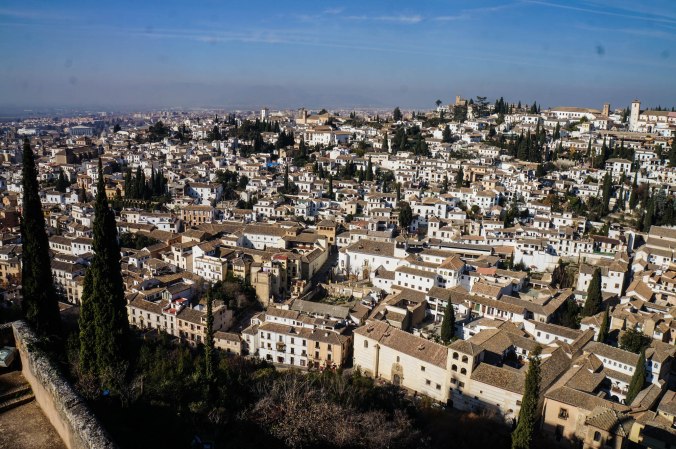
But the best one is definitely Mirador San Miguel. It’s one of the highest points in Granada, giving you a gorgeous view of the entire city, as well as the Alhambra from above.
Watching the sunset from San Miguel is the perfect way to top off a day spent in…
The Sacromonte.
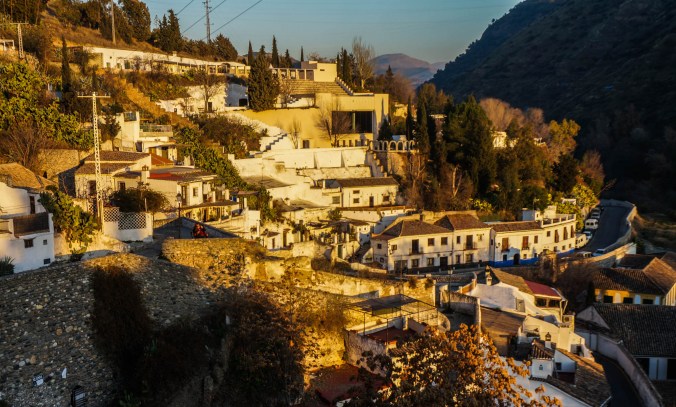
The Sacromonte neighborhood of Granada is like nothing else I’ve ever seen. It’s nestled into the steep hillsides that give way to the mountainous countryside outside the city proper, giving it a particularly unique layout.
There are one or two paved main roads that take you into the neighborhood, but to access much of it, you’ll have to trek up tiny staircases built into the hills or scramble up little pathways that wind their way, seemingly at random, between the scattered houses. It’s often impossible to tell whether you’re walking on private property or not.
In fact, it’s difficult to tell at first what even constitutes someone’s home. The majority of dwellings in the Sacromonte are actually caves, originally carved out from the earth by the Roma (gypsies). The nicer ones are built out from the side of the hill a bit and enclosed within a gated terrace. Many of the caves in the main part of Sacromonte are bars and restaurants, and it’s a popular place to go for flamenco shows.
After exploring on our own for a bit, we ran into a walking tour that several other people we’d met were on. They invited us to tag along with them, which was lucky because they were heading straight off the beaten path, to places we’d never have found on our own. We left any semblance of a road behind and struck out on a dirt path leading high up the hill.
This took us to an area populated with a different kind of cave dweller. Lacking the whitewashed facades and nicely decorated terraces of the homes below, these abodes amounted to little more than an improvised door covering an opening in the earth, though patio chairs and the odd 4×4 parked outside made it clear that people lived here. Apparently, most of the residents in this area are semi-nomadic squatters living here for a short while rent-free. They plant gardens for sustenance and use electricity from solar panels.
I felt odd tramping around their homes and gawking, but this part of our trip was utterly fascinating nonetheless. Despite the remote, primitive feel, this extraordinary community is located within the limits of a major city in a first-world country.
I would have loved to learn more about their lifestyle, but I didn’t get to meet any of the residents and didn’t feel right taking too many pictures or straying from the path. However, I did find
this fantastic photo essay — check it out if you’re curious about Granada’s cave community!
The Albaicin.
After watching the sun set at the highest point of the Sacromonte, we made our way back down the hill toward the main city. This route led us straight through the Albaicin (also spelled Albayzin), Granada’s medieval neighborhood. Nearly as steep as the Sacromonte, the Albaicin is a maze of tiny crisscrossing cobblestone streets.
We really enjoyed just walking around this neighborhood after dark, stopping to admire the unique décor of the many bars and other establishments.
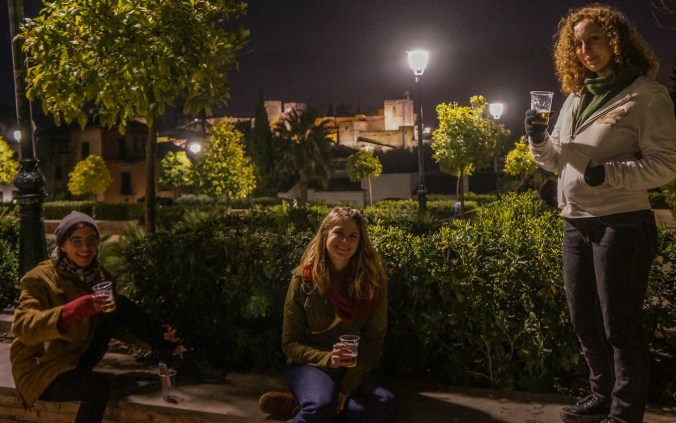
Eventually, we decided to get some take-out beer (litros of one of Andalucia’s regional favorites, called Alhambra) and sit in the park. It was me, Haider and two new friends from our hostel that we’d spent the day exploring with. We put on music, chatted, and watched some badass young Spaniards slacklining and practicing parkour. And of course, we raised a toast to the Alhambra with our cups of Alhambra!
Tips:
- Do just what we did: catch the sunset at a mirador and then take your time to meander back through the Albaicin. Our guide book recommended a particular route to see the prettiest parts of the neighborhood, but we found it far too confusing to follow the tiny, barely-marked streets with any sense of purpose. Just pick a direction and turn on whatever street looks the most charming.
- Though there’s plenty of great little spots to stop and take a break, we loved the view of the Alhambra from Placeta Cristo Azucenas. Around the corner on Camino Nuevo de San Nicolas, you’ll find a bar with take-out Alhambra litros that may or may not have a very cute dog for you to pet.
Tapas.
I quibble with the common claim that Granada is the only place in Spain that still does free tapas — there’s plenty of bars in Madrid that serve them as well — but it’s definitely more common here, and they’re quite good! Of course, you still have to buy a drink for each tapa (or you can choose to buy tapas sin bebida), but at around 2 euros for a beer or glass of wine, it’s an inexpensive way to have a fun, delicious meal. We found that three tapas each was plenty to satisfy our large American appetites, so we spent 6 euros or less each time we went out.
It’s also nice that in Granada, they generally let you choose your tapa from a menu after ordering your drink; in Madrid, you’ll usually just be handed a plate of whatever they choose for you.
Tips:
- Poë (Calle Verónica de la Magdelena, 40) was far and away the best! I liked that it wasn’t just traditional Spanish food (if you go out for tapas in Spain a lot, you’ll likely get prettyyyy sick of patatas bravas, ali oli, and the endless incarnations of jamon), but more international flavors like Thai chicken curry and pork and pineapple skewers. Between the two of us, we tried everything on the menu and loved it all.
- Calle Elvira: I unfortunately don’t remember the names of the other places we went to, but they were both on this street. It’s packed with tapas bars as well as neat little shops, so I recommend taking a stroll here for eating, drinking and shopping.
Cathedrals.
To be honest, I find art and architecture from the Moors so much more appealing than anything from the Catholic period that supplanted them. Of course, Catholicism is still the presiding religious institution in modern-day Spain, whereas visiting a Moorish structure like the Alhambra gives you a very real sense of walking into a lost piece of the past.
Lacking any personal connection to the Christian imagery or the thrill of experiencing something new, I can only gaze upon so many suffering Christ paintings before I need to move on. But I definitely do appreciate the majestic architecture and incredible artistry of the 15th century Granada Cathedral.
It’s worth a visit, but if you’re like me and have a limited span of appreciation for fat cherubs and sad disciples, I suggest skipping the cathedral and visiting the Capilla Real (Royal Chapel) next door instead. It possesses the same gorgeous architecture as the cathedral, but also holds the graves of Ferdinand and Isabella. Standing next to their final resting place definitely gave me a moment of pause while I considered the weight of their actions on the course of world history and shaping the country of Spain. No cameras allowed though, sorry!
***
The first stop on our Andalucia tour, Granada set the bar pretty high for the rest of our journey — so much so that I intended to make this post about our entire trip, and ended up having to devote it all to this one city (stay tuned for the rest of the trip and more travel tips). The city is often referred to as “the pearl of Andalucia,” and I’d have to agree that it’s a really special place. I can’t wait to return in the spring.








 find me in the air