Hola chicos!
Today is October 26th, which means we’ve been here in Spain for just over a month.


The past four weeks have been incredibly exciting and also mind-numbingly mundane at the same time. Sure, we are starting our lives over in a whole new city, country, continent and culture — which is thrilling! But the day to day reality of what that looks like is: finding an apartment. Obtaining a transport card. Opening a bank account. Applying for a residency card. Choosing a cell phone plan. Setting up WiFi. Purchasing a trash can. Doing a month’s worth of laundry. Etc.
I will go into more detail about some of those little adventures in future posts, because I found it really helpful to read about other people’s experiences before we arrived. But for now, I’ll start with a general overview of what we’ve been doing and observing and feeling.
Language.
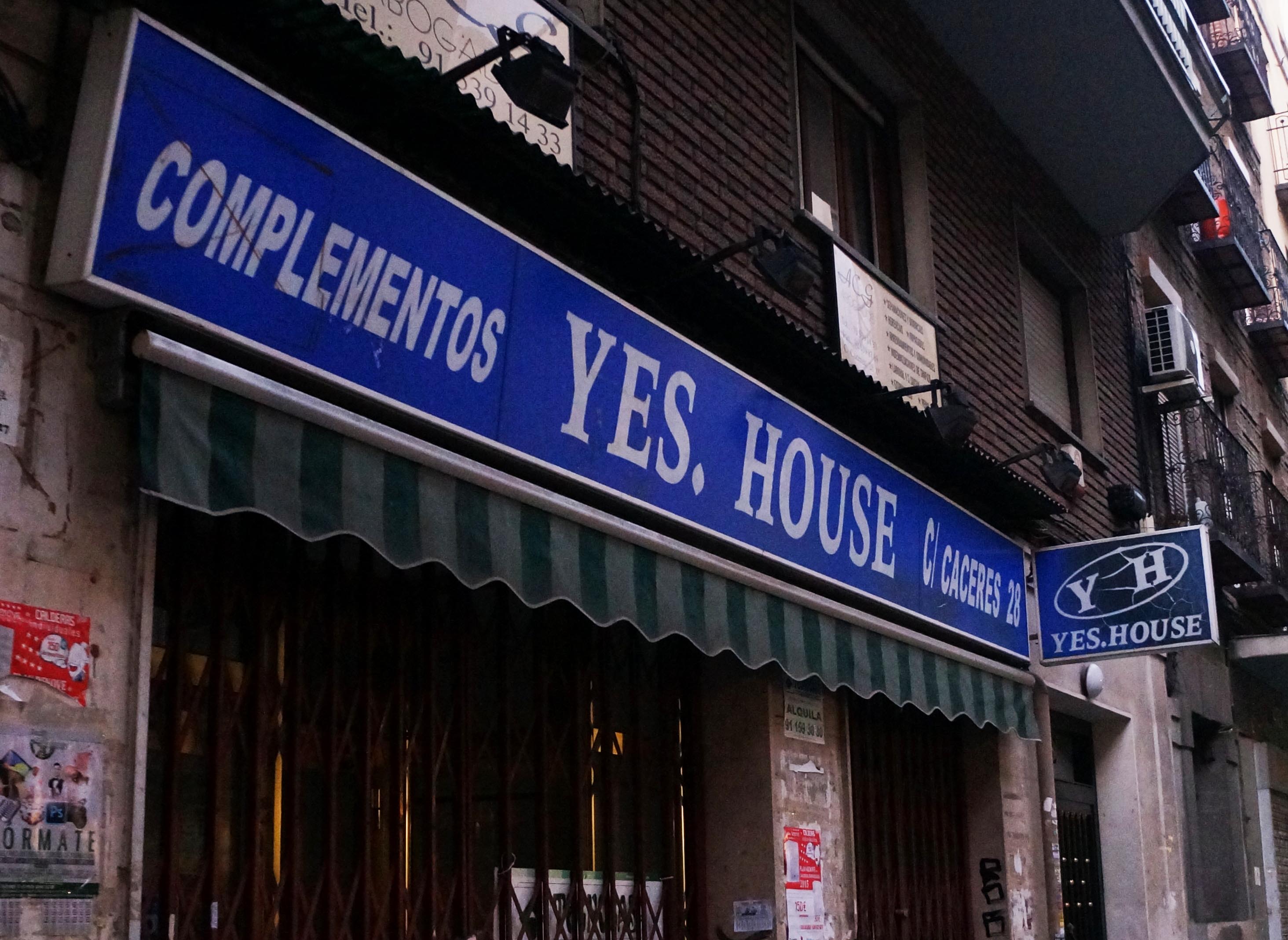
House, yes. English, no.
English is everywhere, but no one speaks it. We were reassured many times that our lack of Spanish wouldn’t be a problem in Madrid, because here in this international city, everyone speaks English. At first this would appear to be the case based on the amount of English written on storefront signs, t-shirts, advertisements, etc. But make no mistake: this is a total lie.
Outside of the city center areas that cater exclusively to tourists, almost no one speaks English. Which makes sense — that’s why we’re here! Thanks to the public schools’ new bilingual programs in which we are employed, the next generation will have a much higher level of English than what currently exists in the country. But in the meantime, it’s pretty rare to encounter anyone who speaks it with any degree of fluency.
This means that we struggle through most interactions and end up looking like colossal dummies pretty much all of the time. For example: our very first time attempting to communicate with Spaniards, when we tried to go out for dinner on our first night in Madrid and realized with dismay that “cerveza” isn’t actually sufficient vocabulary to order a beer. (We’ve since learned that you order your draft by the size and shape of the glass, so depending on the bar, you must request a caña, doble, tercio, jarra, tubo or botella.)
After ordering our drinks came the struggle with the menu. Haider selected the only option with a word or two that he recognized (“Something something chicken curry”). After our difficulty getting drinks, our first waitress had sent over a guy that did speak a bit of English to take our food order, and he gave Haider a pitying look. “Do you know what it means?”
It turned out to be chicken curry meatballs, which was how we learned our first new Spanish word: albondigas. And I made fun of Haider for the rest of the night for getting called out on straight up having no idea what he was ordering.
Our next trial came the following morning when we visited a shop to get some documents printed out for our program orientation. Not without difficulty, we managed to convey what we needed, but when it came time to pay, we misheard the clerk and handed him 15 euros instead of 50 cents. Rather than politely correcting us, the employee stared at us dumbfounded for a few seconds, then burst into riotous laughter. He called his boss over and got the attention of the other customers in the shop so that everyone could literally point and laugh at us. “Fifteen euros!” he kept exclaiming in Spanish, along with other things we couldn’t understand but were undoubtedly along the lines of “These idiot Americans gave me FIFTEEN EUROS for a few pieces of paper! How fucking dumb can you be?”
Luckily, we’re good sports and we don’t mind laughing at ourselves — a trait that has come in handy again and again. Besides, I’m glad that the guy had the decency to mock us to our faces rather than smile politely and pocket our 15 euros.
In the first few days it was easy to feel daunted. We still needed an apartment, a bank account, cell phone plans, and a thousand other things requiring detailed discussions… and we could barely even order a beer.
Luckily, we had a LOT of help from our amazing AirBnB hosts. And we were surprised how well you can get by with a little patience and a lot of Google Translate. A month into our time here in Madrid, we’ve successfully acquired an apartment and all the necessities for daily life, and we’re picking up Spanish pretty quickly. I’ve started taking lessons twice a week, but it’s those little day to day interactions that have been the most helpful.
Food and drink culture.
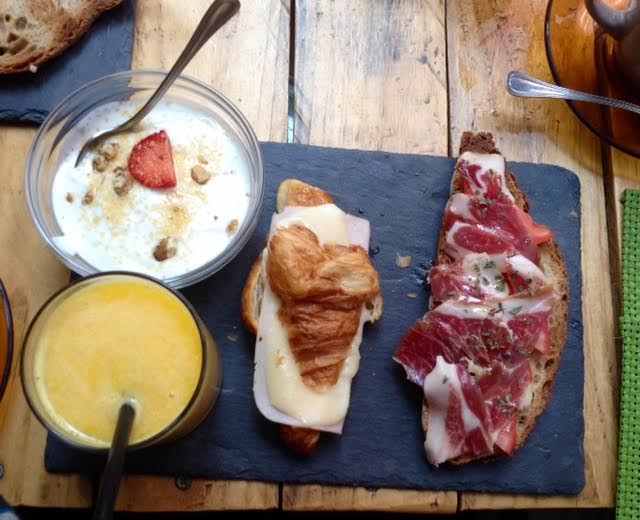
This definitely deserves its own post, which I’ll make at some point, but this has been one of our very favorite things about life in Spain so far. Spanish food is delicious and eating out is incredibly inexpensive — often free! Go to any bar in Madrid and order a caña (half-sized glass of draft beer) and you’ll receive a complimentary plate of food. Sometimes it’s just a dish of potato chips or olives, but most places will give you a home-cooked tapa like croquettes, potato salad, Spanish omelette, mini sandwiches, toasted bread with jamon, etc. Last night we planned to cook dinner at home, but we stopped at a local bar to use the WiFi and have a beer first. We each had a doble (just shy of a pint) and a cana, and by the time we finished all the plates of free tapas, we were far too full for dinner — and had only spent 3 euros each. Spain: where you can literally budget for nothing but alcohol and survive (and probably eat better than you do in your home country).

A bottle of Asturian cider with complementary tapa.
So the surprising thing to us wasn’t how good Spanish food is, but how few exceptions there are to that rule, especially when the restaurants aren’t making any money off of it. The bar that we went to last night, for example? It’s a total dive. It’s dark and smoky inside, and there’s almost never any other patrons besides us using the WiFi, a couple of old abuelos chatting at a table, and a chain-smoking woman pouring her savings into the electronic gambling machines in the back corner. If this place were in America, they’d maybe serve a shitty burger with limp French fries out of the microwave. But this being Spain, the food is nothing short of incredible — and they’re so generous with their tapas that we’ve never even made it to the main course without already being completely stuffed.
Schedules.
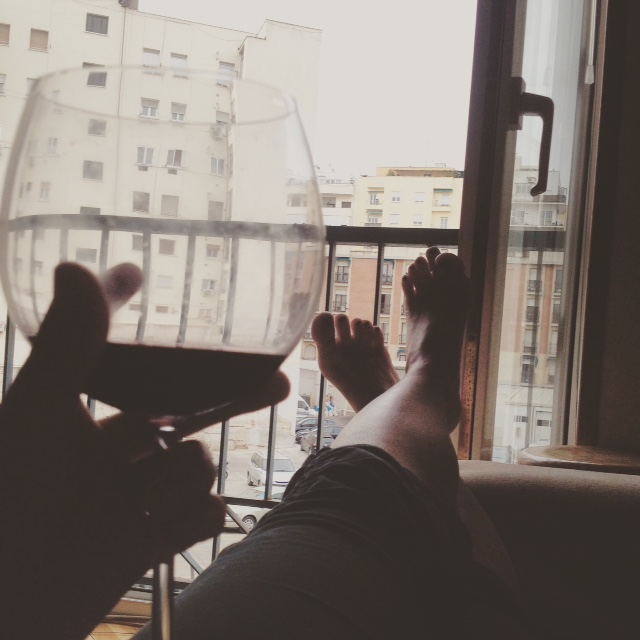
Living that siesta life.
The first moment that we knew we truly belonged in this country was during our orientation, when the speaker was giving us some advice on getting settled in Spain and stressed to us very strongly that we must be sure to always get to the bank “very early in the morning, like 10 or 11 am.”
We’ve also learned that it’s customary to greet one another with “buenas tardes” (good afternoon) until 8 or 9 pm — that’s when afternoon ends in the Spanish mentality.
Spaniards do everything later than Americans. They start their days late and stay up late (which on weekends often means well into the following day). You’ll be laughed at if you try to order dinner at a restaurant earlier than 9 pm. One time we left the bar to head home just after midnight, and found ourselves riding the train back at the same time as parent taking their young families home from dinner — we were calling it a night at the same time as actual babies.
And the siesta? Totally a thing. Everything closes down every day between 2 and 5 pm (with the exception of the bars). Though I knew I’d fit right in to the culture of sleeping in and staying up late, I worried a bit that the siesta would be frustrating. I’ve never been much of a nap-taker, and I thought I might get bored or annoyed with all productivity grinding to a halt every single afternoon.
But my God, it is actually the best. Every day I return from work in the middle of siesta time, kick off my shoes, open the balcony doors to let in some fresh air and settle on the couch with a book — sometimes along with a mid-day glass of wine. I rarely intend to fall asleep, but the absolute lack of guilt over doing nothing at all (there’s nothing you CAN do!) usually lulls me right into a nap. I’ve never slept so much or so well in my life. Long live the siesta.
Transportation.
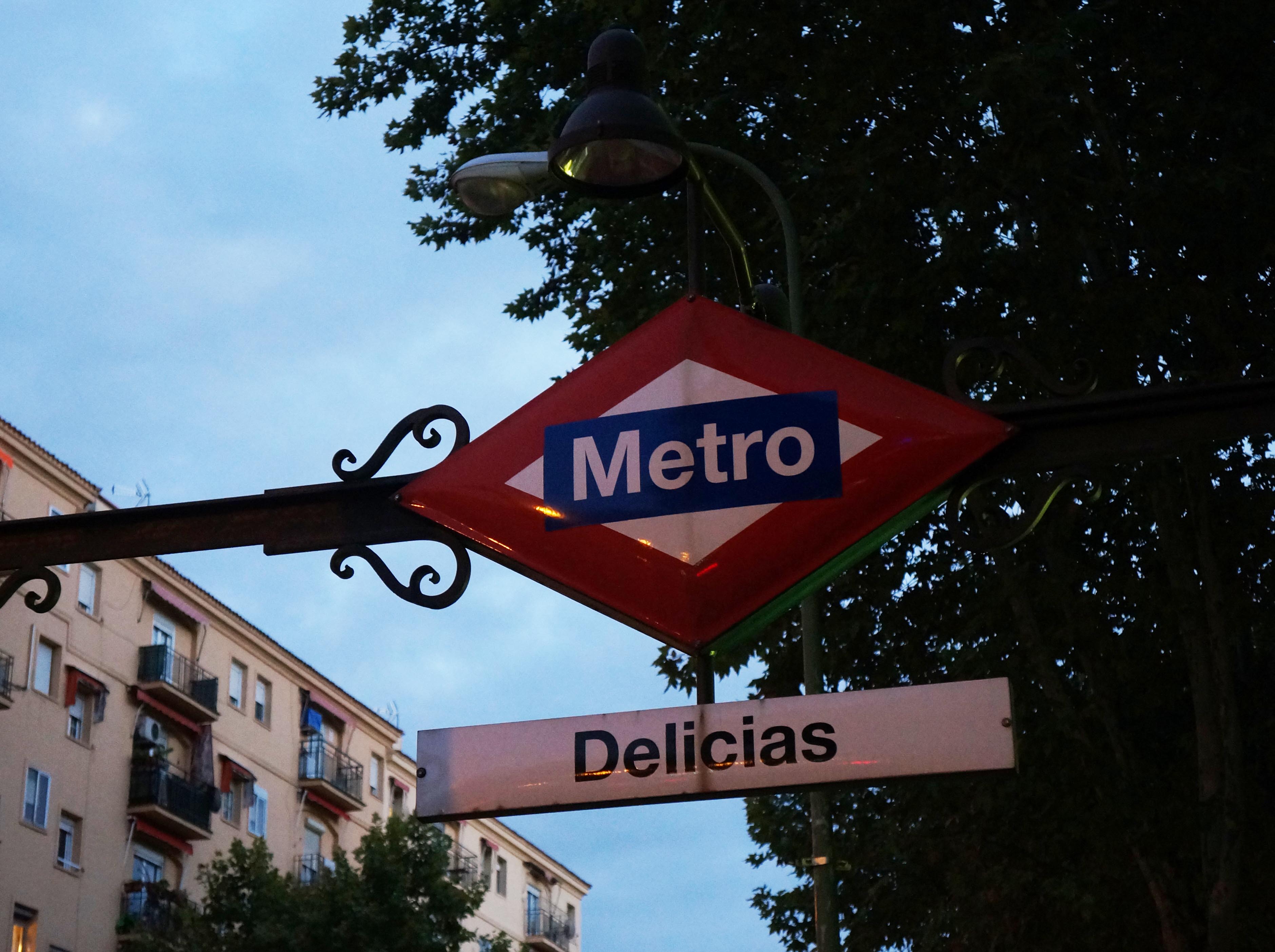
Our delicious metro stop.
Back in the States, I’ve owned a car ever since I was 17 years old. During my years in Philly, I was starting to really resent my dependence on my automobile. I had a long commute out to a suburb that was barely accessible by public transportation, so I had no choice but to spend upwards of two hours every day sitting in my car, spewing fossil fuels and wracking up the costs of gas, insurance and repairs.
So Spanish public transportation is a dream come true for me. In the last month alone I’ve used the metro at least as much as I used Philadelphia public transportation in the full four years that I lived there — probably much more! Our home in Philadelphia was about a 20 minute walk to the nearest train station. Walk that same amount of time here in Madrid, and you’ll pass at least 5 stops. Plus, Philadelphia’s El train bisects the city in two directions only. If your destination wasn’t located along Broad Street or Market Street, the train was basically useless to you. But in stark contrast, there’s no corner of this sprawling city further than a few minutes’ walk away from a metro station — and there are endless fleets of buses to fill in what few gaps are left.
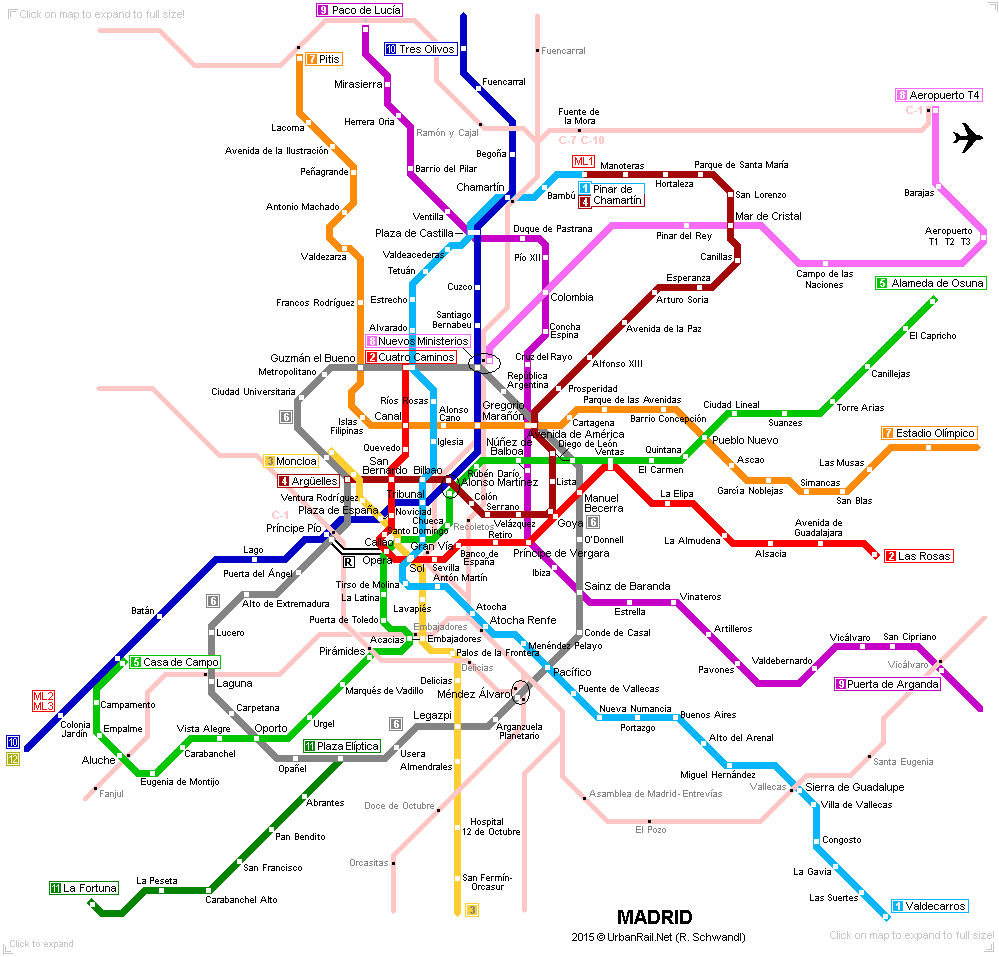
Map of Madrid’s Metro and regional rail lines from urbanrail.net
When the Metro is closed (1:30 – 6:00 am) or you fancy a stroll, the city is incredibly walkable as well. The utter lack of any kind of grid concept makes it a little difficult to navigate (streets generally stretch one or two blocks before ending or taking on a new name, so until you learn your way around you’re forced to stare at your Google Maps directions and retrace your steps a thousand times), but it’s endlessly fun to explore the winding cobblestone calles, taking in the funky street art of Lavapies, the crowds and street performers of Sol, the stately architecture of Gran Via and Salamanca, the fashionable passersby and unique boutiques of Chueca.

Street art in Lavapies.
The only bummer is that despite the incredible public transportation and walkability, it seems like everyone here has a car. Or a scooter or motorcycle, which whip around hairpin turns and whizz up steep cobblestone streets fearlessly. And the predominance of diesel engines, as well as lax or poorly enforced limits on car exhaust, contributes a lot of stinky pollution to the air here — one of the things I dislike the most about Madrid so far. I’m getting used to it, and I’ve learned to avoid walking on certain streets during rush hour, but it’s frustrating to me to see such a car dependency when it’s so easy to get by here without one.
The newest Madrileños.
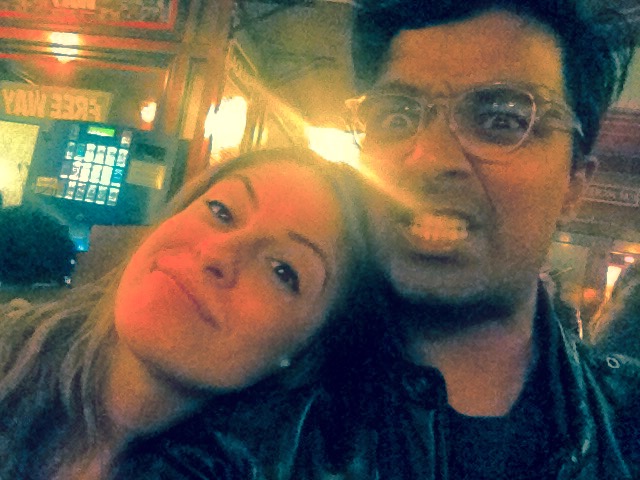
The dummies themselves. No hablo espanol.
That sufficiently scratches the surface of what we’ve been observing about our new surroundings. In terms of how we’ve been holding up, it’s been a confusing mix of emotions. Some days we feel elated and energized by our new city. Other times we feel frustrated and lonely. Often both in the same day or even hour. Gloomy weather or difficult students at work can make the difference between being overwhelmed with joy at my new city or asking myself “what the fuck am I even doing here?”
We left behind a large and loving friend circle in Philly, and it’s been tough to start over without them. It’s been a really long time since either of us has had a fresh start in a new place where we didn’t know anyone — let alone a place so far and foreign from home. And to be honest, it’s not easy. Unlike travelling, when you’re constantly distracted by new things and have nothing on your agenda but living each moment to the fullest, resettling and falling into a routine in a new place really serves to stir up all kinds of emotions, positive and negative.
Every veteran expat we’ve met has assured us that the first month is the hardest, and we don’t doubt that the next few months hold plenty of new friendships and adventures. Besides, leaving our comfort zone is exactly what we wanted out of this move, and whether or not Madrid ever fully feels like home to us, it’s an experience we’ll never regret.


Thank you for this blog. I am enjoying it immensely. Hey, forget cooking at home – sounds like as long as you order beer you can enjoy great free food.. Looking forward to the next chapter.
LikeLike
Thank you Gram, I’m so glad you are following and enjoying it. We miss you!
LikeLike