Our first month in Madrid, as I mentioned in my last post, was a little rough. While I tried to be as realistic as possible with my expectations, there’s really no way to know what it’s going to feel like to leave everything and everyone you love behind until you do it. Not having a place to live doesn’t help; nor does a rapidly diminishing bank account, or the reality of looking like a fool every time you attempt to speak to any other person for any reason.
Once we’d acquired all of the things necessary for life (except wifi – still working on that!), we fell into a routine that was, to be honest, just kind of dull. Not really having any friends yet or the money to always be out doing cool stuff, we spent a few weeks mostly just going back and forth from work to home to the cafe down the street. Hence the “what am I even doing here?” sort of days.
But those days started coming less frequently, and then suddenly they just stopped. A lot of things started falling into place at once — growing more comfortable with the language, beginning to have meaningful interactions with other humans, getting our first paychecks and picking up more work, one wonderful week of fostering two super-cute kittens, etc. But I think possibly the biggest part of this turning point was the two cool day trips we took in the last month.
Yep – to learn to love Madrid, we had to get the fuck out of it.
Toledo
Toledo is a small city located 70 kilometers south of Madrid. A Roman colony all the way back in BC times, it was the capitol of Spain for a stint and has been named a UNESCO World Heritage Site in its entirety.
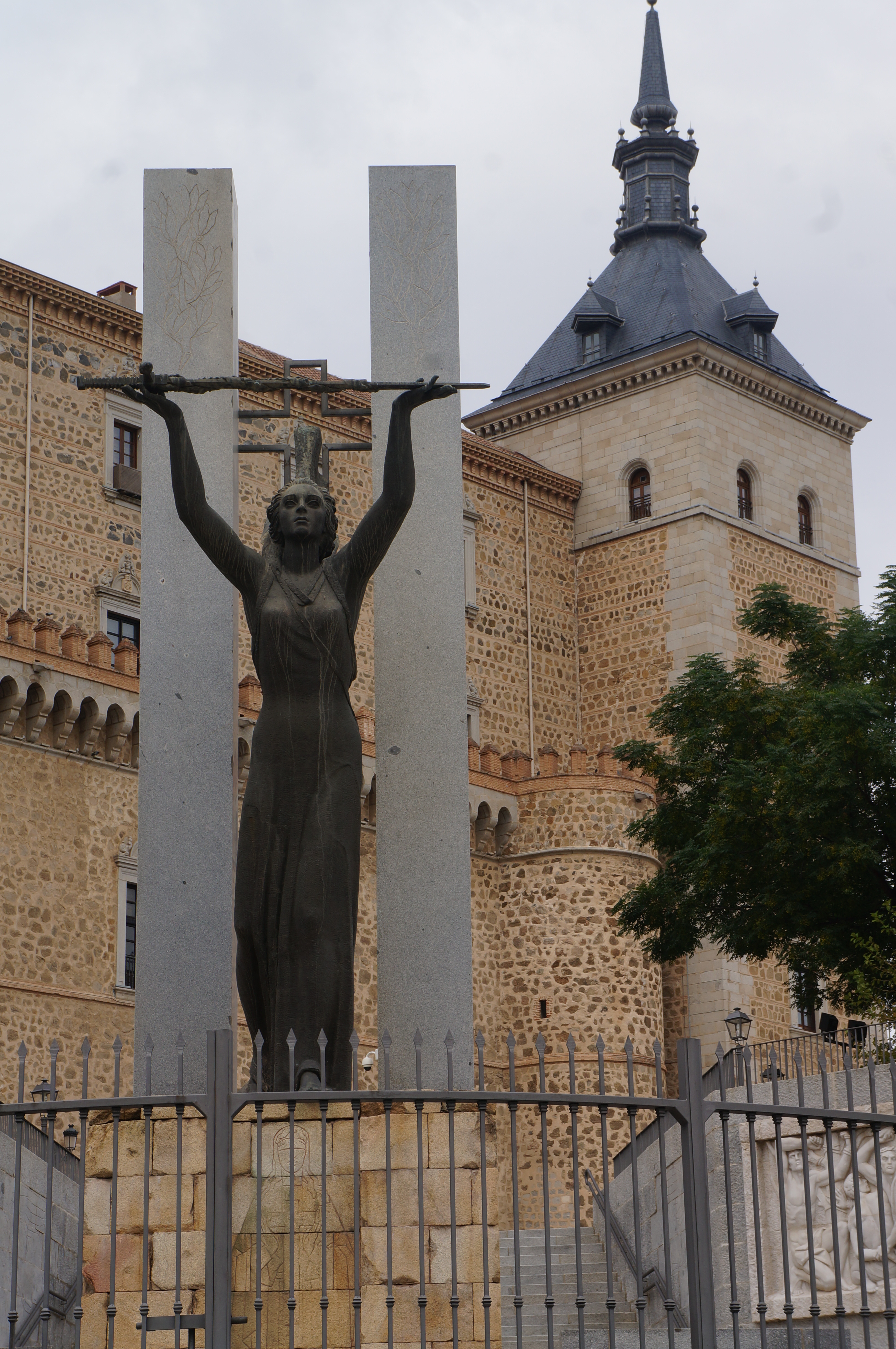
It’s one of those locations where the history is palpable — like the whole place has been frozen in time. The first thing that greets you when you approach the city from the bus station is the ruins of a monastery from the 12th century. Next, you pass the medieval fortifying walls before arriving at the escalators that take you into Toledo proper (granted, this glaringly anachronistic convenience takes you out of the moment a bit, but climbing that hill without them would be hella steep).
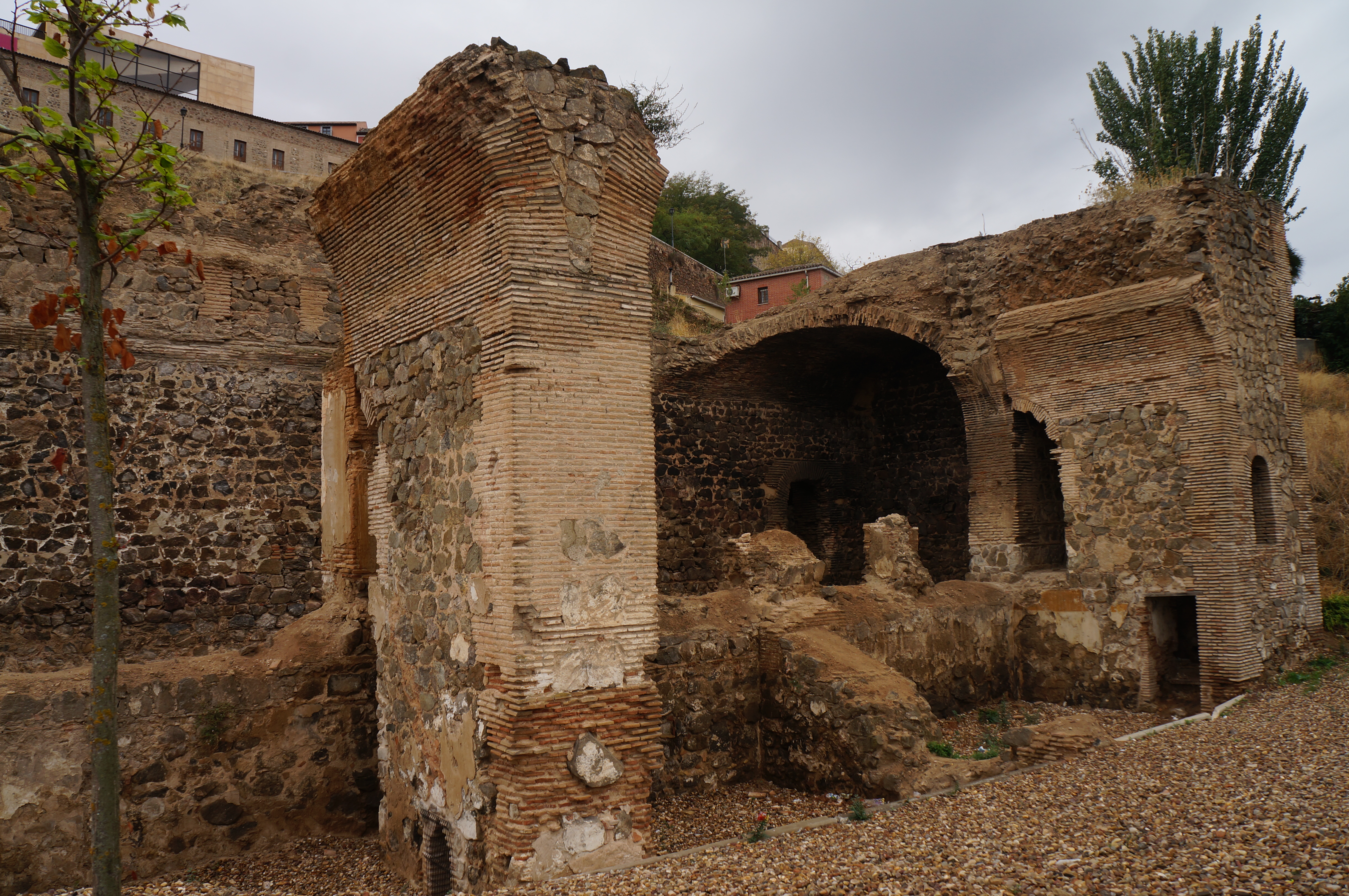
12th century monastery.
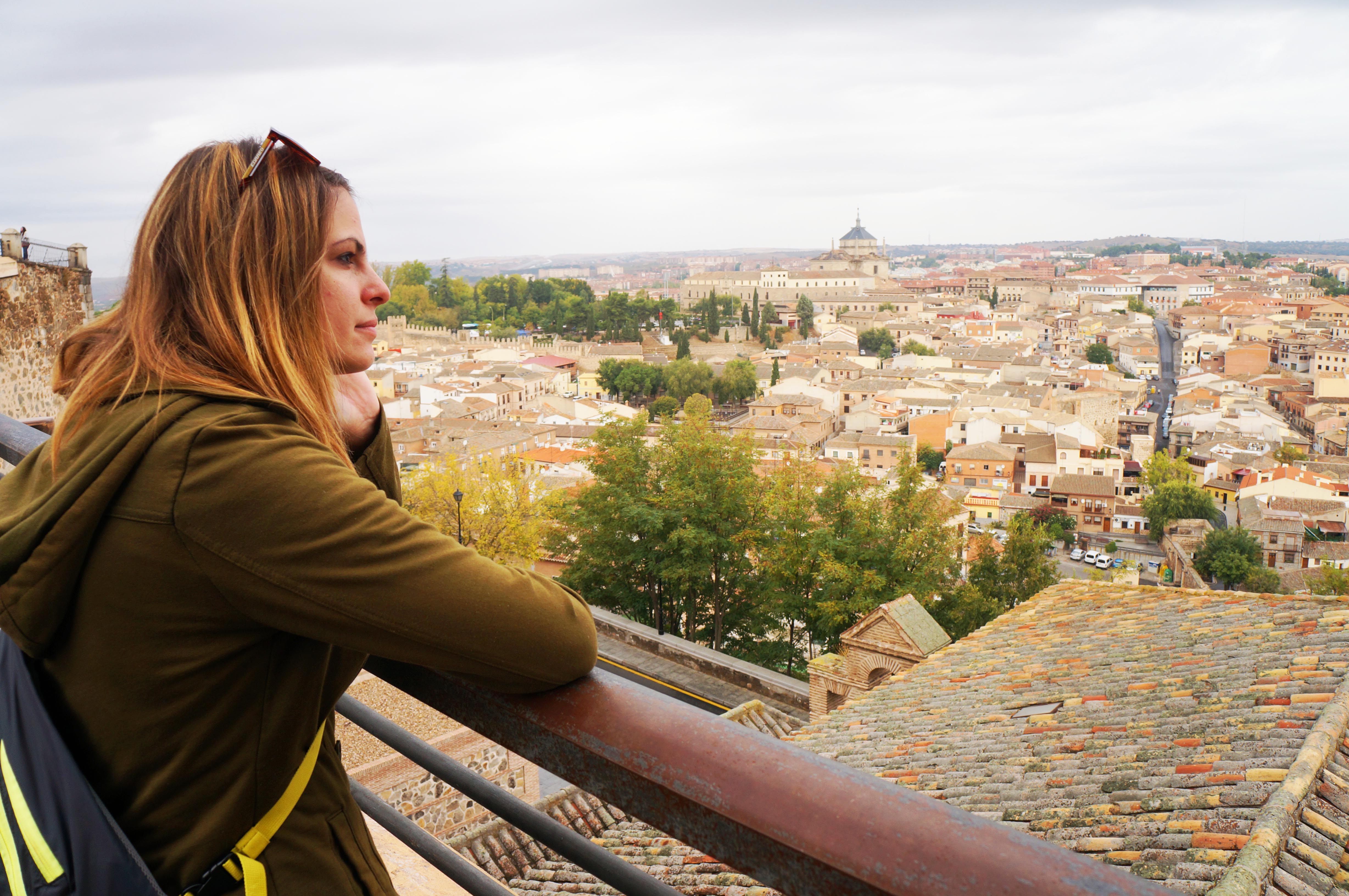
Atop that super-steep hill.
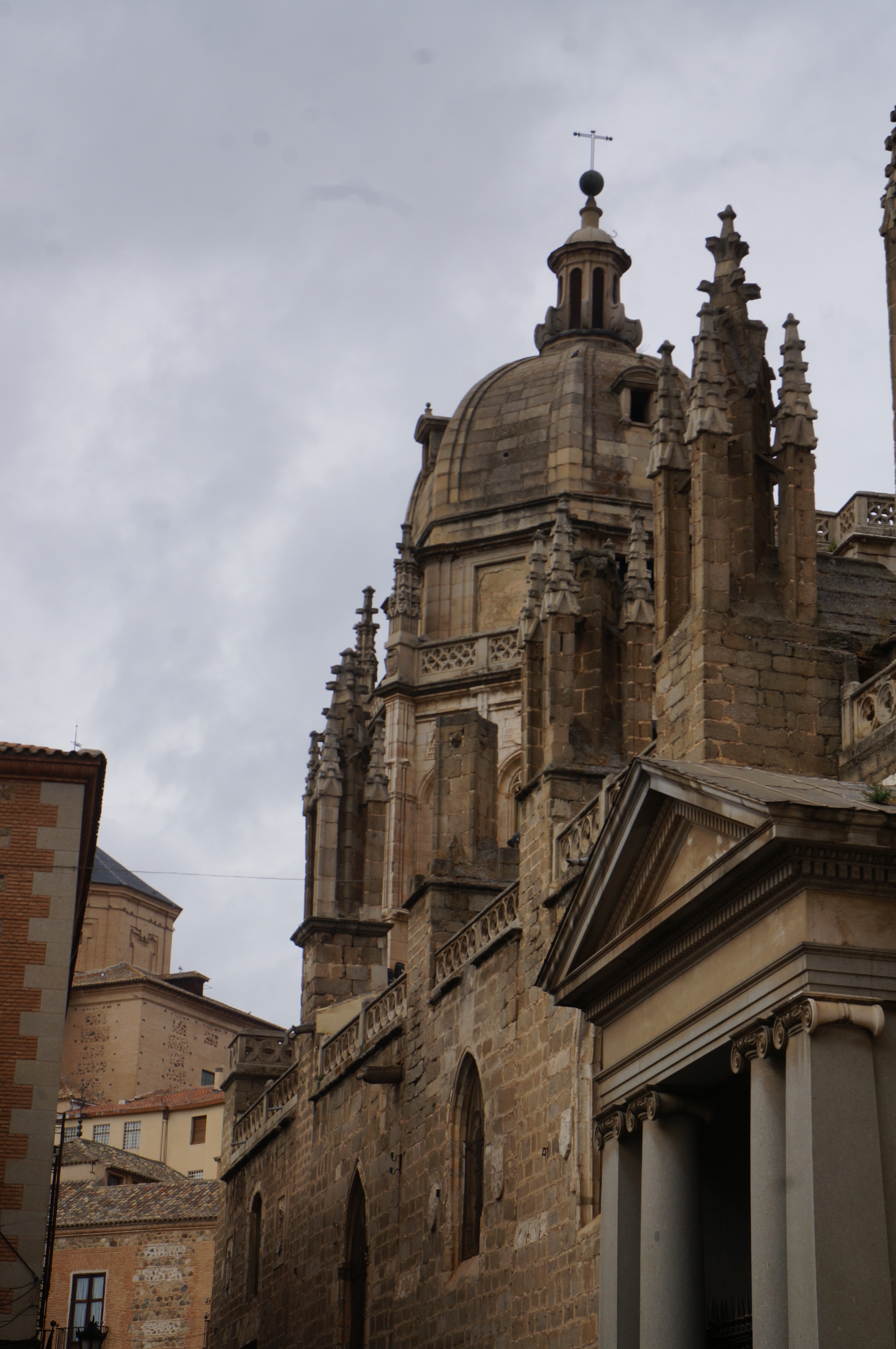
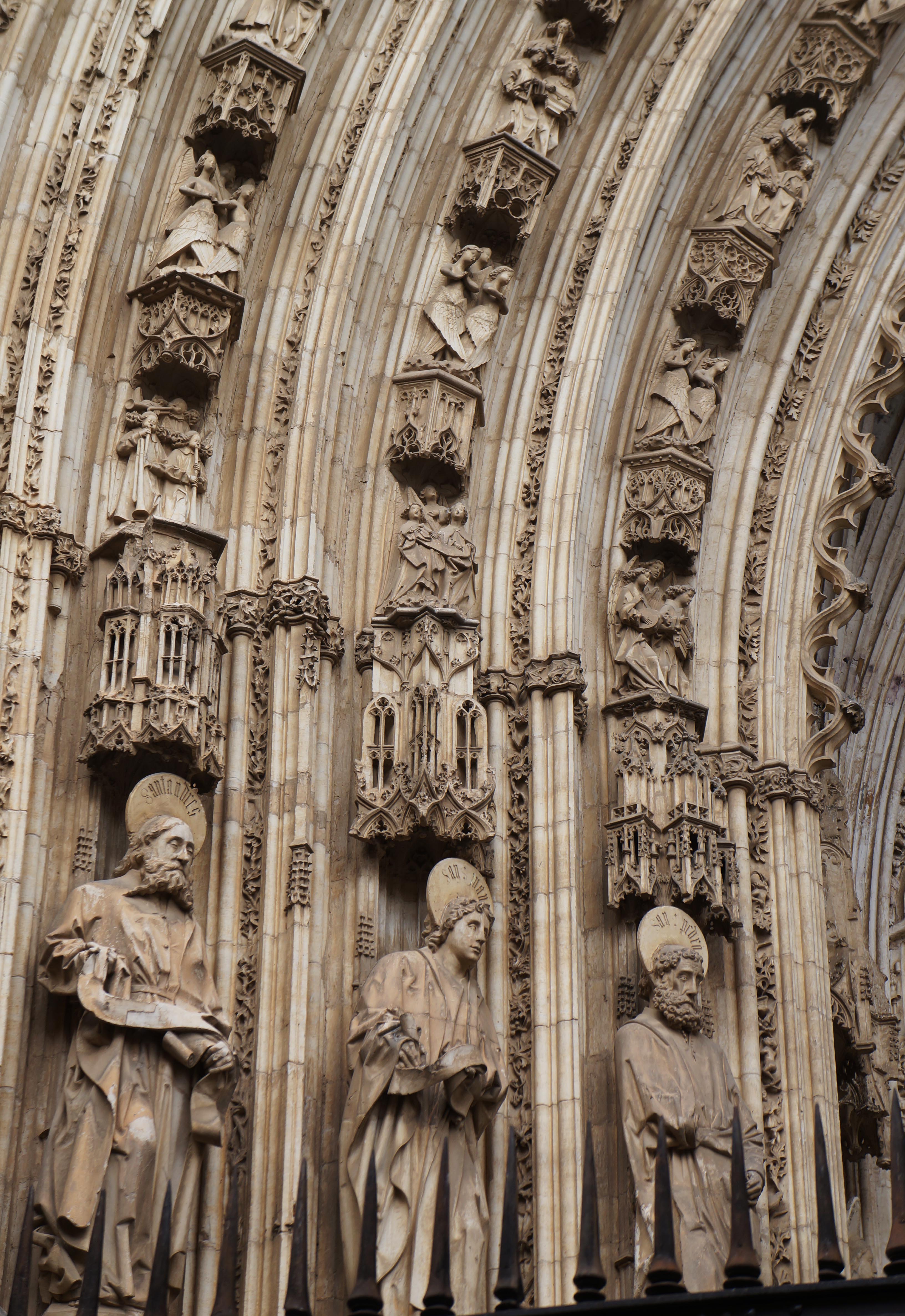
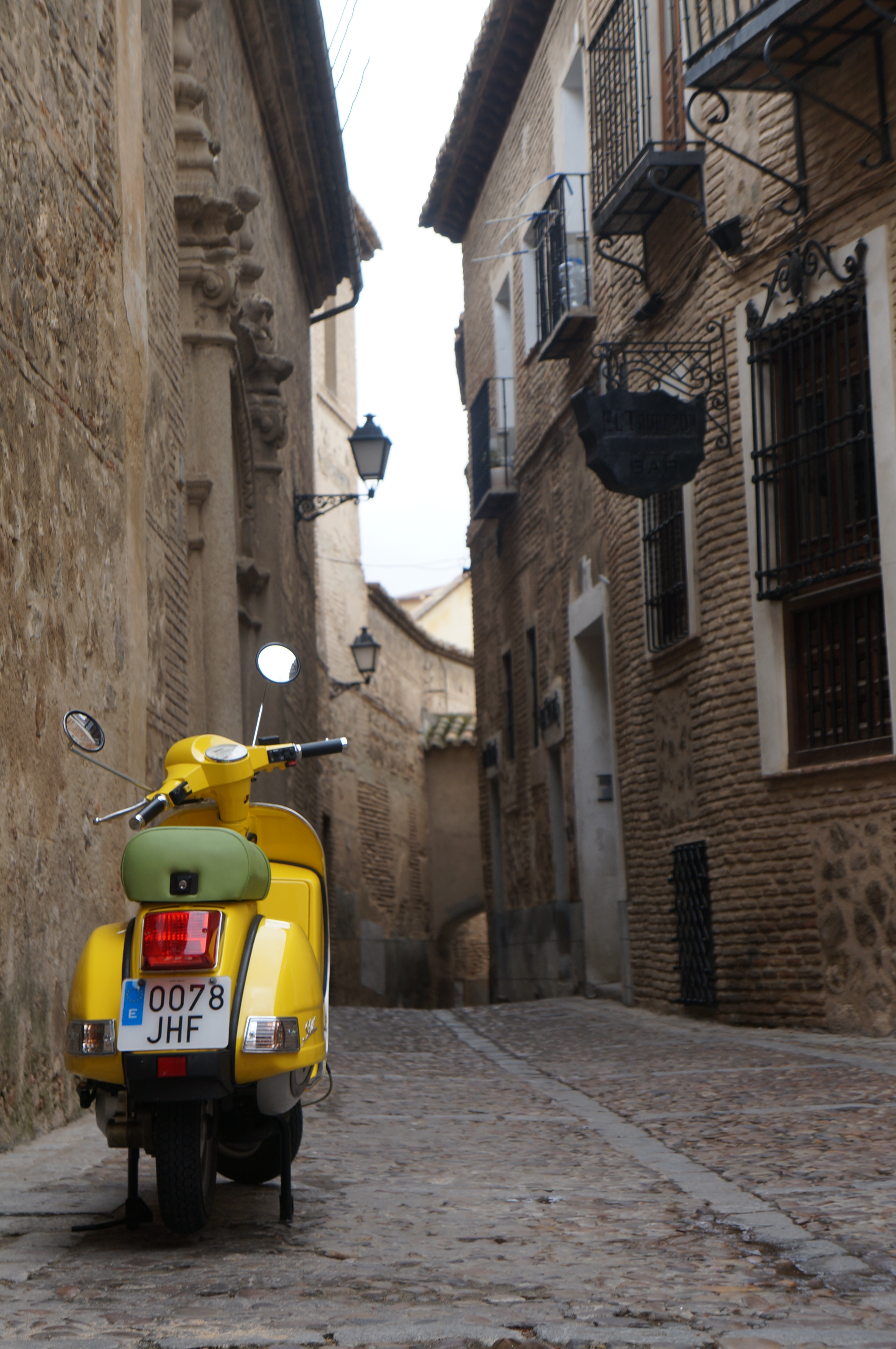
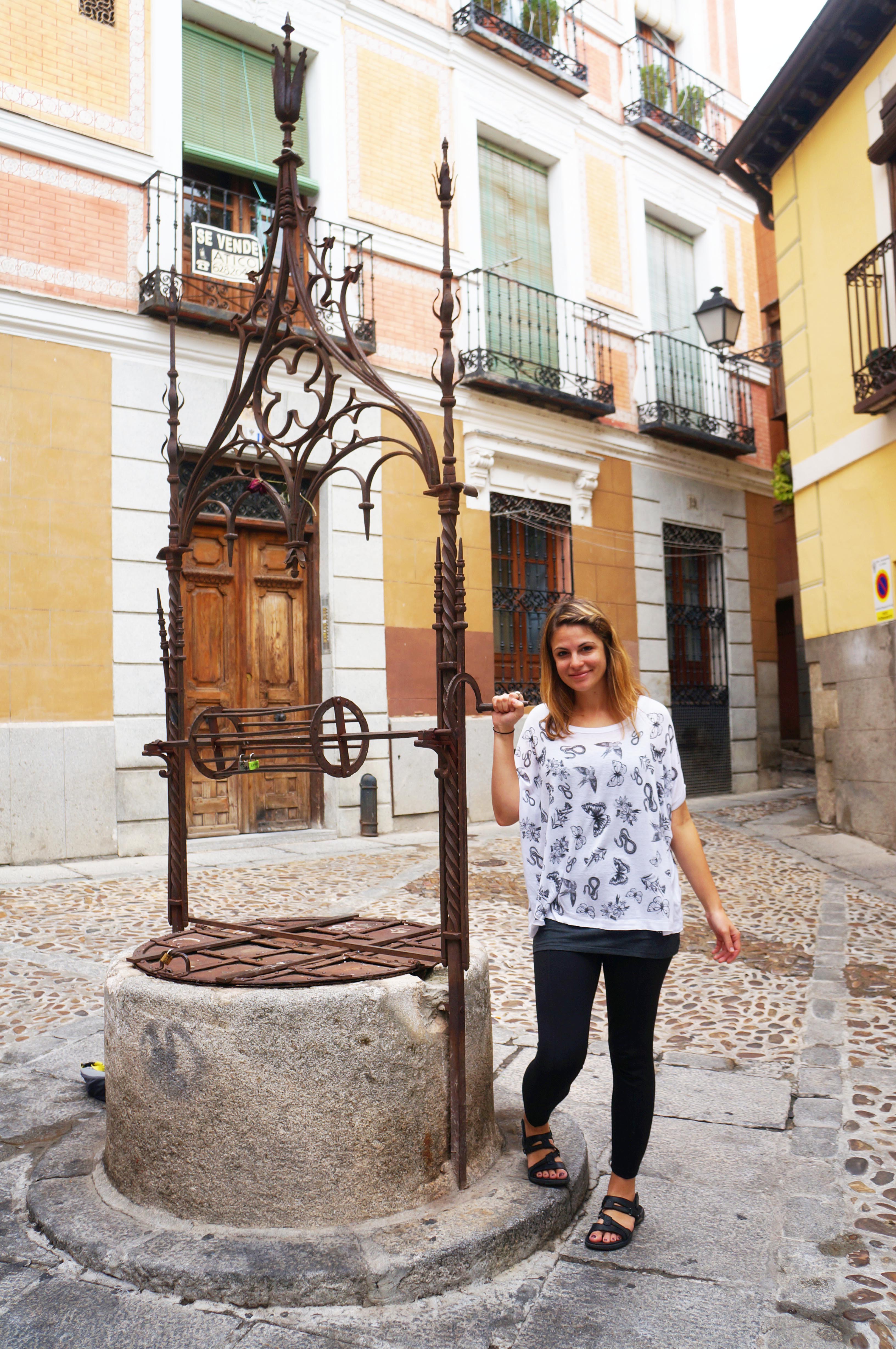
We thought Madrid lacked any sort of grid or order to its layout, but Toledo is another story. Some streets are wide avenues while others are crazily narrow alleyways that appear between two buildings, zigzag their way up a hill and disappear around a corner, practically begging you to explore and see where they lead. We had a great map marked up by the incredibly helpful man at the bus station (who circled all of the city’s main attractions while grunting at us in heavily accented Spanglish: “este museo – free. Aqui, ehh, view panoramico.”) but we quickly abandoned any attempt to follow a designated path. It wasn’t worth putting in the effort to try and puzzle out the confusing maze of calles, and it was too much fun to just wander around without any distinct destination. After all, the city is small enough and so densely packed with incredible sights that if you walk for a few minutes in any direction, you’re bound to stumble across an ancient cathedral, fortress or palace — not to mention all the cool neighborhoods with their hilly, winding cobblestone streets, tucked away houses, Spanish tile roofs and foliage-covered balconies you’ll pass through along the way.
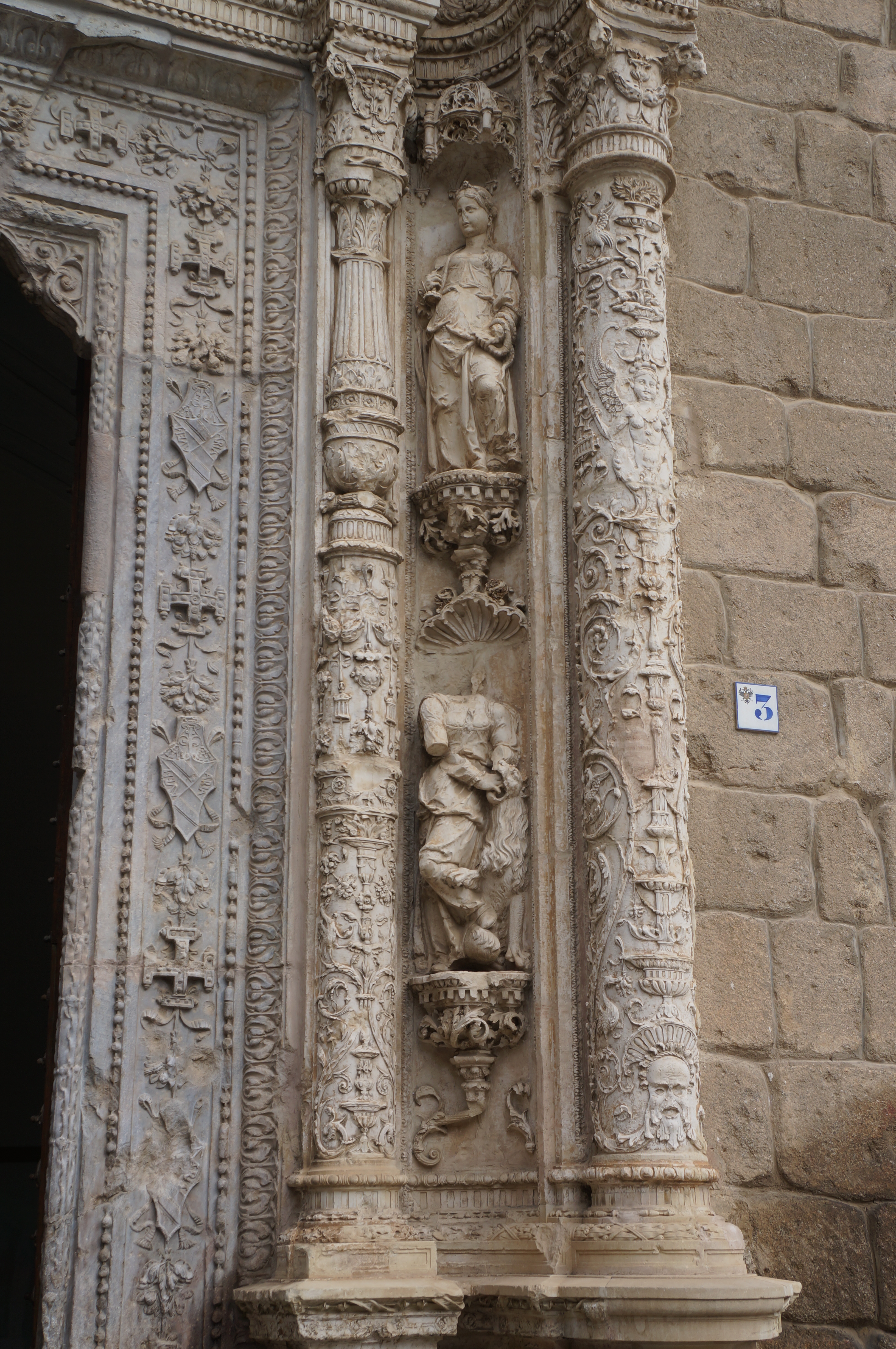
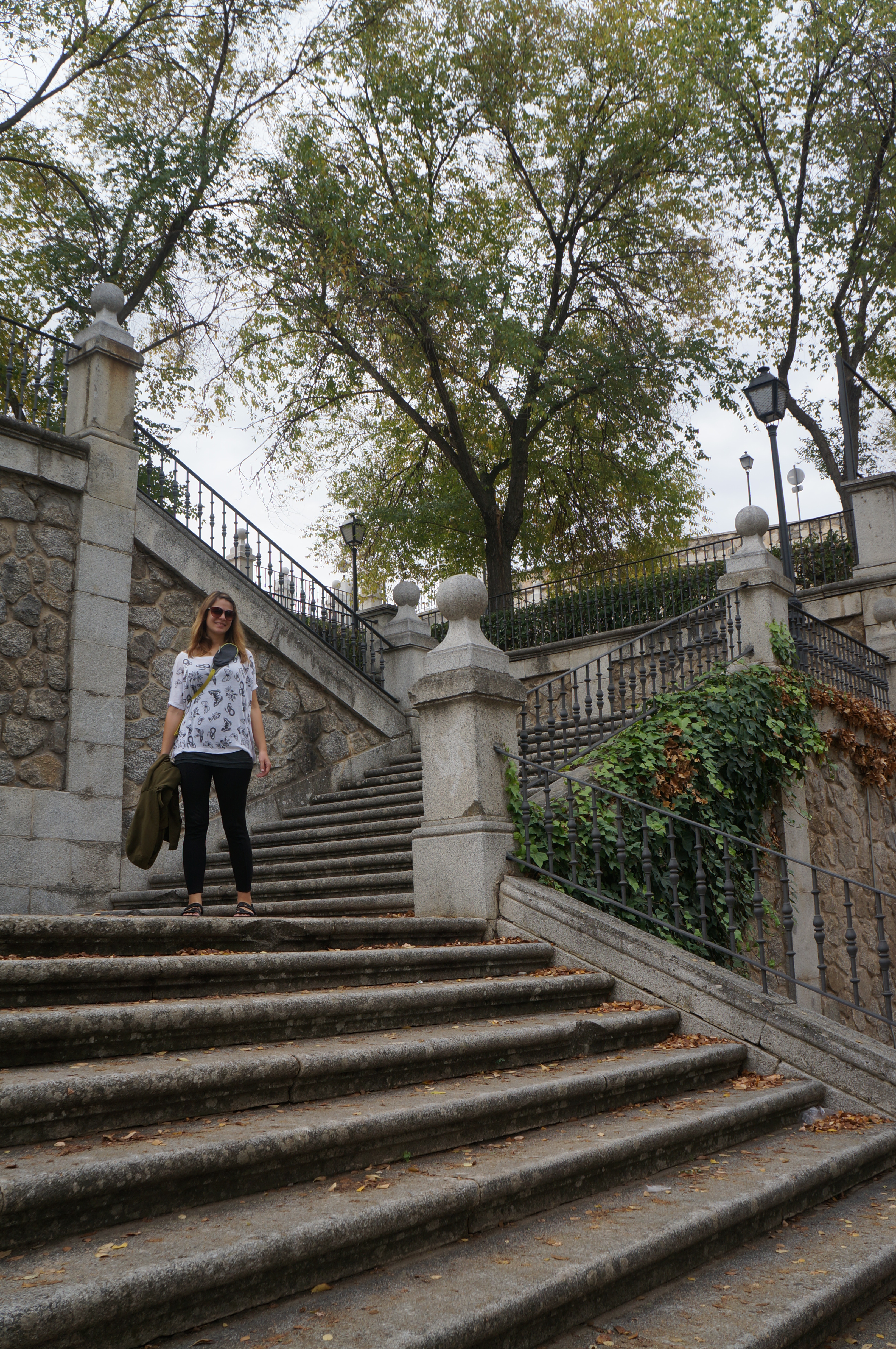 .
. 

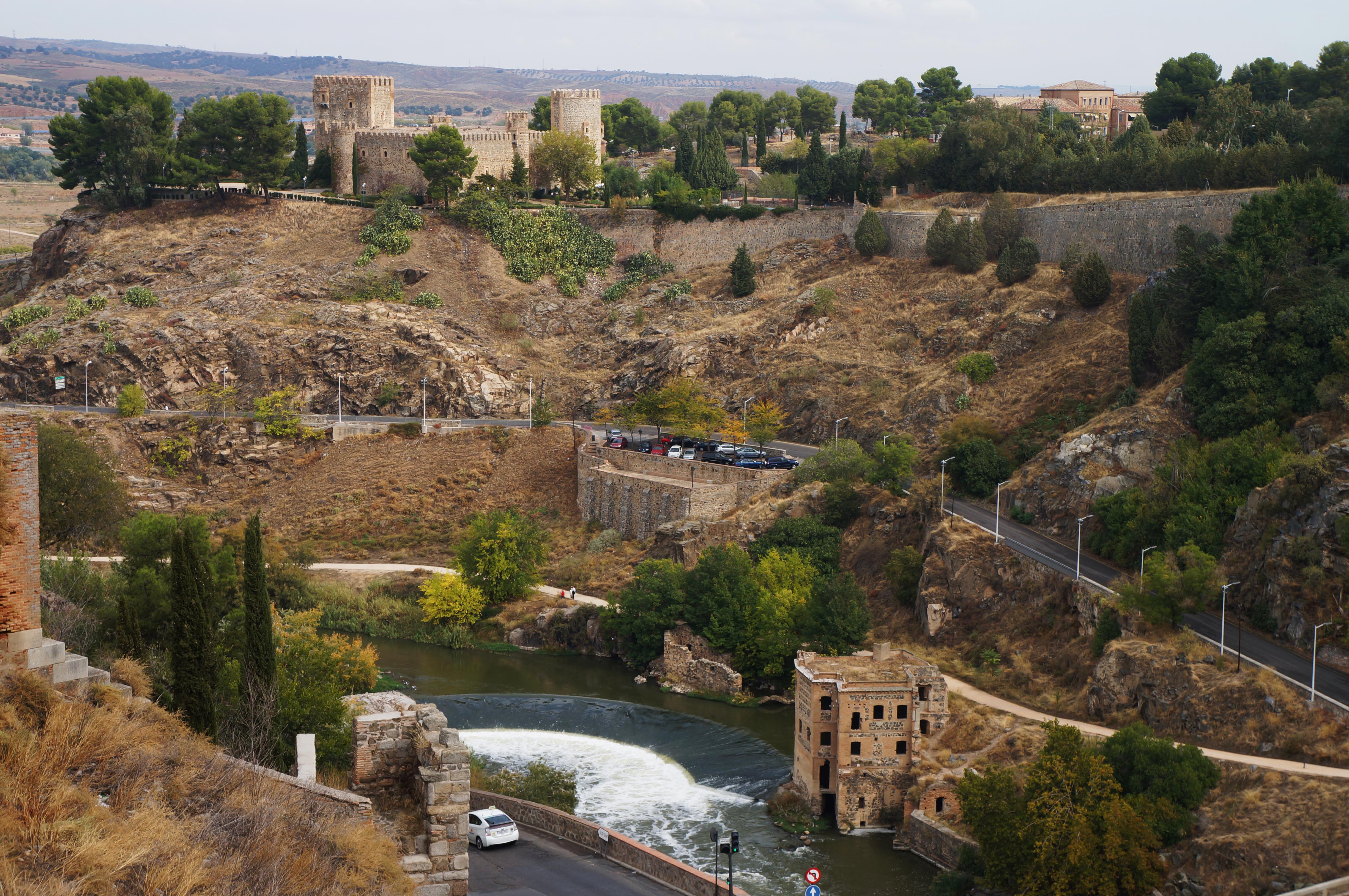
Another thing I loved about Toledo was the sense of depth and dimension to the city’s structure. I’m used to Philadelphia, where everything is perfectly flat, and your view of the city is only ever what you can see immediately in front of, behind or to the side of you. Even if you’re looking down from a tall building, you see only the streets laid out on a one-dimensional plane. But as Toledo is built on a steep hill, many parts of it offer views of multiple layers and levels at once. From a higher vantage point, you can look just below you to see people walking along a street winding down and to the left, as well as scooters zipping up the same street as it climbs to the right and curves around another incline. Below that is another parallel street at a lower level; far lower you can make out joggers running alongside the river, and on the other side, streets and houses follow the hill as it steeply rises up again.

 .
. 
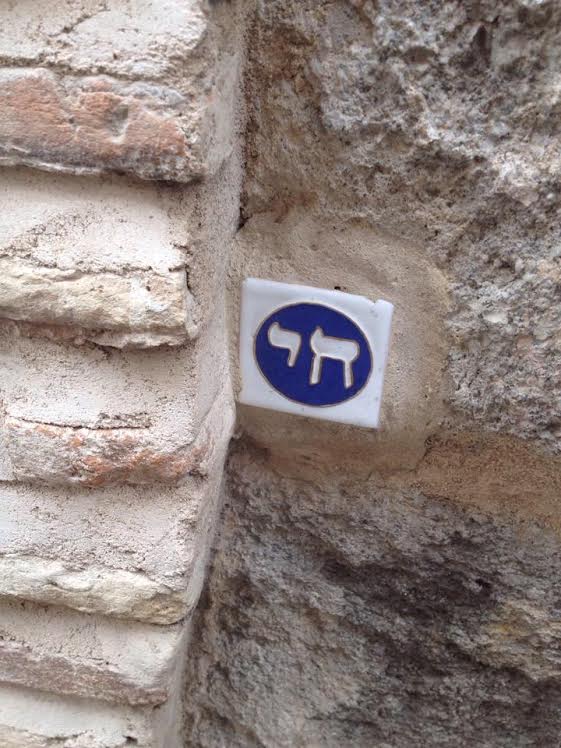
Also awesome: Toledo is also known as the “City of Three Cultures,” as its history included periods dominated by Muslims, Jews and Christians alike. Signs of this intersection of cultures is written in the architecture, aesthetics, and much of the artisan artwork for sale in its shops. An entire neighborhood is named for its Jewish heritage and features tiles of menorahs and Hebrew letters embedded in the streets and walls. A casual stop to grab a drink led us down into crazy candlelit catacombs below street level that connected to sacred 10th century Islamic caves.
 .
. 
We chose a rainy Sunday for our visit, which wasn’t the best planning as many of Toledo’s attractions close up very early on Sundays. By the time we decided to choose a destination and do some actual tourist-ing, everything was shutting down. But it didn’t bother us much, since we were having such a good time meandering around. Plus, it was so stunning just to walk around the outside of all the notable sites that it didn’t even feel necessary to get inside. Instead, we spent the day just crisscrossing the town, taking in the “panoramicos,” and popping in to the charming little bars we passed throughout the day to grab glasses of wine and tapas.
 .
.  .
. 
There’s much more to be seen in Toledo (namely, the inside of all those beautiful buildings) and we will certainly return — less than 45 minutes away from Madrid, it’s the perfect cheap, convenient day trip. Our afternoon there helped us realize how many incredible and easily accessible places Spain has in store for us to discover.
Patones
A few weeks later, we found ourselves overdue for another excursion. Though we both enjoy living in cities, our sanity depends on frequent escapes full of fresh air, sunshine and foliage. From the first temperate days of spring to the return of frosty late fall weather, we’d generally spend only a handful of weekends in Philadelphia, the rest of them camping or hiking in the Pennsylvania wilderness. One of the things I valued the most about where we lived was its proximity to so many beautiful natural areas. Luckily, Madrid seems to be quite similar, with many cool, remote spots reachable by public transportation.
Madrid has an abundance of hiking groups, but, apparently catering to new-in-town expats who may not know where to start or want to put the effort into planning their own excursions, most of them charge fairly hefty fees for their weekly outings (often not including transportation). While I think what they offer is valuable to many people, in my opinion, nature should be free, and I don’t mind doing my own planning.
We saw a Facebook post advertising a particularly cool hike by one such group. Intrigued but not really interested in paying 16 euros simply to go along with the group, we decided to put our own outing together. With the help of our new friend Ryan, we figured out the location and basic route of the hike, recruited our other new friend Eva, and headed out to Patones.
We left Plaza de Castilla at 11 am (the only earlier bus was 8 am, which was a no-go considering it was the day after Halloween) and caught bus 197 to Patones de Abajo. The hour and a half bus ride was a pain, but at least it gave us opportunity for us to get in a solid nap before a long day on the trail.
Patones de Abajo is a little town in the Spanish countryside without much charm or personality to speak of. But walk just out of the pueblo and one kilometer up a steep path, and you’ll find yourself in Patones de Arriba, a teeny medieval village nestled into the hillside.
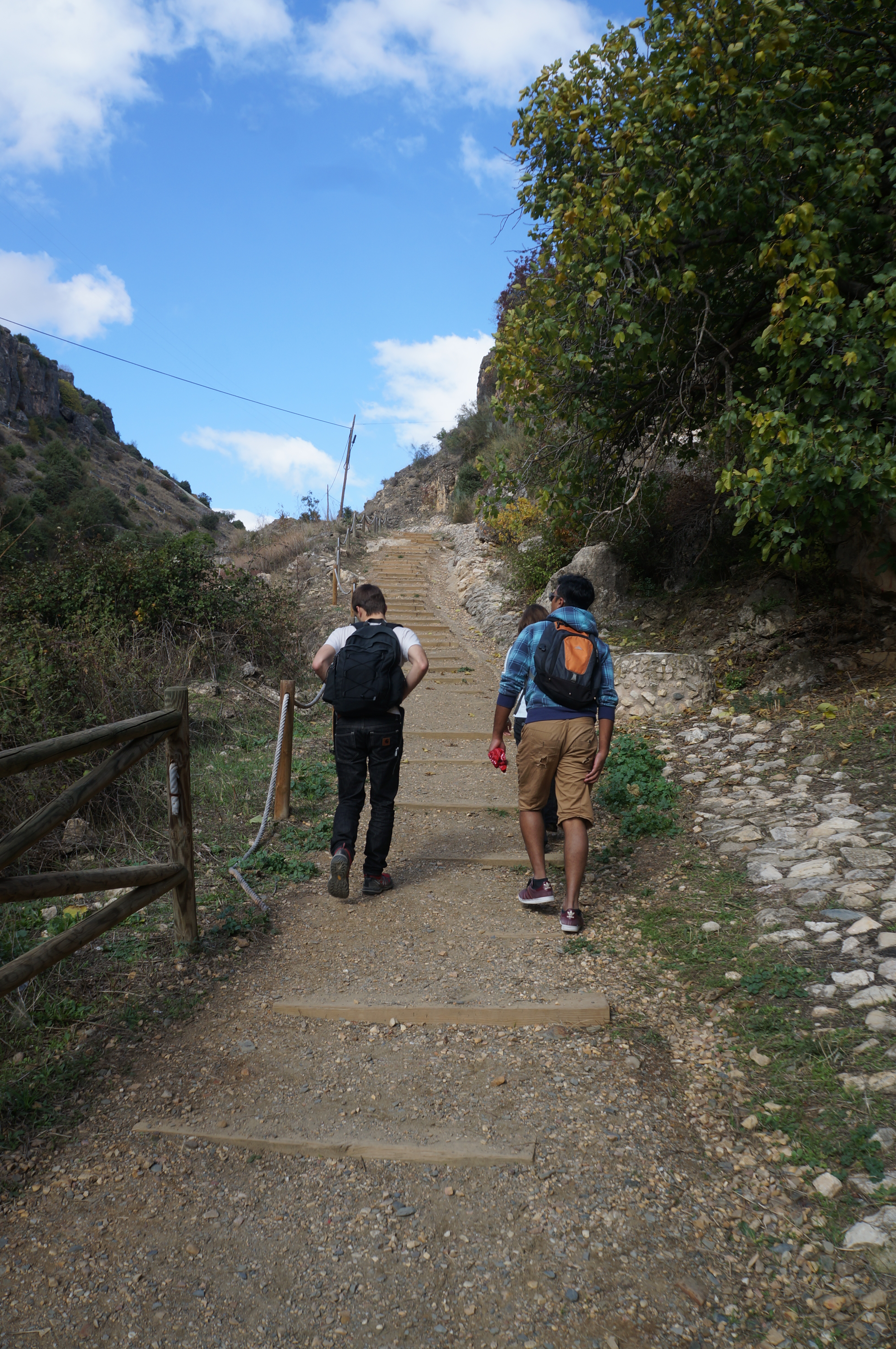
The climb to Patones de Arriba
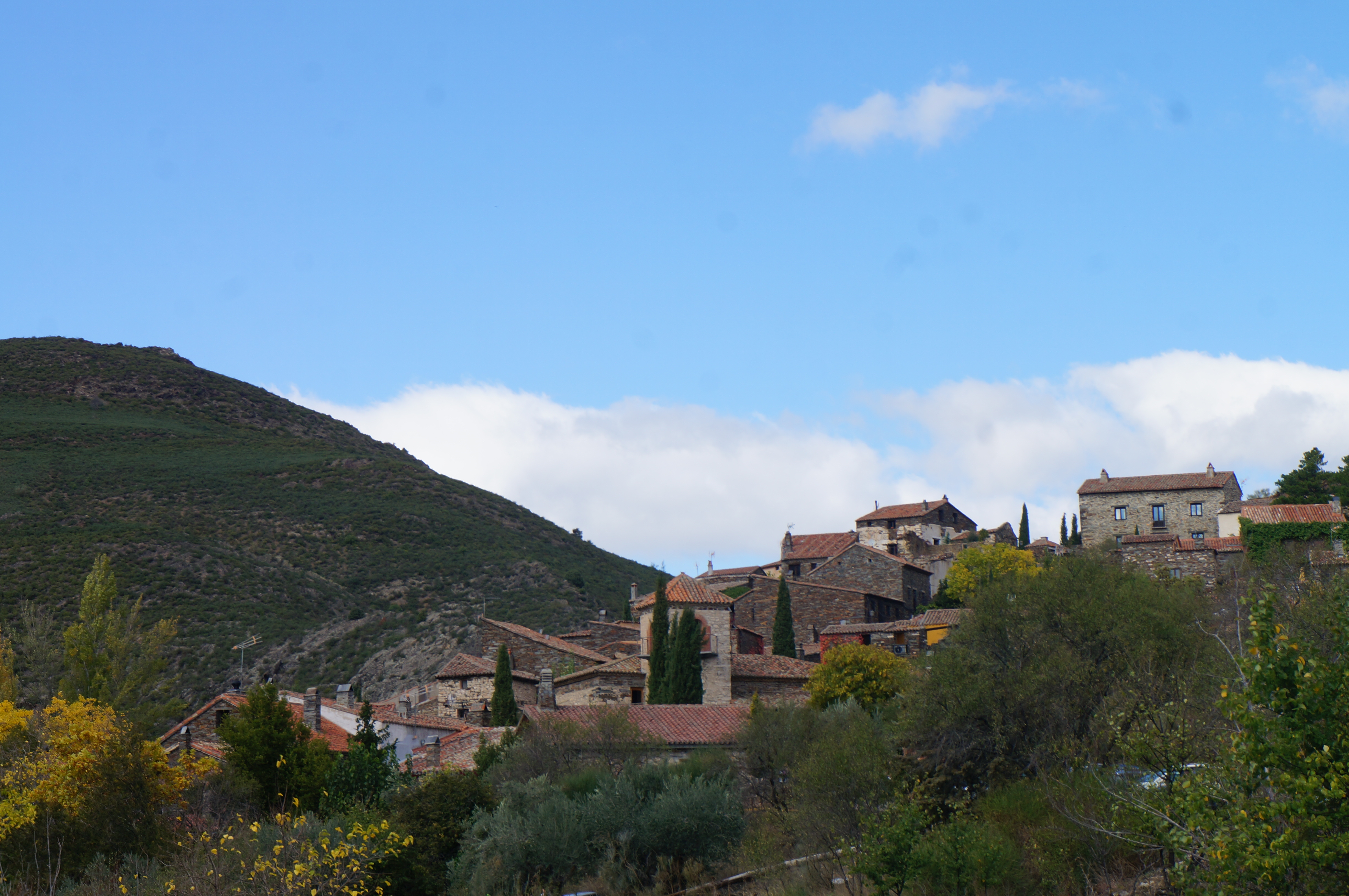
Patones de Arriba
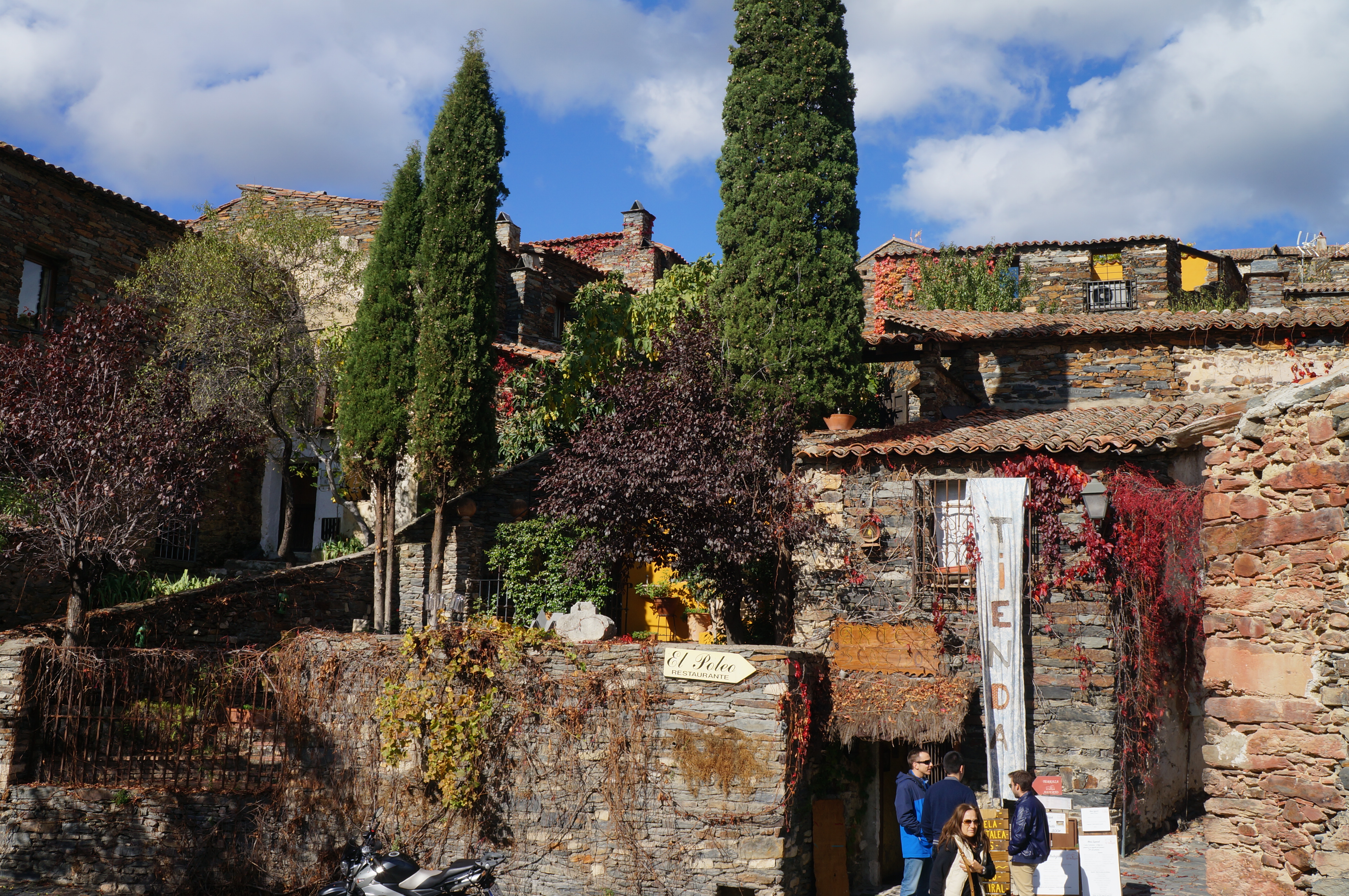
In some ways it was a modest, miniscule version of Toledo, but even better in my opinion. Its remoteness and smallness meant that some of it had been left to moulder, resulting in the interesting contrast here and there of crumbling old buildings situated next to perfectly preserved taverns, restaurants and shops selling hand-crafted knickknacks and fresh baked goods.
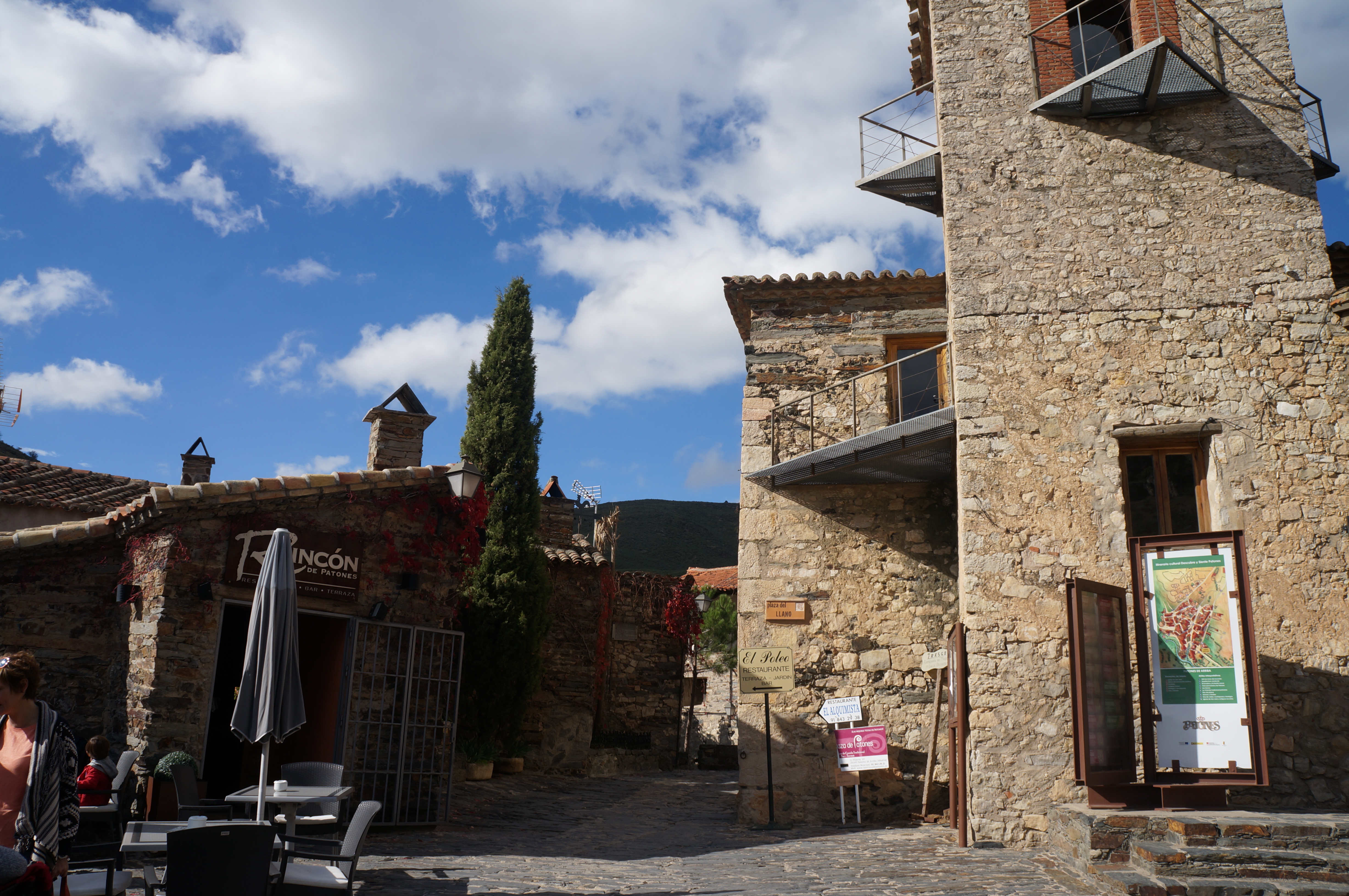
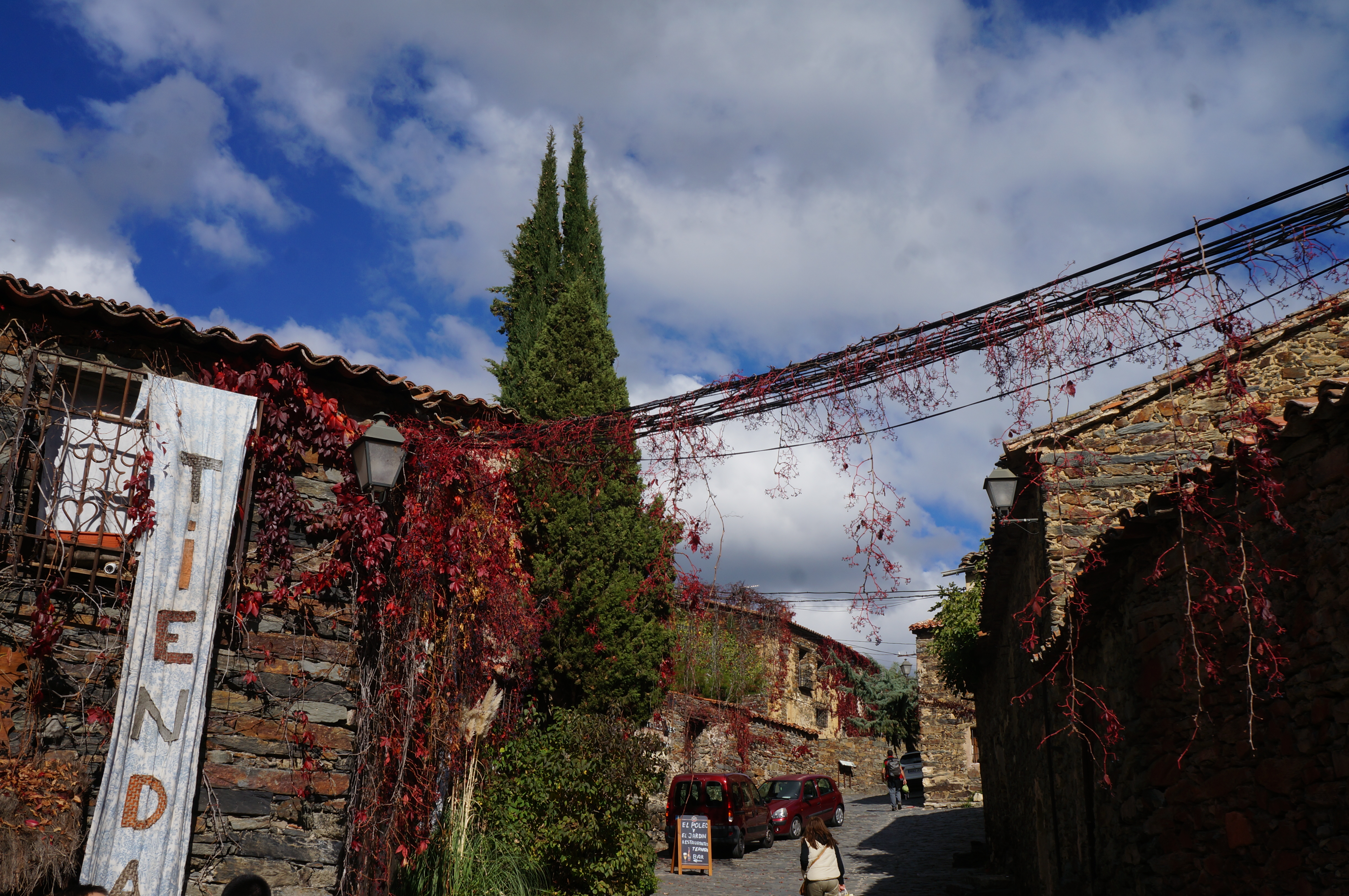 .
. 
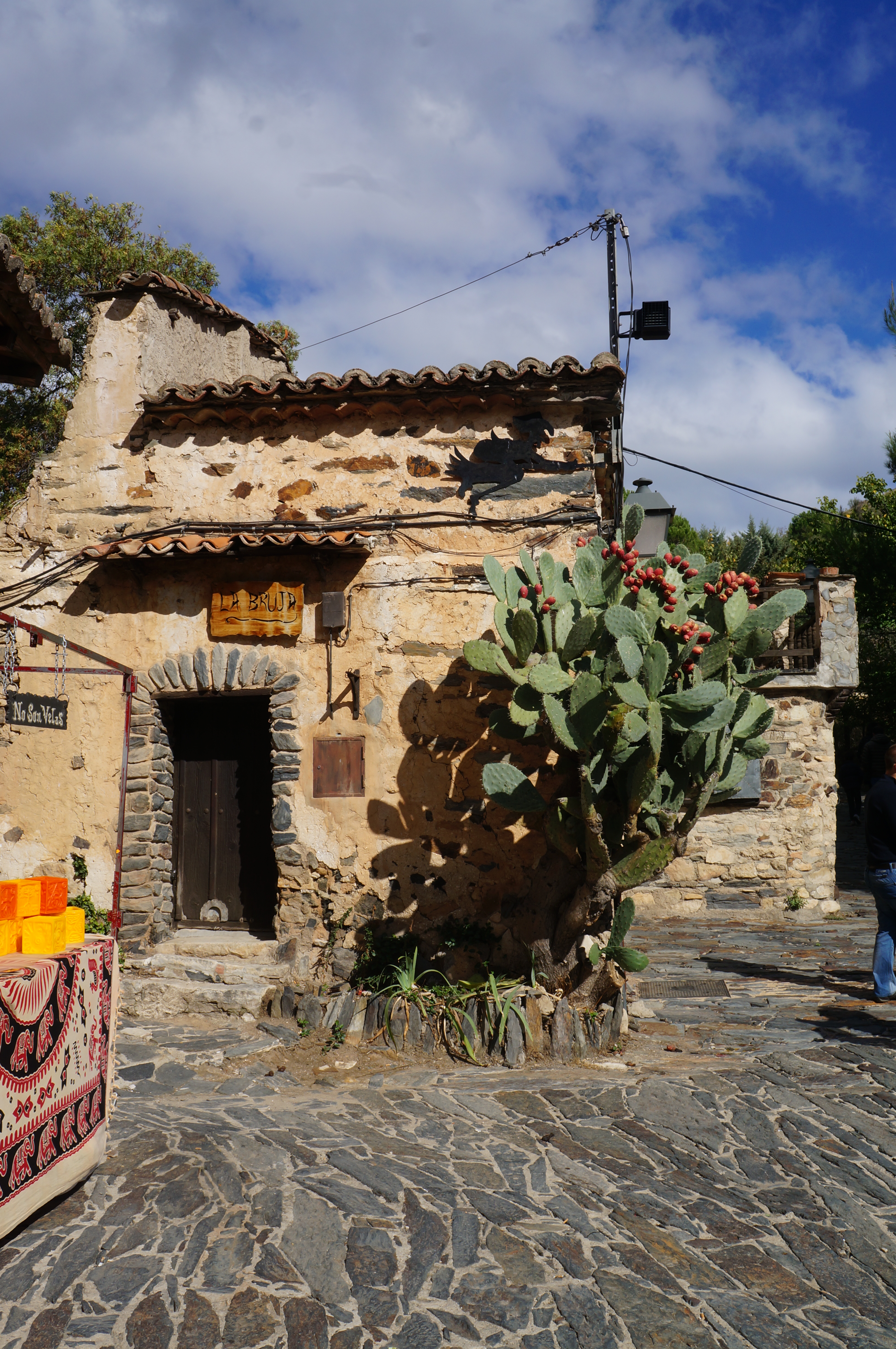
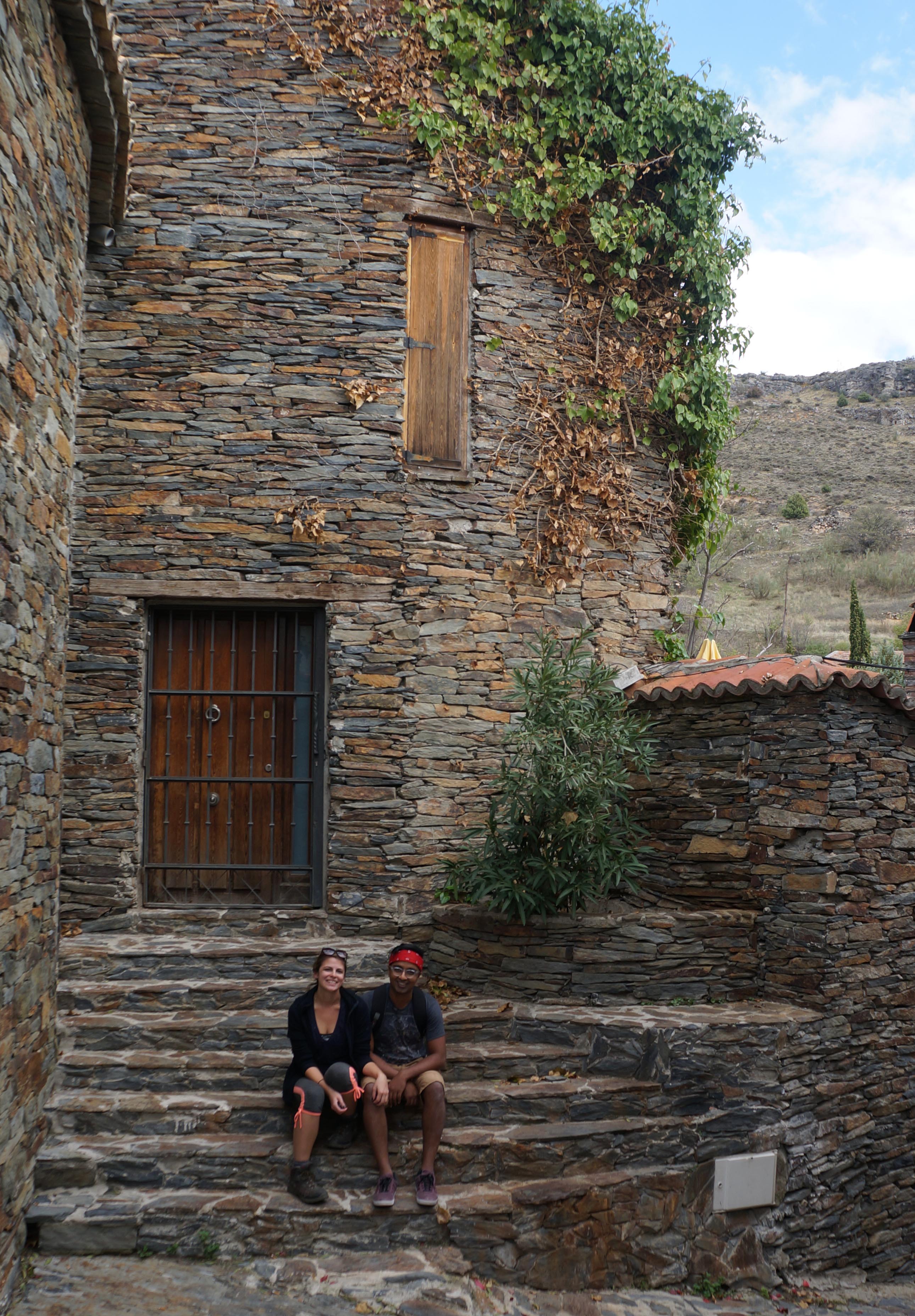
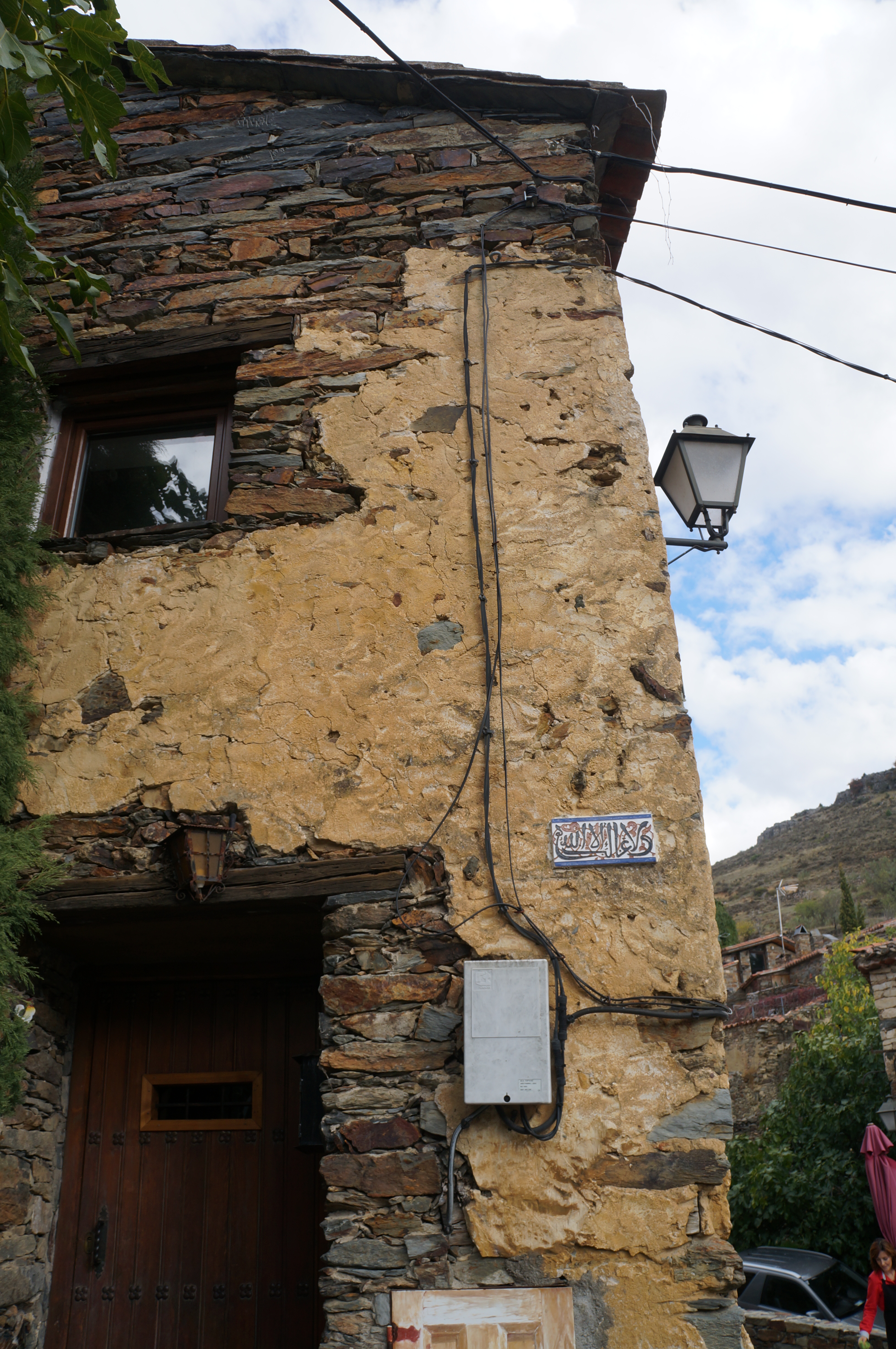
We decided to grab a coffee before we headed out, so we chose a cute little restaurant with a terrace overlooking rolling hills and olive groves.
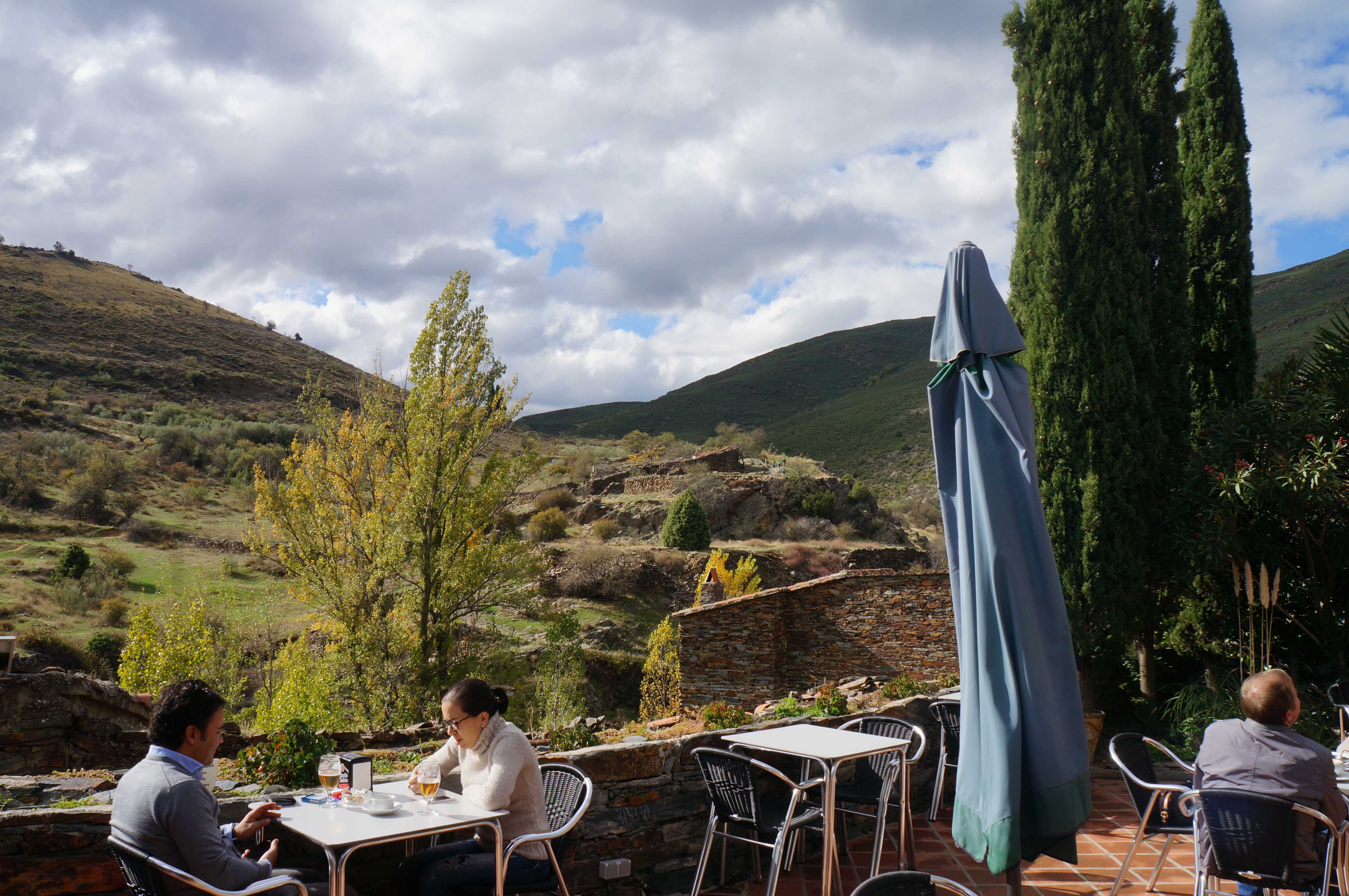
Apparently, we were following a much-loved local tradition — Spaniards tend to flock out to these ancient villages on the weekends, walking around a bit and then spending hours enjoying a leisurely lunch on a terrace. We could easily have done the same, but we had a long hike ahead of us and were anxious to make it to at least one of our two possible destinations: a centuries-old dam and an area of unique red rock formations called Cárcavas (which was a good bit further and a little too ambitious given our late start to the day).
We left the town behind and began ascending the hillside, following the water lines of the Canal de Isabella II, the main water supplier of the Comunidad de Madrid. As far as I can understand, the Canal pipes water in from various sources throughout the area. Many of its pipes are underground, while others, like the ones in this area, run over the land up and down the hillsides.
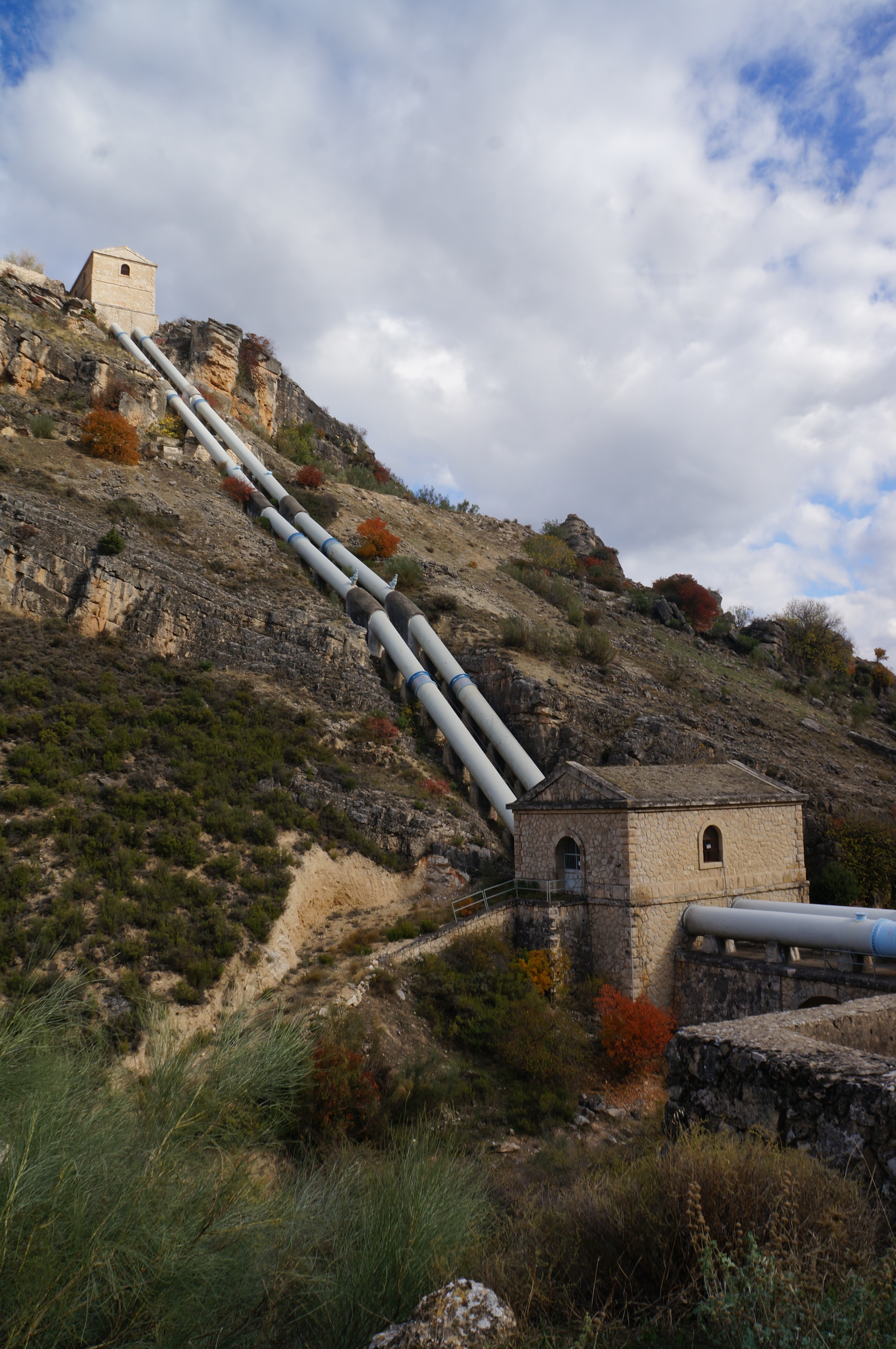 .
. 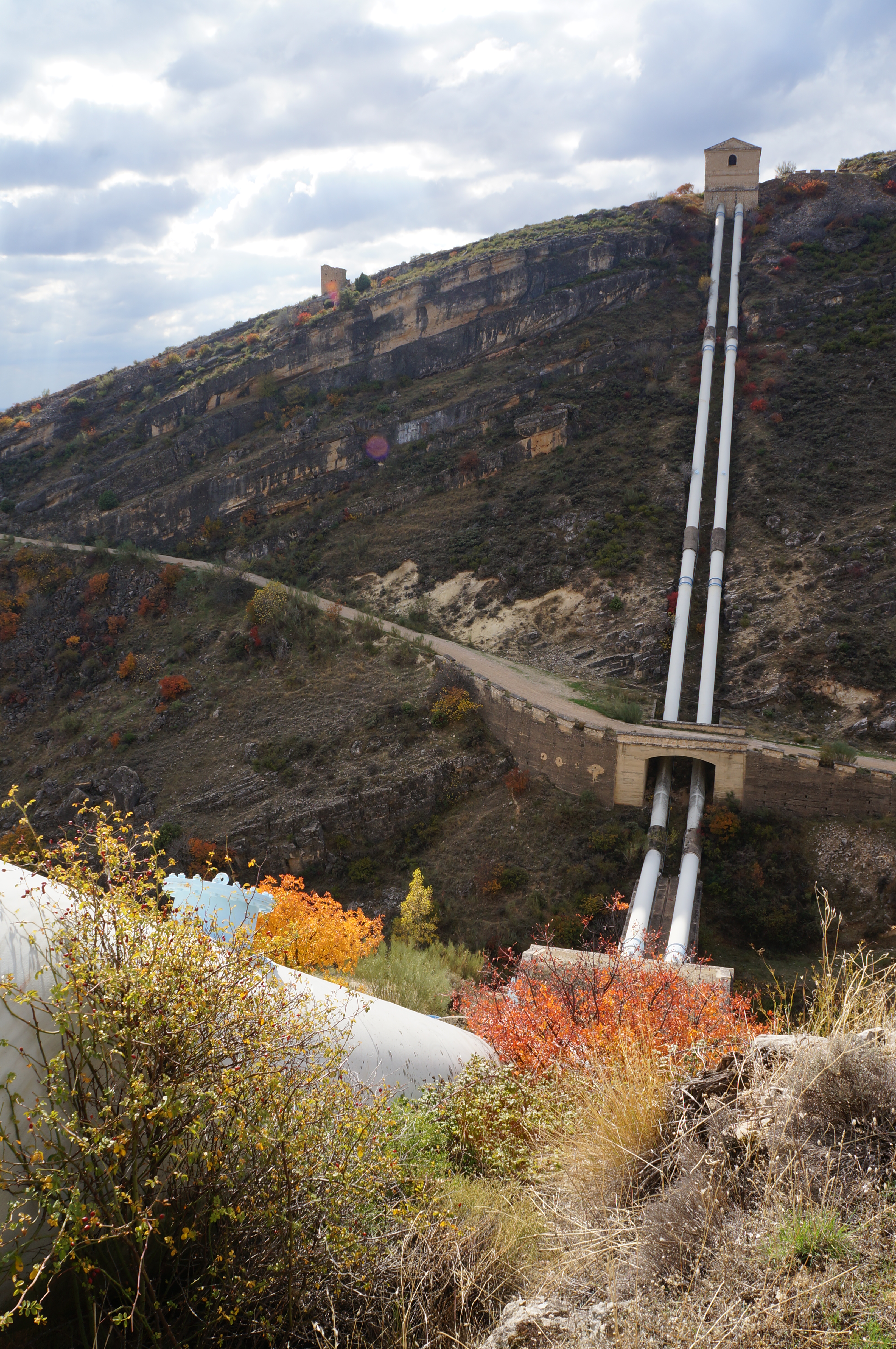
More or less parallel to these modern pipelines was a system of enclosed aqueducts that appeared to be much older — more on those later.

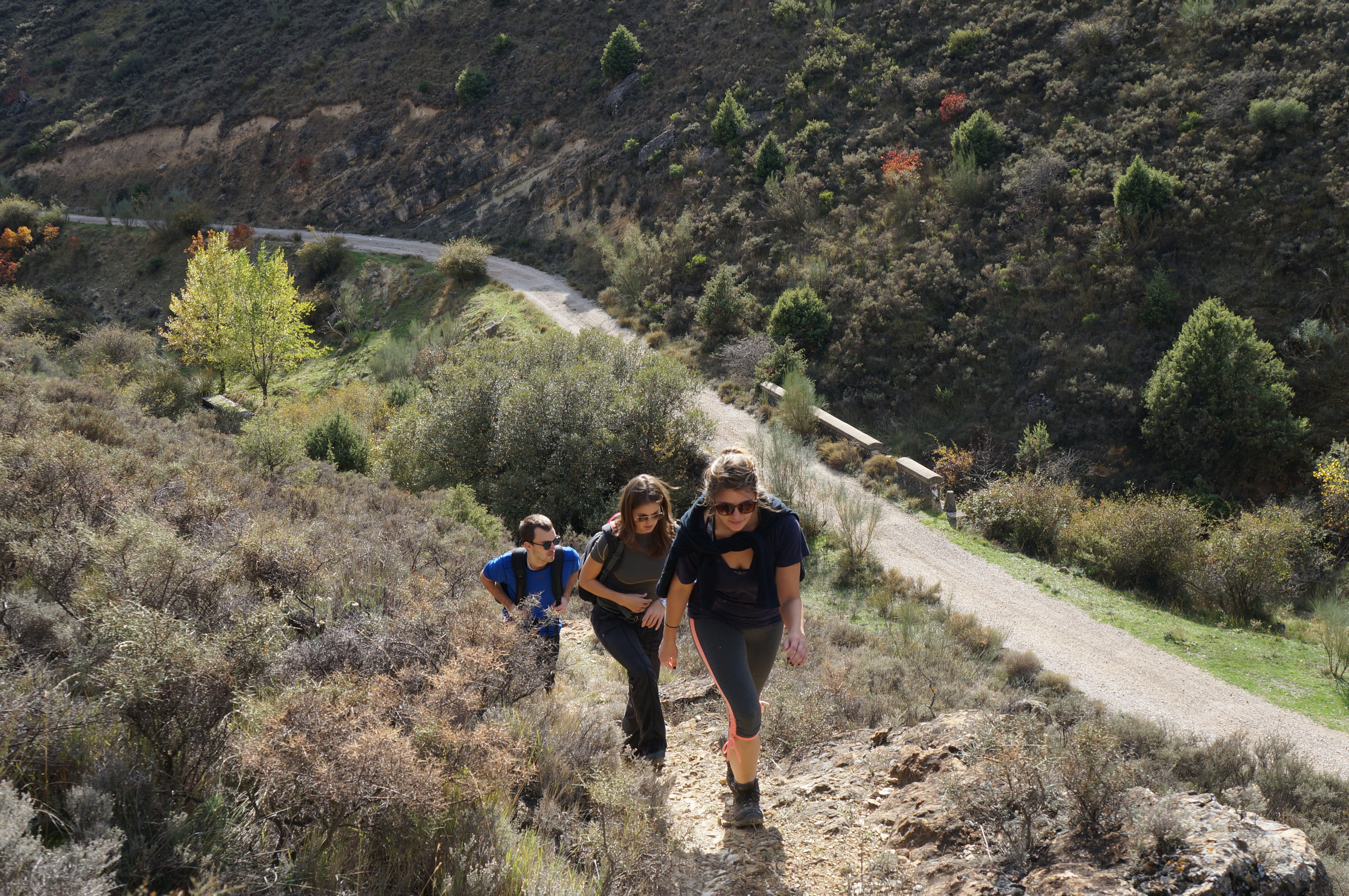
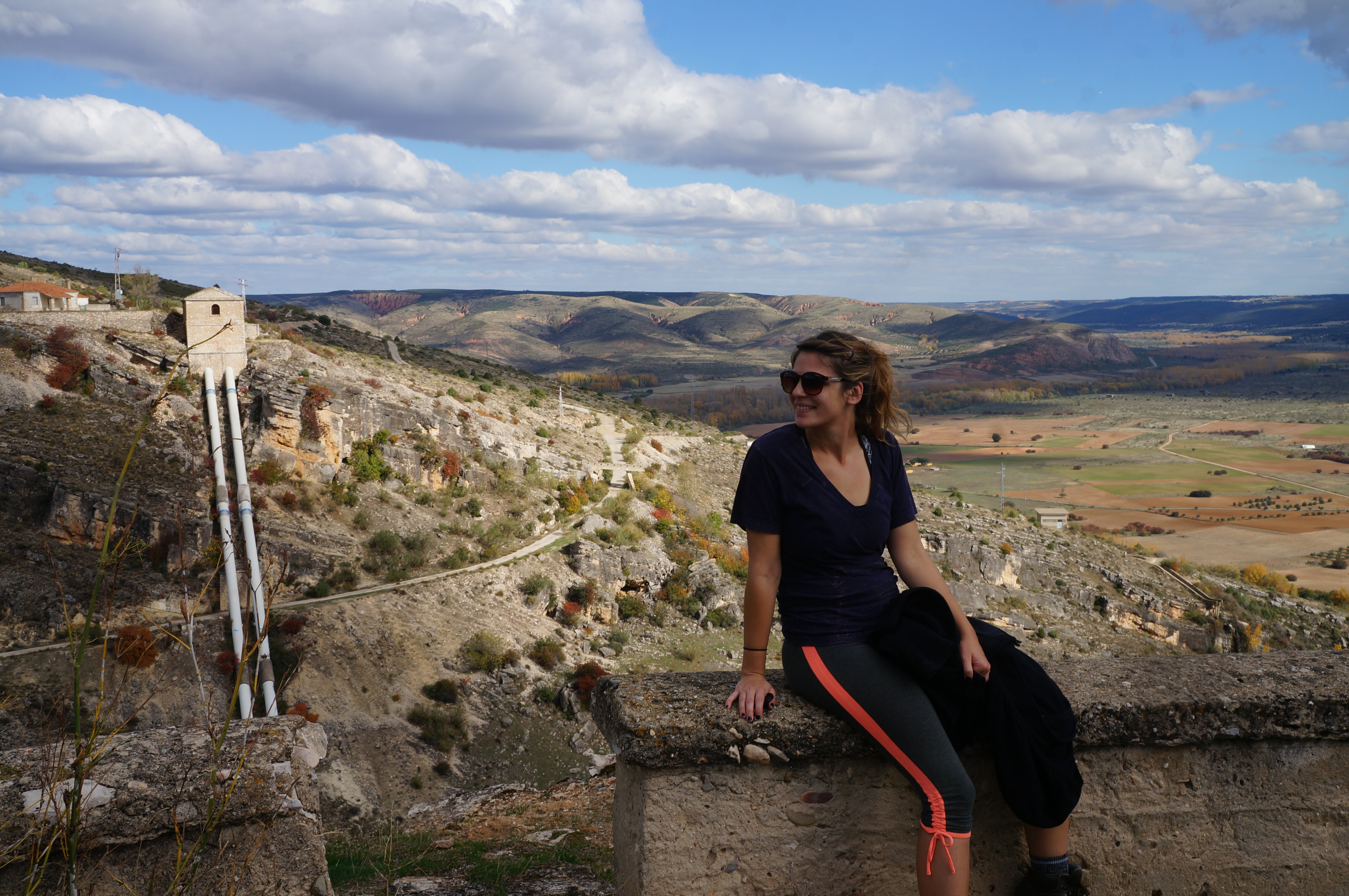
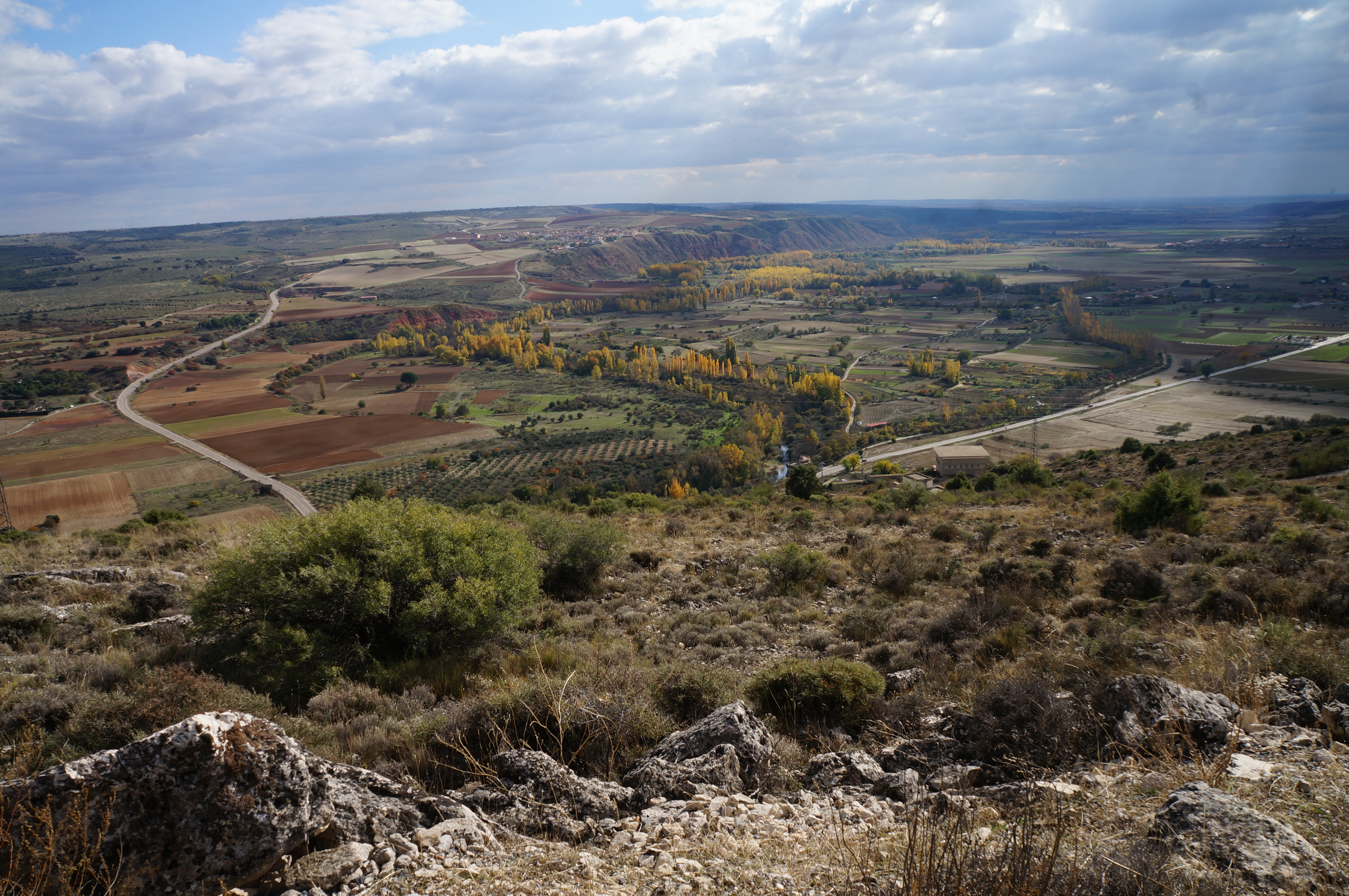
Our path took us on a circuitous route up, down and around the steep hills. We had a gorgeous view of the countryside with its cute rural towns and riverbank lined with bright yellow trees.

In the distance, we could even make out Madrid, its handful of skyscrapers visible in their smoggy haze (which felt blessedly far away as we breathed in the fresh, clean mountain air).
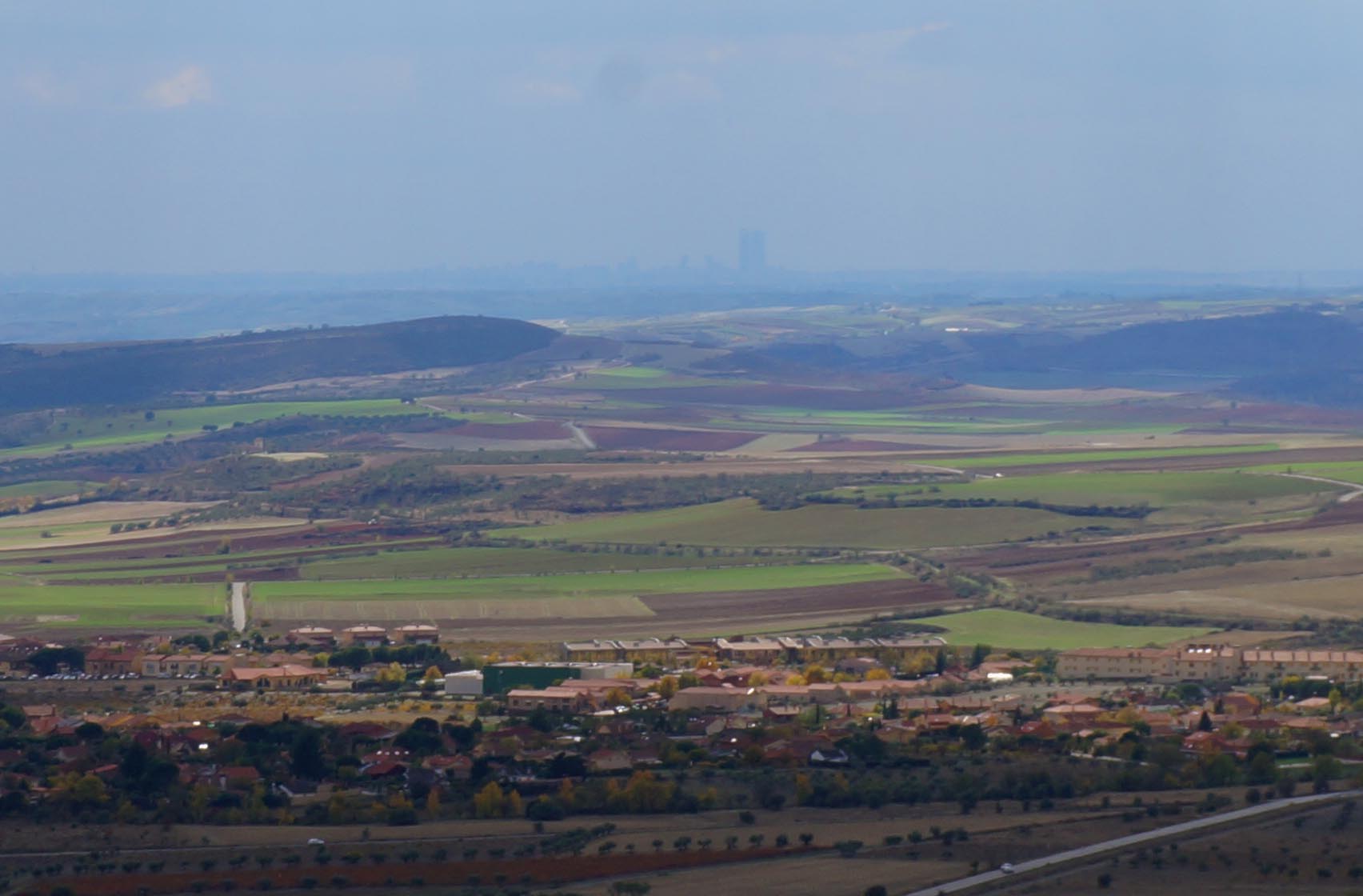
Can you see Madrid’s skyline on the horizon?
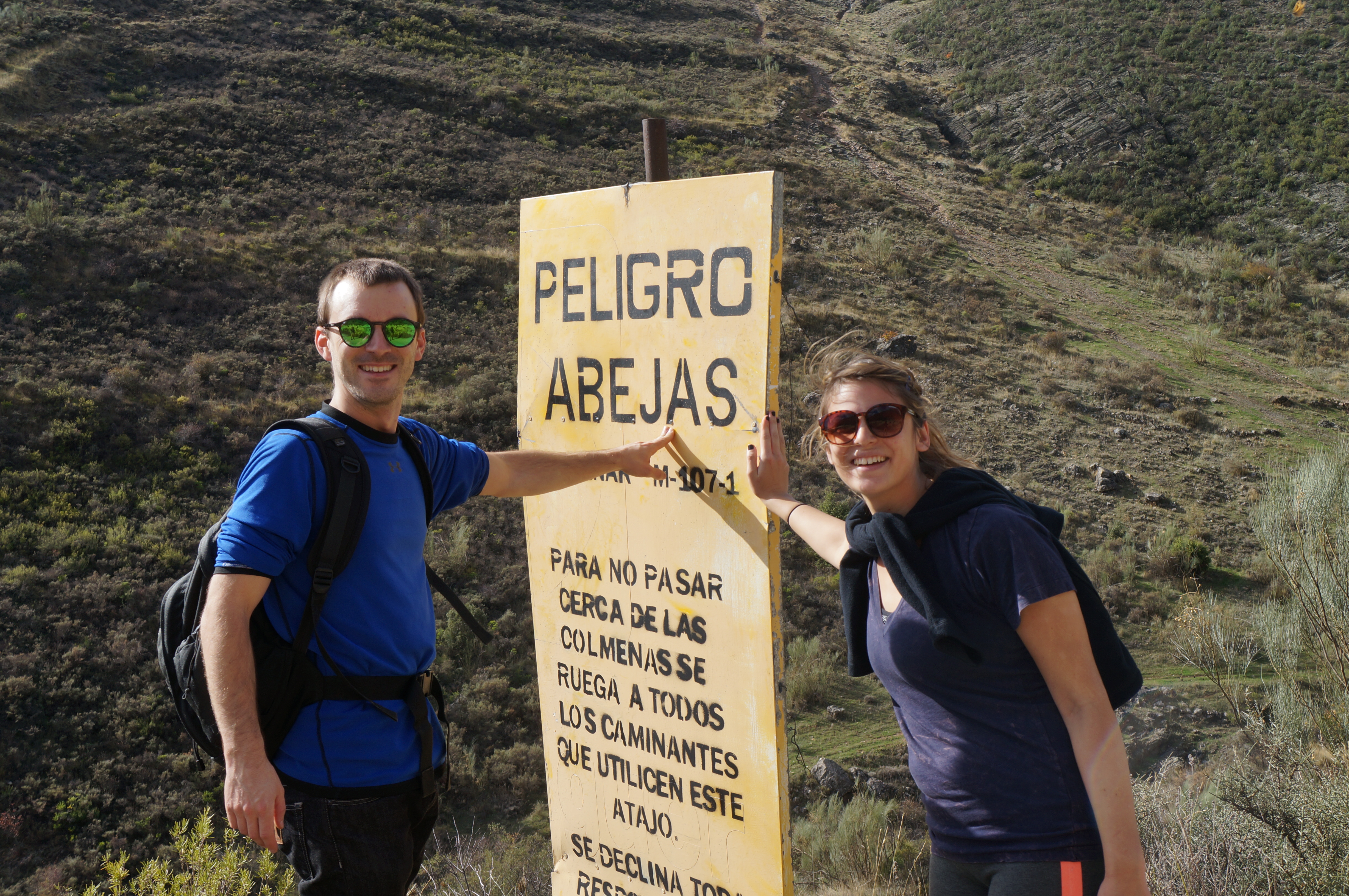
As we hiked, we encountered signs warning us to “Beware of Bees,” the forewarned beehives (a comfortable distance from the path, luckily) some medieval-era ruins of mills and farmhouses, as well as some jarringly marked by modern graffiti artists.
 .
.  .
.  .
. 
 .
. 
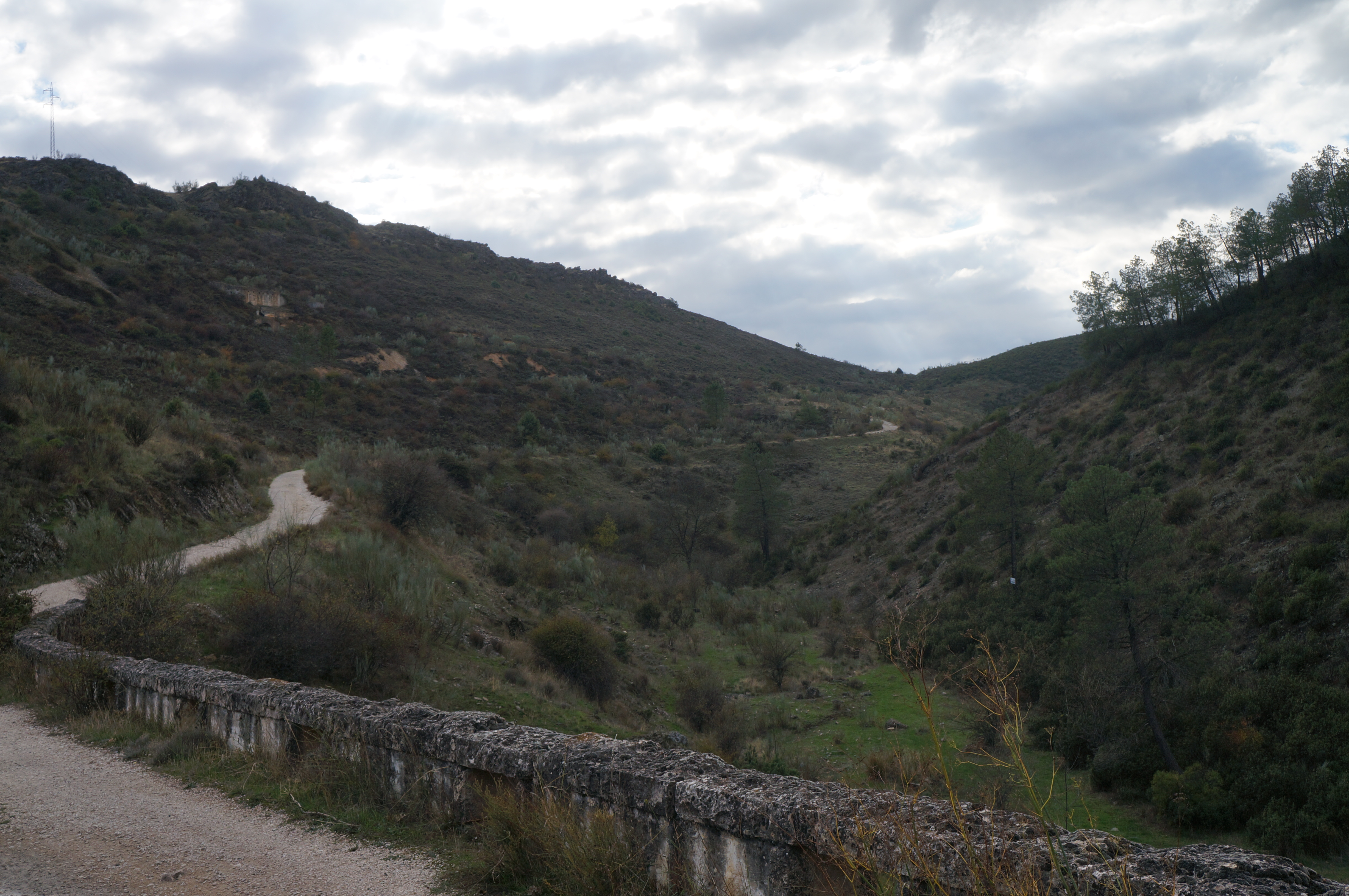

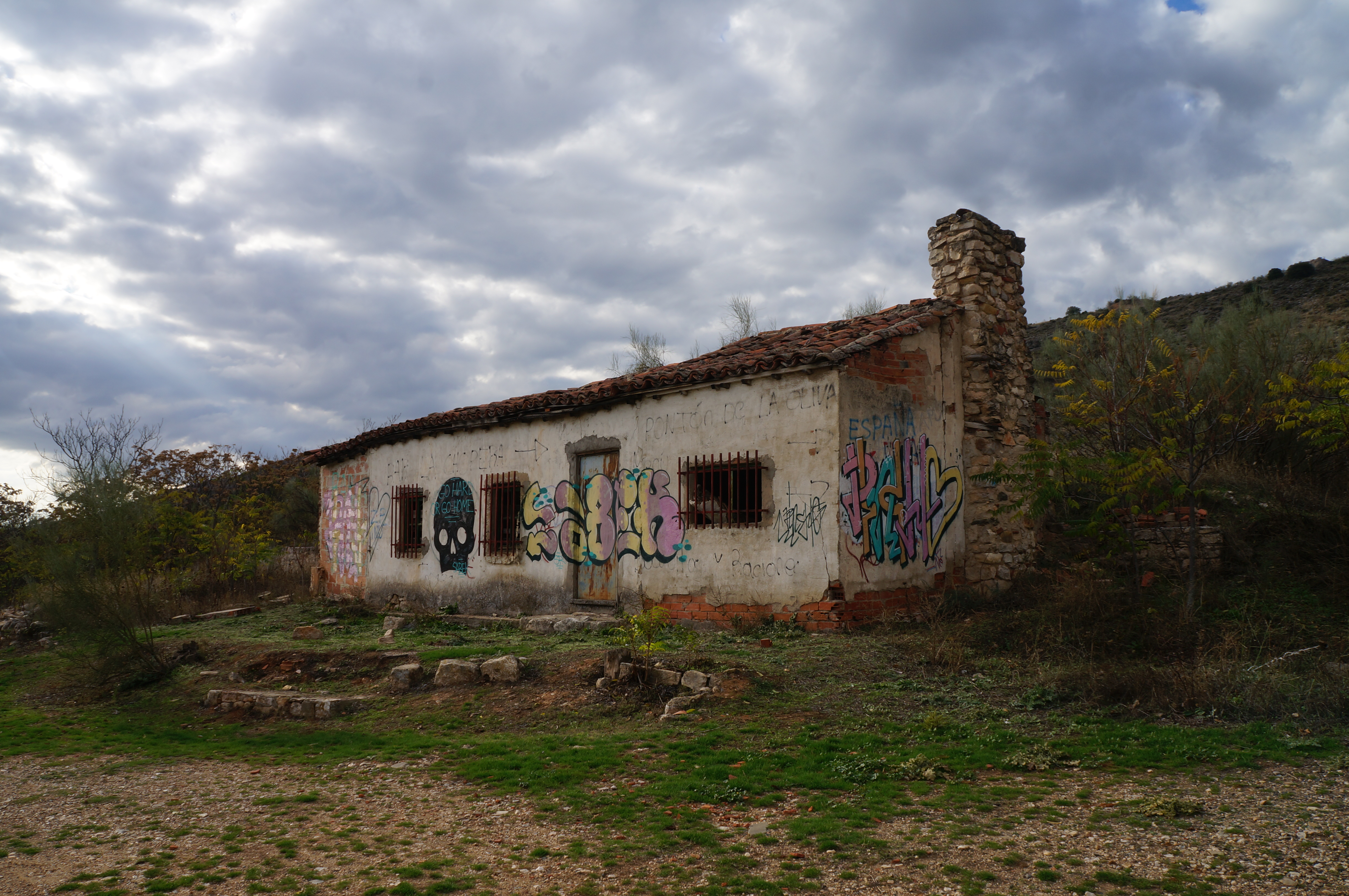
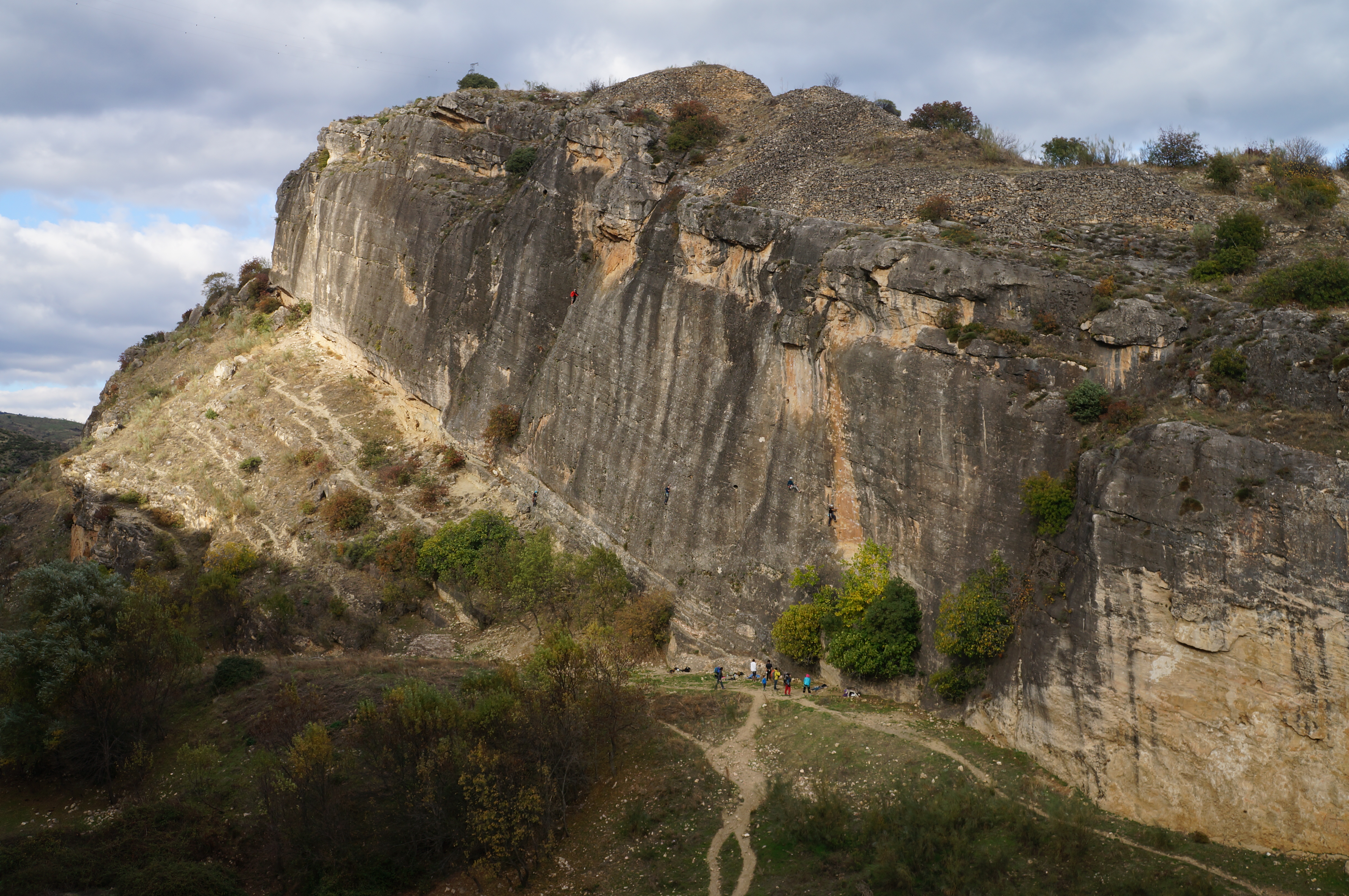
Eventually we reached the dam, a formidable piece of construction that spanned a wide canyon. Opposite us, a group of rock climbers traversed the cliff face.

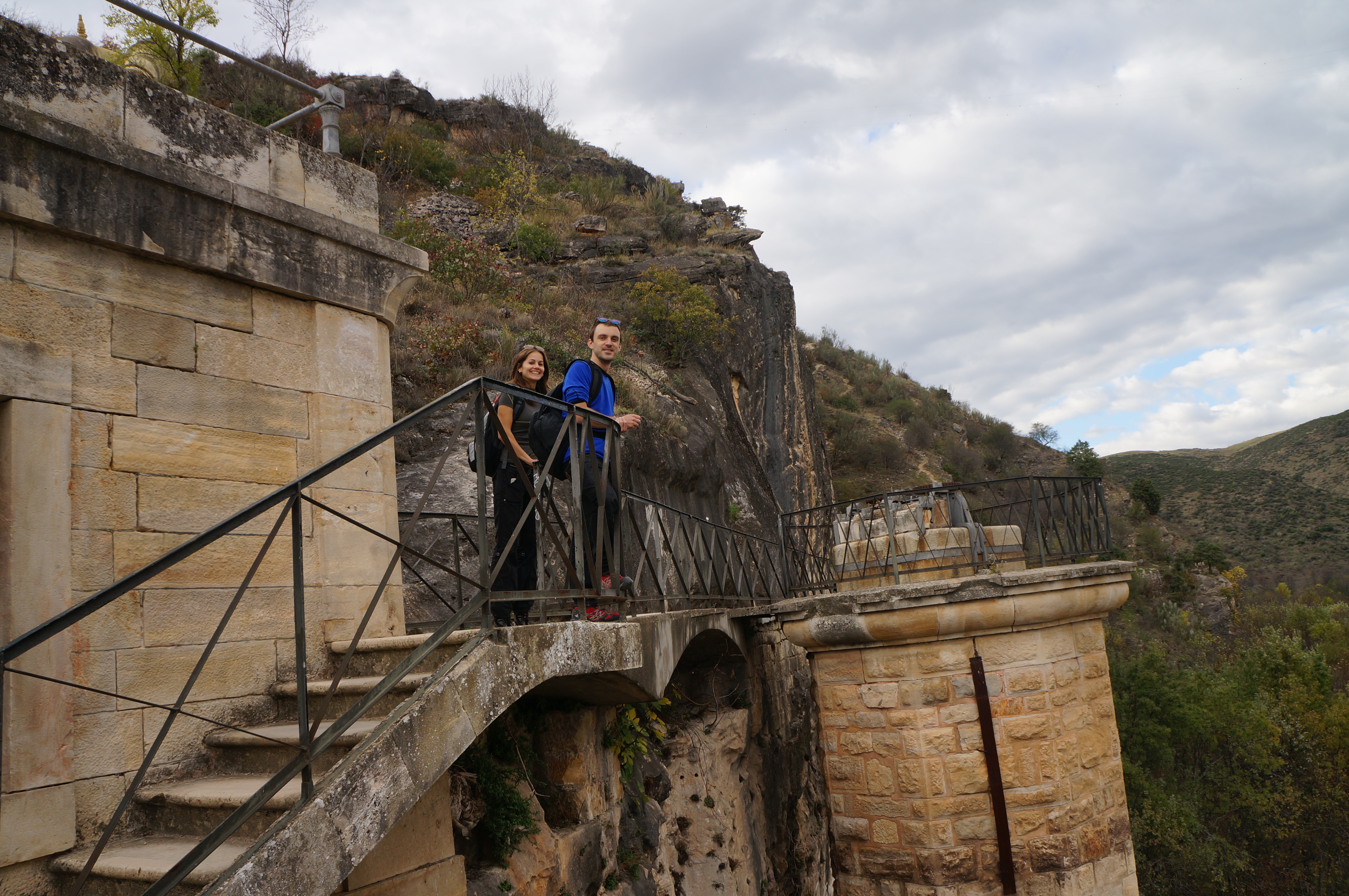


We’d known from the beginning that we weren’t likely to make it to the rock formations that day, and indeed, by the time we reached the dam (still an hour or so away from them), we were starting to run low on daylight. It was unfortunate, because they were visible for most of our hike — the sun always seemed to shine a special beam directly onto them, highlighting the patch of eerie red spires on a distant hillside.
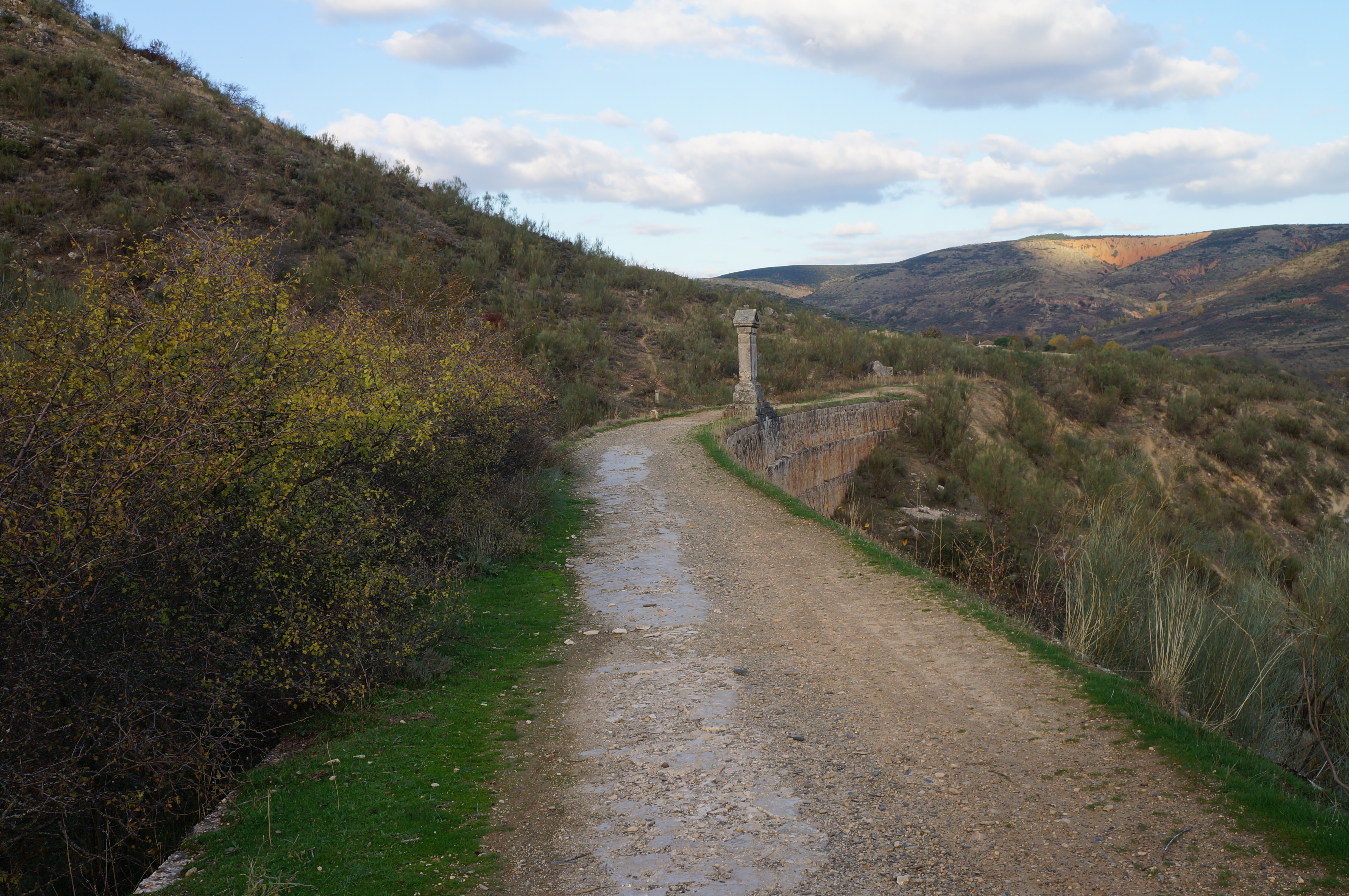
After eating lunch at the dam, we reluctantly decided that we’d need to return to the area another time to catch Cárcavas, and headed back toward Patones to catch our bus. While fun, the route to the dam had been tediously long, and we chose to blaze a more direct trail on the way back. We followed the road for a bit, then opted to scramble up the hillside a bit to walk on top of the older section of the “canal,” which was topped with a perfectly flat walkway wide enough for two people to comfortably walk side by side. Though Ryan mentioned he’d heard that it wasn’t legal to walk on the canals, it seemed absurd to waste such a perfectly good path — which was marked with bike tires and footprints from countless other adventurers before us.
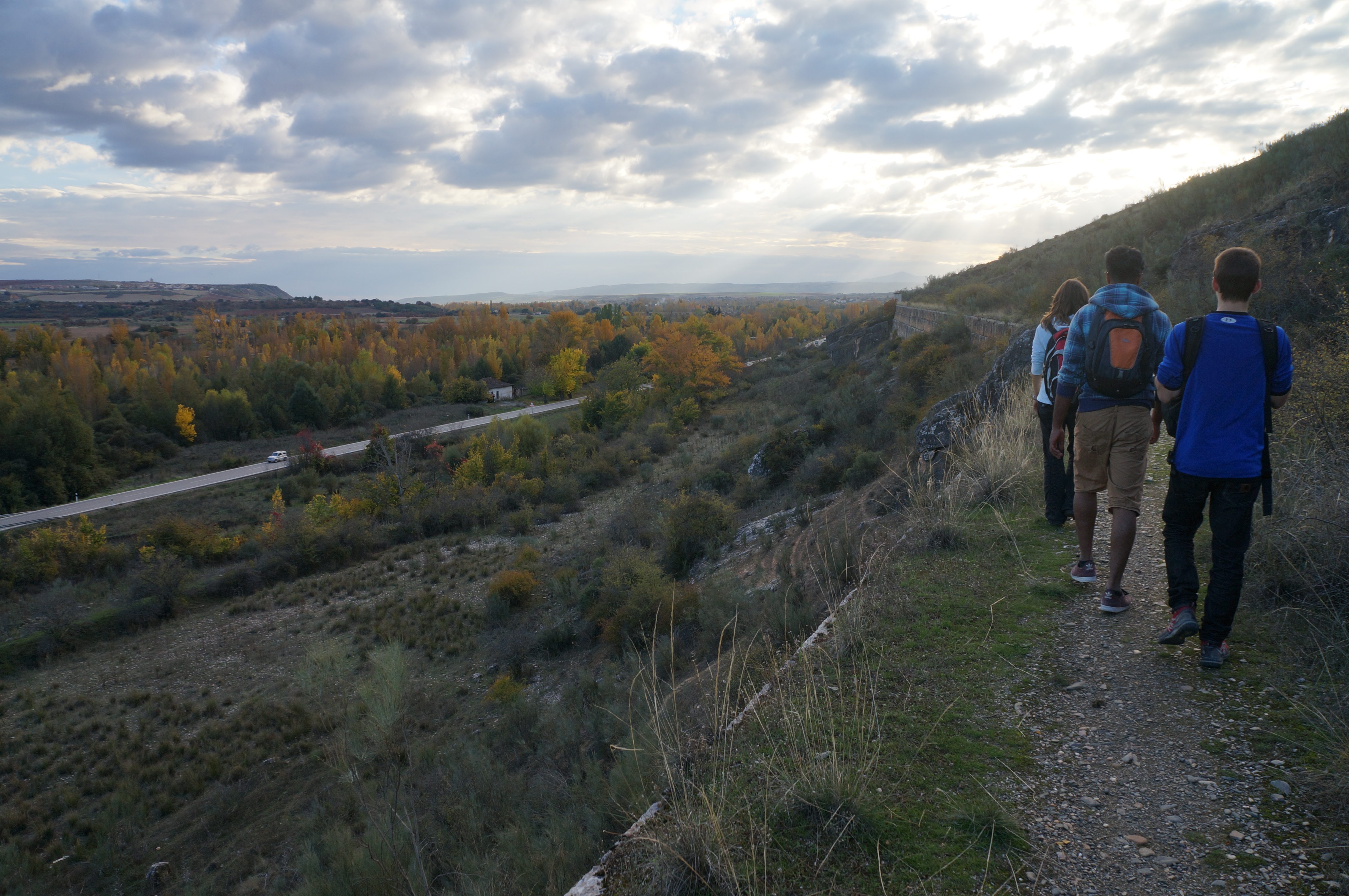
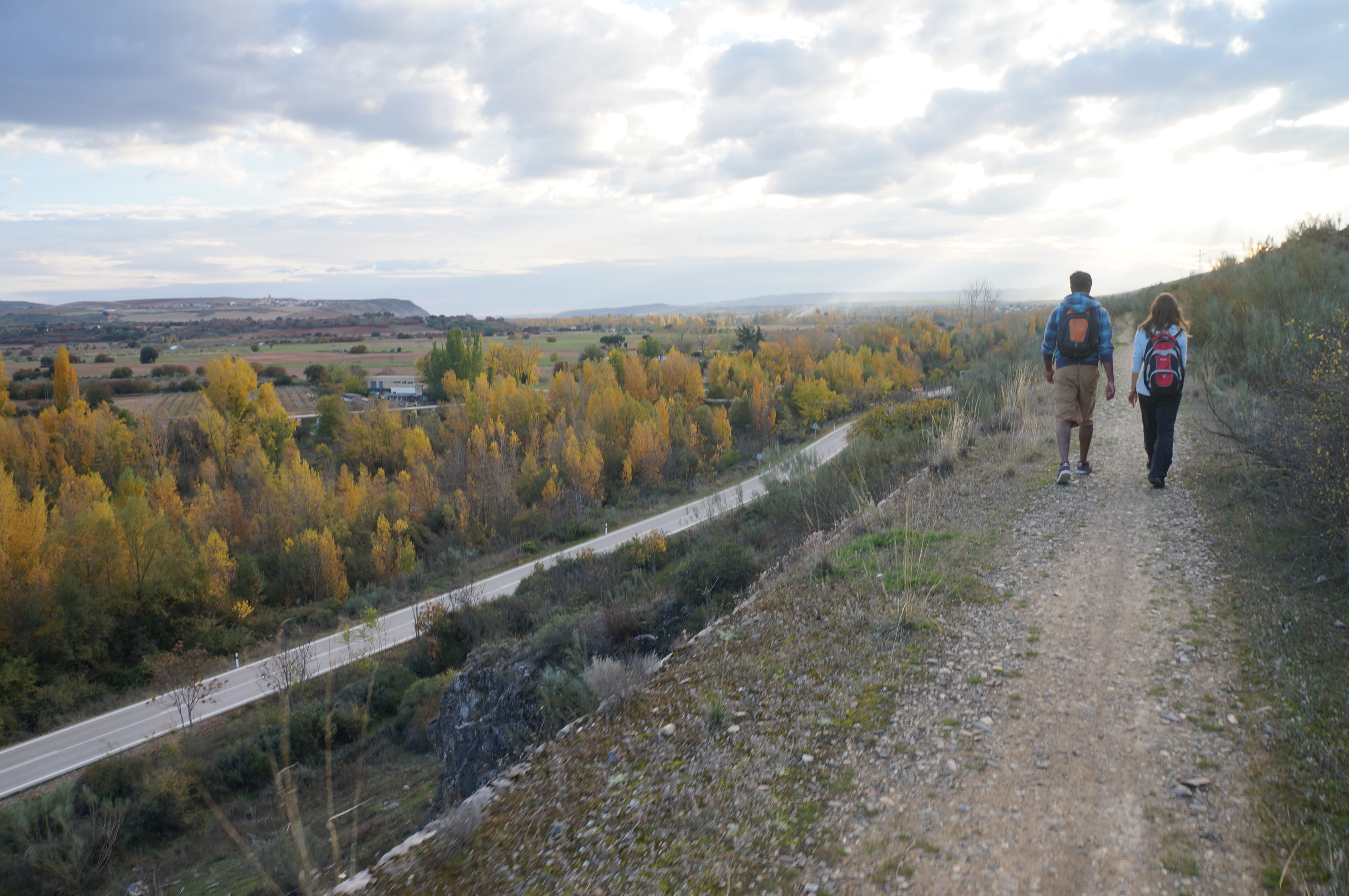
However, all at once we found out why the canal trail might be discouraged when we came upon a fenced off section of the path ahead of us. Just beyond the fence, the top of the canal had collapsed, opening up into a deep, dark hole with water down below. We became all too aware of the hollow sound our footsteps had been making and the thin surface that had separated us from the empty space beneath us. It was time to find a new route back.
At this point, there was a steep drop to our left toward the road and a steep incline to our right, which would also have taken us well out of the way even if we’d felt like bothering to return to our original route. Ahead of us was a canyon. But a little bit of exploring revealed what appeared to be a roughly carved approximation of steps leading down from the canal, along the side of the canyon and toward the road. Despite some initial misgivings that it might lead nowhere and just force us to backtrack more, we took the chance and it paid off perfectly — the mysterious overgrown little rock path led us right down to the road and across, revealing a perfect trail to follow back into town.

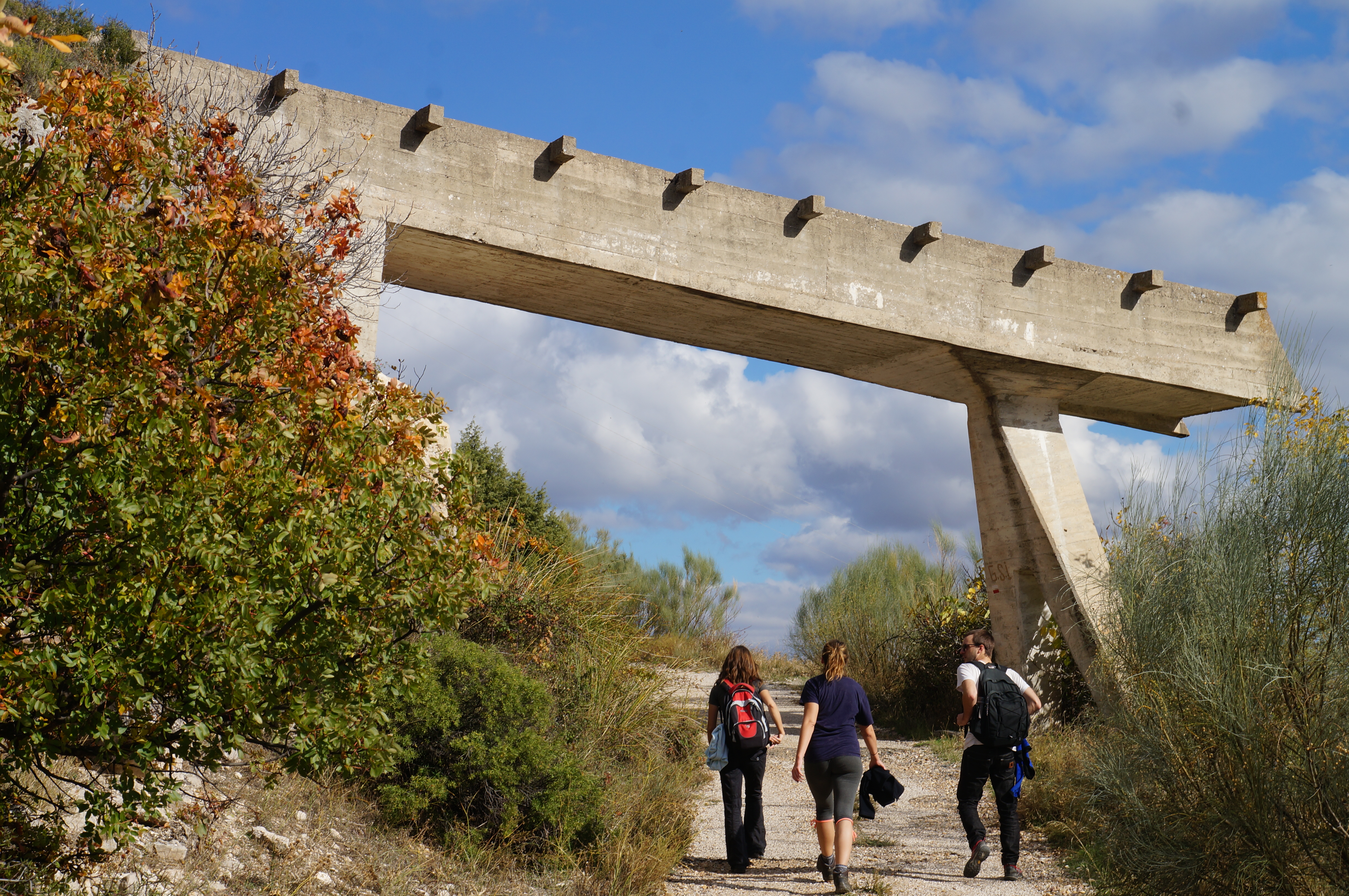
Our original path was on top of this bridge
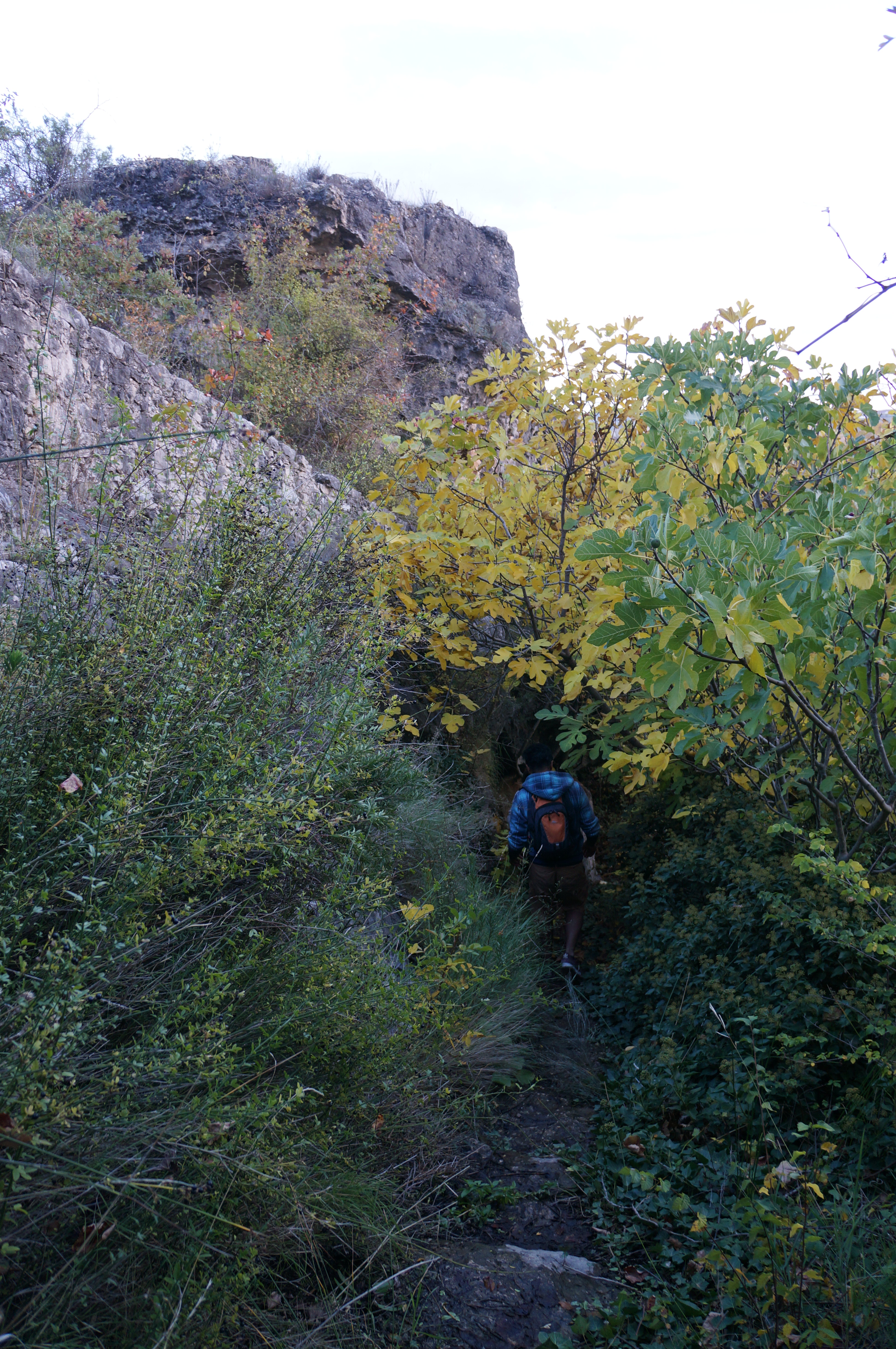
Down the side of the canyon towards the road
All in all, the day was a great adventure, a chance to see some gorgeous sights and spend time with cool new people. Pretty much all that we had experienced to that point of Spain was either urban cityscapes or the scrubby, bare plains in between Madrid and the dingy suburb we work in. Getting out of the city limits and seeing some breathtaking natural beauty was necessary for our souls and crucial to breathing new excitement into our lives in Spain.
We were also lucky enough to spend the day with two people who’d traveled extensively around Spain and the surrounding countries. All day long we got to listen to them trade stories about the fabulous places they’d seen — the rental country homes built into caves and the sides of cliffs in southern Spain; the breathtaking hiking trails of Galicia and the Pyrenees; the “hanging houses” of Cuenca; the markets of Marrakech; and so much more that it all started to blur together over the course of the day. It served to re-ignite our excitement for this incredibly diverse country and all the things we have yet to experience here.
Vamos!


more adventures! I love reading about them and being able to live vicariously through you guys. I’m so glad to see that you’re doing well and really enjoying your time there!
LikeLike
Thanks a bunch, Bika! So glad you’re following. I hope you and Larry can make it over here and have some adventures with us 🙂
LikeLike