Morocco has been on the top of my travel bucket list for a long time. The geographical and cultural intersection of Africa, Europe and the Middle East, the idea of Morocco has always thrilled me. I was endlessly charmed by imagining the chaotic marketplaces, the flurry of foreign languages being spoken, the call to prayer echoing from the minarets, getting lost in the Sahara desert, and just existing in a culture still so steeped in history, tradition, and superstition.


But it intimidated me, too. For every person who’d traveled to Morocco and had a wonderful experience, I met at least one whose trip had been a nightmare. Morocco is a complicated country with a different culture than what I’m used to, with little hand-holding available for tourists. There are things you have to be prepared for and things you have to know how to avoid. I can’t take too much credit for the success of my trip — a lot of it, like many travel experiences, came down to sheer luck. But proper planning goes a long way, too!
Putting together our Morocco trip was completely overwhelming at first. Many people opt to visit Morocco on organized tours which arrange accommodation, transportation, and sightseeing schedules. I can certainly see the appeal, and we did consider it, but my thirst for the challenge and adventure kept turning me off from the idea.
In the end, planning this trip was almost as fun as actually taking it — and I loved the experience of staying just flexible enough that we could go with the flow and make a few spontaneous decisions along the way. It takes some effort and forethought, and a bit of bravery, but anyone can plan a sweet Moroccan excursion themselves.
My best piece of advice? Plan, but don’t overplan. This is pretty good travel advice in general, but especially relevant for a country like Morocco, where you’ll have the best time if you stay flexible and ready to embrace enticing new opportunities or shy away from ones that don’t seem as good as they were advertised.
Accommodation was the only thing we had solidly planned in advance — and I took full advantage of Hostelworld‘s flexible booking policy, which allows penalty-free cancellation up to the day before your arrival. And since accommodation is so cheap in Morocco – hostel beds can cost less than $10 per night – even if you end up changing your plans without enough time to cancel, you won’t lose out on much. It’s well worth it for the peace of mind of always having a guaranteed bed for the night!


1. Pick your stops.
The first step of planning, of course, is to choose where you want to go. How much time do you have to spend in Morocco? If it’s less than a week, I suggest limiting your ambitions. Morocco is a big country, and traveling between many of the major destinations means traversing crazy mountain ranges that make every journey longer and more complicated than it initially seems.
Think hours of this:
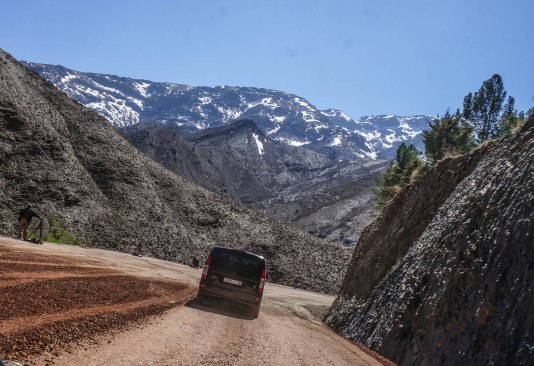
On our 10-day trip, the main destinations we visited were:
Chefchaouen
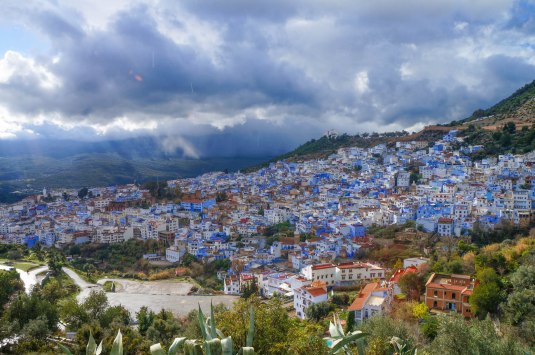
Perhaps you can guess why it’s called “the blue city”…
Yes, this small city nestled into the mountains is almost entirely painted an otherworldly shade of blue. It’s an artist’s enclave and features all the same artisan shopping you can find in other parts of Morocco without as much of the chaos.
It’s also a wonderful place to go hiking. A day is plenty of time to see the city itself, but you could spend a second day taking a taxi out to the trailhead for God’s Bridge and seeing the famed waterfalls (our plans to do this got rained out, unfortunately). Even without going far from the city, you can easily reach some spectacular views.
Fez
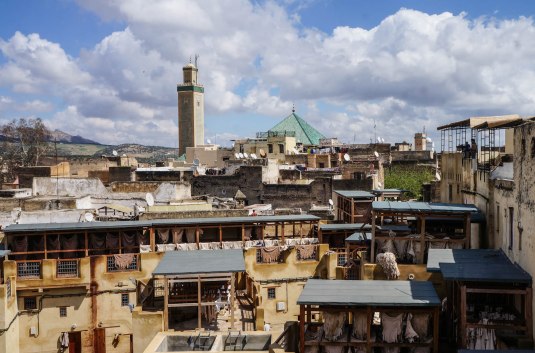
Not everyone who visits is fond of Fez, but we really enjoyed it. Yes, the medina is dirty, chaotic and crowded; it’s less colorful, tropical and tourist-friendly than Marrakesh. That’s why we enjoyed it though — it felt much more authentic, like a true step back into time or another world entirely. For the strangest culture shock of your life, go straight from the heart of the gritty, ancient medina into the brand-new, shining luxury shopping mall on the edge of the new town.
Marrakesh
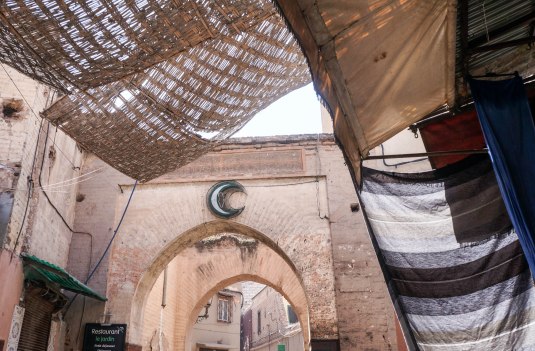
Though I preferred the authentic vibe of Fez, I did absolutely adore Marrakesh. It’s colorful and vibrant, and every bustling street has so much to see and hear and smell. Shopping lovers will find anything they could dream of here for purchase in the sprawling souks. The abundance of rooftop terraces deliver incredible views of the snowy Atlas Mountain peaks on the horizon, and the many square minarets that sprout up from the endless cluster of shorter buildings. Even the oldest parts of the medina felt more modern than Fez thanks to the huge number of scooters and motorbikes that go weaving between tourists, Moroccan shoppers or farmers or storekeepers and the donkeys carrying their goods.
Meknes
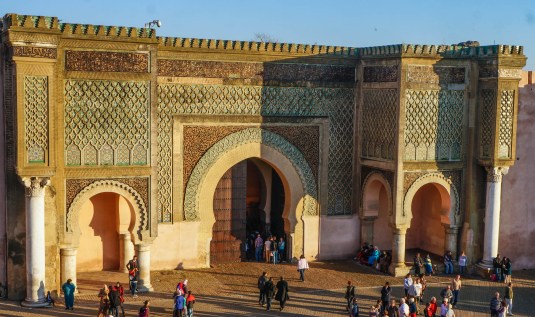
We didn’t know much about what to expect from Meknes, and didn’t do a very good job of sightseeing (we got pretty lost, and also went on a Friday when most things were closed), but we did appreciate the juxtaposition of the city’s historical atmosphere and the comparatively youthful, progressive attitude of its residents– likely a result of its many universities. The medina felt just as old as Fez’s, but the people in it seemed far more 20th century. Many women wore their hair uncovered, which was a pretty rare sight in Fez. Ultimately I enjoyed Meknes and it made a nice, easy day trip from Fez, but I wouldn’t go too far out of my way to visit it.
The Desert
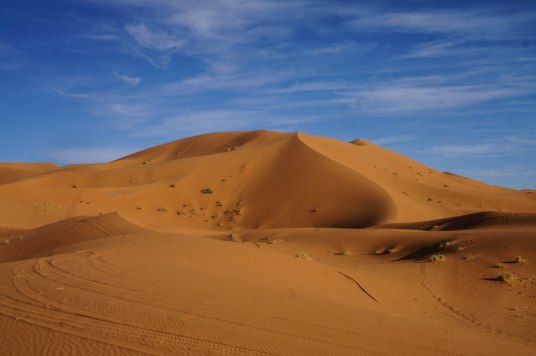
Despite what I’d once envisioned, there is much, much more to Morocco’s landscape than just desert. In fact, only a tiny fraction of the country is covered in actual sand dunes. You’ll need to travel a long way to get to the legit desert — either to Erg Chebbi or Erg Chigaga, both located on the border with Algeria. It’s a long drive (at least 8 hours) to get to these areas from… just about anywhere, so you’ll need to set aside several extra days of your itinerary if visiting the desert is a priority for you. Which it should be! Riding camels out into the desert and spending the night in a Berber tent is a fantastic experience. You can also ask any hostel or hotel to arrange your transportation and desert experience, and easily travel from Fez to the desert to Marrakesh or vice versa, with optional other stops in pretty places along the way like the Todra Gorges and the monkey-filled cedar forests of the Middle Atlas Mountains.
Destinations that we didn’t visit, but which you might consider:
Tangier: Though we flew in and out of Tangier, we spent almost no time here. I’d heard iffy (or outright negative) reviews from most people I talked to, and got the impression that the city is unpleasant for tourists and culturally lacking compared to other destinations. My brief experience lined up with this, but to be fair, I was mostly in the vicity of the bus and train stations, which are generally located in the worst parts of any city.
The biggest pro is that it’s very easy to reach, either by ferry from southern Spain or by flight. Its proximity to Spain is actually pretty amazing — you can clearly see the Spanish coastline across the water from the city. I think it’s worth a visit, but I wouldn’t prioritize it over other cities.
Casablanca: Despite the romance the name Casablanca likely conjures in your mind, people I talked to generally shrugged it off. It has Morocco’s largest mosque, the Hassan II Mosque, which sounds pretty incredible. Otherwise, Casablanca is quite cosmopolitan and Westernized, and not a very popular tourist destination. If I’d had more time I would have probably stopped here briefly on my way from Marrakesh to Tangier; a major train route runs right through it, so you could definitely make a day trip of it on your way someplace else.
Rabat: Morocco’s capital city, Rabat has a reputation of being a bit dull. Of course, a quieter place can be a welcome respite if you’re spending lots of time in the crazier atmospheres of Marrakesh, Fez and Tangier. It does have lots of interesting colonial and Berber architecture, as well as the geographic benefits of being located on both the coast and the banks of a river.
Agadir: The southern city of Agadir is a popular winter destination for European tourists, appreciated for its lovely beaches and resort-like feel. I went to Morocco seeking a different type of experience, but it sounds like a great place to relax by the ocean while also getting a smaller dose of the unique cultural experiences that Morocco is all about.
Essaouira: We’d hoped to visit Essaouira, which is typically visited as a day trip from Marrakesh, but sadly we ran out of time. It’s a chilled-out, beautiful beach town with waves that draw a huge community of surfers. Jimi Hendrix was apparently a big fan of Essaouira, and it’s attracted many other celebrities and artists over the decades.
**
3. Choose your route.
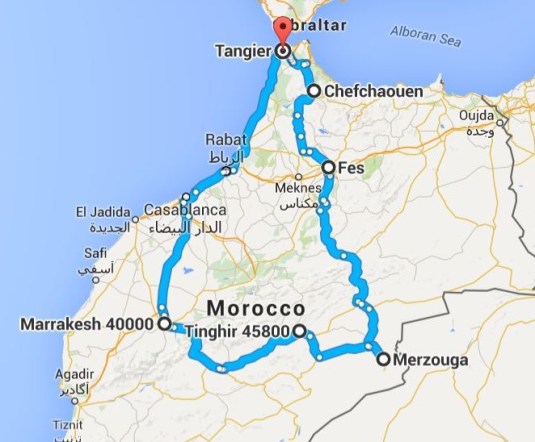
So you’ve chosen your destinations! Now you need to decide what order to see them in. This may be entirely dictated by your flights (if it’s cheapest to fly into Marrakesh and out of Tangier, for example), but if you do a loop as many people do, you’ll have to decide on North to South or vice-versa.
We flew in and out of Tangier so either direction was a valid option for us, but I ended up plotting a North to South course for no particular reason — just working my way down the map from Spain as I drew up our itinerary. But most people I met in Morocco were going the opposite way and working their way north, making me wonder if we’d made a mistake.
Actually, we ended up lucking out thanks to this decision, due to a massive blizzard that struck the High Atlas Mountains while our south-to-north companions were attempting to cross the region. Though we ended up making out with just a light, drizzly rain where we were in Chefchaoeun, many people had their travel plans majorly impacted by road closures in the mountains.
Of course, the weather’s the luck of the draw, but there are a few more reliable factors you can take into account. The biggest one is that, since traveling south to north is more popular, transportation can be cheaper and easier to arrange. A popular option is to stop in the Sahara desert between Fez and Marrakesh, starting in one city and ending in the other. We’d learned what to generally expect of prices for these types of desert tours going from Marrakesh to Fez, but were disappointed to find out that it was nearly twice as expensive to do the reverse trip, the direction we were going.
But that disappointment aside, I definitely appreciated hitting our northernmost stop, Chefchaouen, first. Though the medina is as notoriously confusing to navigate as any other in Morocco, its much smaller size means that if you walk long enough in any direction, you’ll wind up where you need to be sooner or later. Its vibe was far more relaxed than anywhere else we visited, and in general, it felt like a great way to dip our toes into the madness ahead of us. I think I liked Fez and Marrakesh much more having visited them after Chefchaouen than I would have if one of them had been my first destination in Morocco.
**
3. Plan accommodations.

Like I mentioned above, I’m really glad I booked my accommodation first, especially since we visited at a busy time. But choosing a place to reserve can be overwhelming. I suggest asking for personal recommendations whenever possible, as well as reading reviews online. Websites like Hostelworld and Booking.com do a great job at breaking down what people liked and disliked about each place; they also both offer flexible booking options that allow you to cancel your reservation free of charge.
Depending on your comfort preferences, you can find hostels, riads (similar to a bed and breakfast – many riads act as hostels too, offering shared dorms as well as private rooms) and inexpensive hotels on these websites. AirBnB is also an option in Morocco, but I wouldn’t recommend it. I really appreciated the knowledgeable advice and help we got from the hostel staff everywhere we stayed: in a country where so many people are out to rip you off, it really helps to have a local willing to negotiate for you. Plus, we met a ton of awesome fellow travelers in our hostels that made our whole experience better.
Make sure you seek out recent reviews online, as everything is subject to change in Morocco. I was turned off by older reviews of our hostel in Fez that complained of the tour guides being really pushy and rude, but more recent ones just said that the tour was great. We ended up having a fantastic tour guide, so I can only assume that the hostel took the feedback into consideration and found a replacement.
I’d also read glowing reviews of one hostel in Marrakesh, only to meet MULTIPLE people on the road who’d gotten bedbugs from staying there a few days before. Luckily, I’d already chosen a different place to stay.
I’ll go into much more detail when I get into writing about each destination, but for now I can offer an enthusiastic recommendation for any of the places we stayed: Riad Baraka in Chefchaouen, Funky Fez in Fez, and Riad Layla Rouge in Marrakesh.
**
4. Consider transportation.
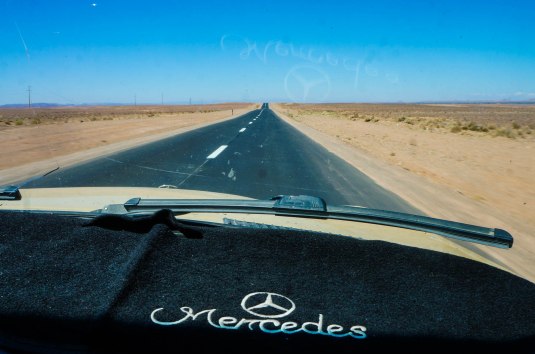
I’ve never taken a wider range of means of transport during such a relatively short trip as I did in Morocco. Getting around the country is a really unique experience, and whatever you take, it’s sure to feel like an adventure. Here are the most common ways to travel in Morocco, ranked by my preference (best to worst).
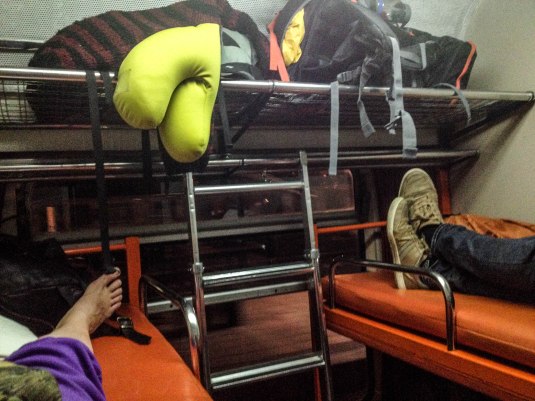
1. Overnight train. Ideal for traveling long distances without wasting time. We had to get from Marrakesh back up to Tangier for our flight the next day, so we took the overnight train. Traveling all the way from Marrakesh to Tangier, we paid 35 euros each for the “couchette” option, which means you get your own bunk bed in a compartment of 4. They’re surprisingly comfy too. I had a truly great night’s sleep on that weird little bunk while the country sped by just outside the window. We left Marrakesh at 8:45 and arrived in Tangier at 7 am, so we didn’t lose any time. You can get away with booking this ticket the day you want to leave, but it should be done hours in advance.
2. Daytime train. In general, Morocco’s train lines — operated by ONCF, the national rail company — are much more modern and first-world-seeming than any other means of transport in the country. We took the train from Fez to Meknes and back for a cheap and easy day trip, and were pleasantly surprised by how comfortable the trip was. Sure, the train was late returning to Fez, but not nearly as late as the buses were typically running. There’s generally no need to book these train tickets in advance, but if you want to be able to choose your seat, it’s a good idea to show up an hour early.
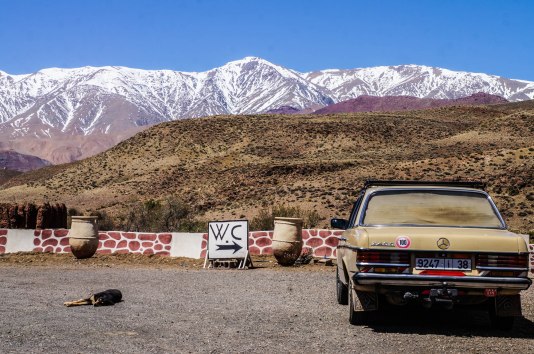
3. Grand taxi. There are two types of taxis in Morocco: petits taxis and grands taxis. Grands taxis are more like having a hired car and driver for the day. They’ll take you very long distances and will pull over whenever you request a bathroom break, lunch, a picture of the scenery, or even to stop and check out a roadside attraction.
Be aware: there are two types of grands taxis. Some can be pre-arranged through your hostel, with a pre-determined price that’s usually part of a desert tour or some other kind of package deal (transportation + hotel, for instance). These are quite nice cars, spacious and comfortable. Or, you can hail your own grand taxi by going to a major transportation hub like a bus station. Here you’ll find a bunch of guys driving ancient, beat-up Mercedes, who may insist on waiting to find a 5th or even 6th person to fill the car if your group isn’t big enough (and only 4 people can really fit comfortably in these cars for a long journey) or making you cover the cost of what the extra person would pay. When we took the latter option, we were able to haggle our driver down to a lower rate to take just the four of us. The car was beat up but it somehow got us safely over the insaaaane roads through the High Atlas Mountains, and the ride was comfortable enough.
4. Bus. Moroccan buses are cheap as hell (it was about 3 euros from Tangier to Chefchaouen), and not horribly uncomfortable, but any long distance trip through Morocco tends to cross an intense mountain range, and spending 5+ hours creaking and swerving up and down and around windy mountain roads in a clunky old bus isn’t my favorite pastime. The buses frequently run extremely late and all feel as though they’re about to fall apart, but you will enjoy some highlights like watching people load the luggage compartment with bizarre baggage (like the hood and door panels of a car), or walking up and down the aisles to try and sell you candies or odd handmade trinkets. You’ll likely stop at a typical rest stop like this one for lunch, where you can choose a chunk of raw meat and have it grilled up for you next door (it was fucking delicious, actually).

Buses may not be the most comfortable or convenient mode of transport in Morocco, but they’re certainly one of the most adventurous. Depending on where you’re going, it’s sometimes a good idea to arrange your bus ticket a day in advance — check with your hostel/hotel for their advice.
5. Petit taxi. Similar to regular taxis anyplace else, petits taxis provide quick trips within the city limits. As with anything in Morocco, be prepared to haggle over the price and walk away from one or two if they don’t give you the price you want. They will absolutely insist on charging you more if it seems like you don’t know exactly where you’re going, so try to have an idea of how far your destination is.
Petits taxis are the best way to get from the bus/train station or airport (usually located in the newer part of town) to the medina, where you’ll probably be staying. But keep in mind that cars can’t drive far into the medina, if at all, so the taxi will drop you off at the edge and you’ll have to find your way on foot from there.
**
5. Get inspired
Once you’ve gotten the outline of your trip hammered out, build up your excitement while you count down the days by checking out other travelers’ accounts and photos. Here’s a few blogs I found both inspiring and useful:
This American Girl (scroll down to find her Morocco posts)
There’s much more still to come here on Find Me in the Air, too!
And don’t forget about the travel blog’s analog predecessor. My fascination with Morocco was initially piqued years ago after reading The Caliph’s House, Tahir Shah’s excellent memoir about his experiences as an Englishman who relocated his family to Casablanca. It’s full of really entertaining and engrossing tales about navigating all the weird and wonderful facets of Moroccan culture.
**
I can’t wait to dive deeper into my experiences in each place I visited in upcoming posts. Thanks for reading, and please leave a comment if you have any questions or Moroccan travel advice of your own to share!
 find me in the air
wonderful post
LikeLike